Industry Guide
Why Your Salon Needs an AI Receptionist (Stop Missing Bookings While You Work)
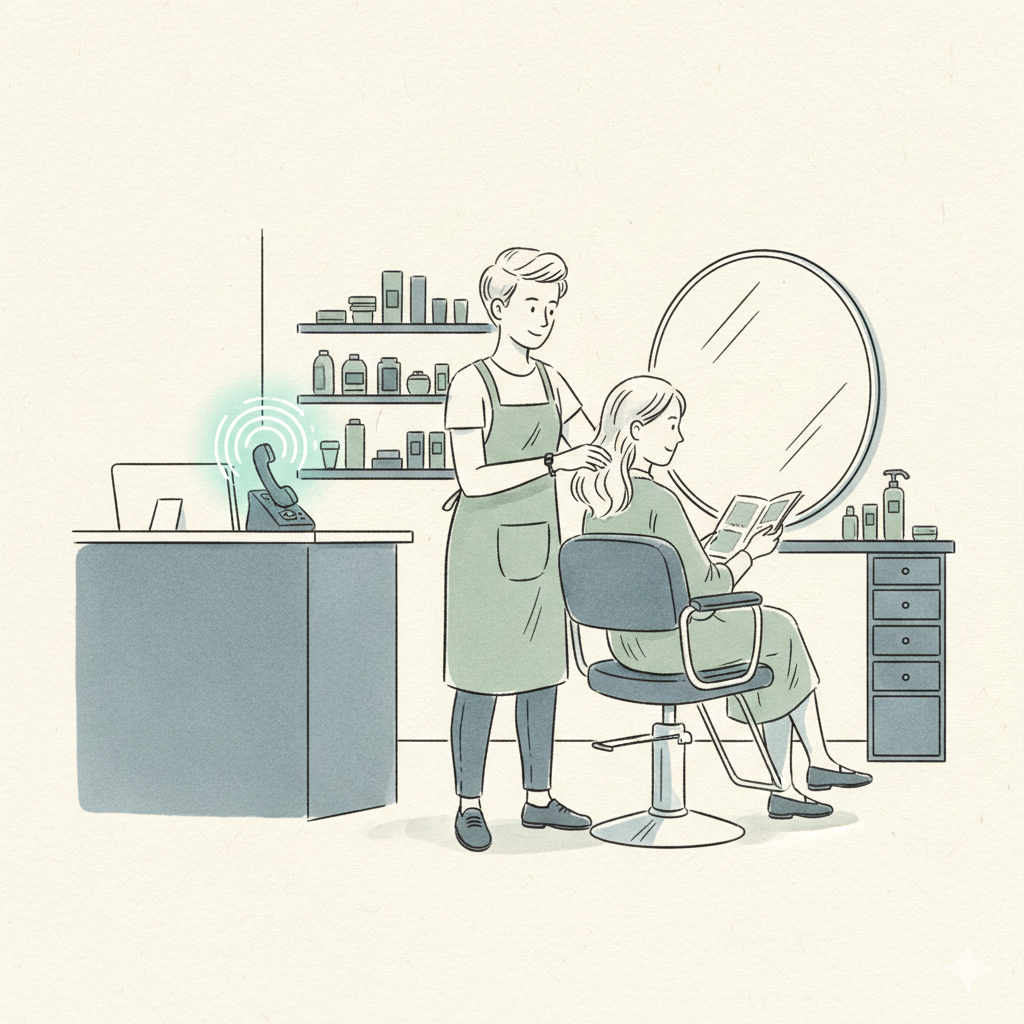
You're mid-highlight when the phone rings. An AI receptionist answers every call, books appointments, and keeps salon chairs full.
11 min read
Read35% of dental calls come after hours. 62% of small business calls go unanswered. An AI receptionist for your dental office picks up every call, triages emergencies, verifies insurance, and books the right appointment -- 24/7, for $49/month.
It's 10 PM on a Saturday night. A patient chips a tooth on a popcorn kernel. They grab their phone, call your office. Voicemail. They Google "emergency dentist near me" and book with your competitor.
You just lost a patient -- and potentially $3,000+ in lifetime value -- because nobody answered the phone.
This isn't a hypothetical scenario. It happens to dental practices every single weekend. According to industry data, 35% of dental calls come after hours, and 62% of calls to small businesses go unanswered entirely. That means more than one in three of your patients are calling when nobody is at the front desk -- and most of those calls are disappearing into voicemail purgatory.
As we covered in our dental SEO guide, getting patients to find your practice online is only half the battle. The other half? Actually answering the phone when they call.
Watch: Alex Hormozi and Replit CEO Amjad Massad on how AI is transforming service businesses — from missed calls to booked appointments
"If you were a dentist, you do Invisalines, person comes in, you make three times your money, and then after that you get them onto the subscription — cleanings and whitening on an ongoing basis. Almost every business can structure it this way."
Hormozi uses dental practices as his go-to example of lifetime value because the math is so clear. One new patient isn't one cleaning — it's a decade of cleanings, X-rays, fillings, crowns, whitening, and family referrals. That's $3,000-5,000 in lifetime revenue. But that entire revenue stream starts with a single phone call. If that call goes to voicemail on a Saturday night, you don't just lose the emergency appointment — you lose the entire relationship.
— Alex Hormozi, conversation with Replit CEO Amjad Massad
The average dental patient is worth $3,000-5,000 in lifetime value -- regular cleanings, X-rays, fillings, crowns, and referrals. Every missed call isn't just a missed appointment. It's a missed relationship that could have generated thousands in revenue over the next decade.
Your front desk receptionist is the first point of contact for every patient. But dental offices face a unique staffing challenge that makes consistent phone coverage nearly impossible.
Annual turnover rate for dental front desk staff
Dental Economics
Cost to hire and train a single replacement
ADA Practice Management
of dental calls come after hours
Dental Intelligence
of calls to small businesses go unanswered
Forbes
If your practice misses just 5 new patient calls per month -- which is conservative given the statistics above -- here's what that costs:
That's a quarter million dollars walking out the door every year -- to competitors who simply answered the phone.
Before we talk about solutions, let's define what the ideal front desk phone experience looks like for a dental practice. Because dental offices have unique requirements that generic answering services simply can't handle.
Including nights, weekends, and holidays. Dental emergencies don't follow business hours -- a knocked-out tooth at 9 PM needs immediate guidance, not a voicemail box.
The ability to ask the right questions and determine: is this urgent (needs to be seen today), moderate (book an emergency slot for tomorrow), or routine (schedule a regular appointment)?
"Do you take Delta Dental?" "Is Cigna accepted?" "What about MetLife?" These are the most common first questions from new patients. If the phone can't answer them, the patient hangs up.
Matching the right appointment type to the right provider -- cleanings with hygienists, procedures with dentists, emergencies with the first available slot. Not just blocking time, but intelligent routing.
No-shows cost dental practices thousands per month. Automated SMS reminders before appointments dramatically reduce missed visits and keep the schedule full.
Patient privacy matters. Any phone system handling dental calls needs to be designed with healthcare privacy in mind -- no storing health records, encrypted conversations, and transparent data handling.
Imagine every call answered instantly. Every emergency triaged correctly. Every insurance question handled. Every appointment booked with the right provider. Every patient reminded before their visit. All without adding headcount, paying overtime, or worrying about sick days and turnover. That's what dental offices actually need -- and until recently, it wasn't possible without a massive staffing budget.
An AI receptionist isn't a generic call answering bot. When configured for a dental practice, it becomes a specialized dental front desk assistant that understands the unique needs of your patients and your practice.
"It would make a mistake and I would correct it — and every single time after that, it would do it right. I've trained a lot of salespeople. This was scary in a cool way. It just doesn't make a mistake after."
For dental offices, this consistency is critical. When a panicking patient calls about a knocked-out tooth at 10 PM, you need the AI to follow the emergency protocol perfectly — every single time. Unlike a rotating pool of answering service operators who might forget to ask about bleeding or give wrong reimplantation instructions, an AI receptionist configured with your dental protocols executes them flawlessly on every call.
— Alex Hormozi, conversation with Replit CEO Amjad Massad
Asks pain level, symptoms, and timing to classify urgency. Routes true emergencies to the on-call dentist. Provides immediate care instructions for everything else.
Books cleanings and check-ups with hygienists. Routes fillings, crowns, and procedures to the right dentist. Matches appointment duration to procedure type automatically.
Knows your accepted plans -- Delta Dental, Cigna, MetLife, Aetna, and more. Answers coverage questions and tells new patients what to bring to their first visit.
Sends SMS reminders 48 hours and 2 hours before appointments. Reduces no-shows by 30% or more. Allows patients to confirm or reschedule via text.
Collects name, contact info, insurance details, and reason for visit before the first appointment. Sends new patient forms via text. Patients arrive ready.
Handles the 35% of calls that come outside business hours. No more lost Saturday night emergency patients. No more Monday morning voicemail backlog.
The real test of any dental phone system is how it handles emergencies. Here's exactly how an AI receptionist walks through the four most common dental emergency calls -- step by step.
Patient calls at 10:15 PM Saturday
"I just chipped my tooth on a popcorn kernel. It hurts and I can feel a sharp edge."
Rachel asks triage questions:
Rachel classifies as MODERATE and responds:
Patient calls at 3:00 PM Sunday
"My son just got hit in the mouth playing basketball. His front tooth got knocked completely out."
Rachel identifies URGENT situation immediately:
Rachel classifies as URGENT and takes immediate action:
Patient calls at 7:30 PM Tuesday
"My crown just fell off while I was eating dinner. There's no pain but the tooth underneath feels weird."
Rachel asks clarifying questions:
Rachel classifies as NON-URGENT and responds:
New patient calls at 8:45 PM Wednesday
"Hi, I just moved to the area and I need to schedule a cleaning. Do you take Blue Cross Blue Shield?"
Rachel handles the full intake:
All four of these scenarios happened after business hours. Without an AI receptionist, every one of these patients would have reached voicemail -- and most would have called another practice instead.
For any dental practice, patient privacy is non-negotiable. When considering an AI receptionist, HIPAA compliance is the first question -- and rightfully so. Here's how Rachel is designed with healthcare privacy at the core.
Rachel doesn't store diagnoses, treatment history, or medical records. She handles scheduling and triage, not clinical data.
All call data and conversations are encrypted in transit and at rest, meeting industry standards for data security.
Rachel doesn't connect to your PMS (Dentrix, Eaglesoft, Open Dental, etc.). She operates independently as a scheduling and triage layer.
Rachel collects only what's needed to book appointments and triage emergencies: name, contact info, reason for visit, insurance plan, and urgency level.
When asked, Rachel is honest about being an AI assistant. She introduces herself by name and handles conversations professionally and transparently.
Rachel is a scheduling and triage tool, not a clinical tool. She doesn't give medical advice, doesn't access patient charts, and doesn't replace clinical judgment. She handles the administrative side of phone calls -- the same work your front desk receptionist does -- while routing clinical questions to your dental team.
Every dental practice needs reliable phone coverage. But the cost differences between your options are staggering. As we detailed in our virtual receptionist guide, AI has fundamentally changed the math.
"One customer comes in with enough gross profit embedded to pay for that customer plus the cost of acquiring the next customer. If you can accomplish that within a 30-day cycle, cash is no longer a constraint to growth."
Hormozi's "money model" math works perfectly for dental practices. Rachel costs $49/month. One captured emergency patient who would have otherwise called your competitor is worth $3,000+ in lifetime revenue. That single answered call doesn't just pay for Rachel — it funds your entire marketing budget for the year. The ROI isn't 10x. It's 100x.
— Alex Hormozi, conversation with Replit CEO Amjad Massad
| Feature | Front Desk Receptionist | Answering Service | Rachel AI Dooza |
|---|---|---|---|
| Monthly Cost | $3,500-4,500 | $500-1,200 | $29 |
| Availability | Business hours only | Extended hours (varies) | 24/7/365 |
| Emergency Triage | Trained judgment | Basic script only | AI dental protocols |
| Insurance Questions | Knowledgeable | Usually can't answer | Configured per practice |
| Appointment Booking | Yes | Message-taking only | Automatic booking |
| Setup Time | 2-4 weeks hiring + training | 1-2 weeks | 30 minutes |
| Consistency | Varies by person/day | Varies by operator | 100% consistent |
Front Desk Receptionist
Salary + benefits + training
Business hours only
$42,000-54,000/year
Dental Answering Service
Limited call volume
No booking or triage
$6,000-14,400/year
Rachel AI (Dooza)
Unlimited calls, 24/7
Emergency triage + booking
$348/year total
Save $41,652-$53,652/year vs. a full-time hire
And get 24/7 coverage, emergency triage, and smart scheduling included
Rachel answers your practice phone like your best front desk employee -- but she never takes a day off, never puts a patient on hold, and costs less than a single dental crown. She's specifically configurable for dental practices with emergency protocols, insurance knowledge, and smart provider matching.
Answers in under 1 second. No rings, no hold music, no voicemail.
Dental emergency protocols classify urgency and route appropriately.
Knows your accepted plans. Answers coverage questions instantly.
Books hygienist vs. dentist appointments automatically.
Reduces no-shows by 30%+ with automated appointment reminders.
Collects info and sends forms before the first visit.
Handles the 35% of calls that come outside business hours.
Detailed summary of every call sent to your team via email.
Want to make sure patients find your practice before they call? Read our dental SEO guide to learn how Ranky, your AI SEO specialist, keeps your practice visible on Google and AI recommendation engines.
Setting up an AI receptionist for your dental office takes less time than a single patient appointment. Here's exactly how it works:
Create your account at dooza.ai. You'll get instant access to Rachel and your full AI employee team. No credit card required to start.
Set up your specific services (cleanings, fillings, crowns, extractions, emergencies), provider names and schedules (hygienists vs. dentists), accepted insurance plans (Delta Dental, Cigna, MetLife, etc.), and emergency triage protocols. Our free concierge onboarding team handles this for you if you prefer.
Set up call forwarding from your office phone to Rachel's number. Works with any phone system -- landline, VoIP, or cell. Takes about 5 minutes. Rachel answers your next call.
Every missed call is a missed patient. Every missed patient is $3,000-5,000 in lifetime revenue. Rachel answers every call, triages every emergency, and books every appointment -- for $49/month.
Dooza's Rachel is designed with healthcare privacy in mind. She doesn't store patient health records, doesn't access your practice management system, and conversations are encrypted. She collects only the information needed to schedule appointments and triage urgency.
Yes. Rachel is configured with dental emergency protocols -- she asks the right questions (What happened? When? Pain level? Bleeding?), classifies urgency, and either books an emergency slot or provides after-hours instructions based on your practice's guidelines.
A dental front desk receptionist costs $3,500-4,500/month in salary alone, plus benefits and training. An answering service runs $500-1,200/month with limited hours. Dooza's Rachel costs $49/month -- 24/7, unlimited calls, with dental-specific configuration.
Rachel can be configured with your accepted insurance plans and common coverage questions. She tells callers whether you accept their insurance and what to bring to their appointment. For complex benefits questions, she routes the caller to your billing team.
Yes. During setup, you configure Rachel with your appointment types, durations, and provider assignments. She books cleanings with hygienists and procedures with dentists -- automatically matching the right provider to the right appointment type.
You're mid-highlight when the phone rings. An AI receptionist answers every call, books appointments, and keeps salon chairs full.

You became a doctor to help patients, not to write blogs and manage Google listings. Discover how Ranky, your AI SEO specialist, handles medical SEO so you can focus on what matters—patient care.
Join thousands of companies using Workforce to automate their work. Get started for free today.
No credit card required · 7-day money-back guarantee · Cancel anytime