AI Education
AI Staffing: Building a Workforce That Runs 24/7
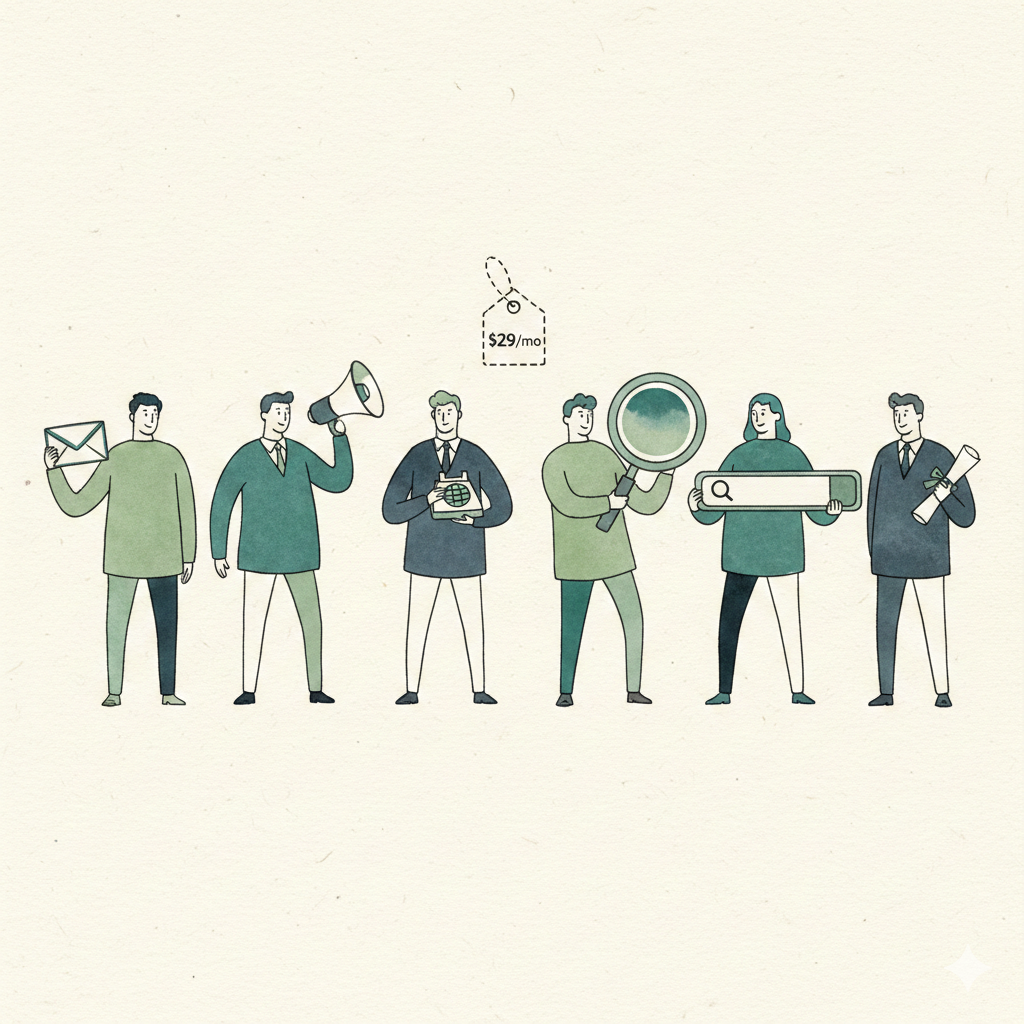
Hiring is slow and expensive. What if you could fill 6 roles with AI employees the same day? Learn how AI staffing is replacing traditional hiring for small businesses.
13 min read
ReadAmi Palan went to dinner with a friend who'd just expanded her business. Her team was responding on Slack at 10 PM — every single one of them turned out to be an AI agent. The tweet went viral.

It was a regular dinner. Two friends catching up. One had recently expanded her business — more clients, more moving parts, more to manage.
Mid-dinner, she pulls out her phone. Slack notifications. Her team is active — messages going back and forth, tasks being picked up, replies firing instantly. It's nearly 10 PM on a weeknight.
Her friend, Ami Palan, watches this and thinks: Wow, her team is dedicated. She even compliments her management skills.
Then, casually — almost as an afterthought — the friend reveals the truth.
Every single team member on that Slack channel was an AI agent. Not one human.
Ami posted the story on X that same night. Within hours, the tweet had been viewed over 68,700 times. The replies flooded in — people asking what platform, how it works, whether it was real. The follow-up answered the biggest question:
The platform was Dooza — an AI-native company that builds AI products and services for small businesses, including the Dooza Workforce app with autonomous AI employees for email, social media, phone calls, lead generation, SEO, and legal work. The friend had deployed a full team of AI agents for her expanding business.
The detail that struck people wasn't the technology itself — it was how normal it looked.
The Slack messages looked like any team conversation. The AI agents were responding contextually, handling tasks, coordinating work. There was nothing robotic about the exchange. Ami didn't realise they were AI until her friend told her.
And the business owner didn't frame it as a tech achievement. She mentioned it the way someone mentions switching to a new accounting software — it's just how things run now. The casualness of the reveal is what makes the story so striking.
This wasn't a startup founder showing off a proof-of-concept. This was a business owner who had expanded her operations, needed a team, and chose AI agents over hiring. It was a practical decision, not an ideological one.
“Been thinking about it ever since.”
— Ami Palan
Everyone has heard about AI by now. Most people have tried ChatGPT, used Copilot, or at least seen a demo. But there's a psychological gap between “AI can write a paragraph for you” and “AI is running an entire business operation at 10 PM while the founder eats dinner.”
This tweet closed that gap. It moved AI from theoretical to tangible — not through a product demo or a keynote speech, but through a dinner conversation between two friends.
The reason it resonated is simple: people saw themselves in the story. Every small business owner who has replied to emails at midnight, forgotten to post on social media for weeks, or missed a customer call because they were in a meeting — they saw what the alternative looks like.
Not a future alternative. A current one. Already deployed. Already working. In India.
The conversation around AI in business has largely been driven by Silicon Valley — billion-dollar models, enterprise deployments, abstract roadmaps. This tweet grounded it. A real business. A real dinner. A real team of AI agents.
India has over 65 million MSMEs — micro, small, and medium enterprises that form the backbone of the economy. Most operate with skeleton teams. The founder is often the CEO, the marketer, the customer support rep, and the accountant rolled into one.
Hiring is expensive relative to revenue. A social media manager, an email administrator, a receptionist, an SEO specialist, a sales representative, and a legal assistant would collectively cost ₹1.75 to 2.95 lakh per month. For most MSMEs, that's not a budget line — it's a fantasy.
AI workforce apps like Dooza Workforce are changing that equation. For a small fraction of that payroll, a business owner gets six AI employees that handle each of those functions autonomously, starting with a refundable pilot (100% refund within 14 days; see pricing). They work around the clock. They don't take leave. They respond instantly.
Indian entrepreneurs in cities like Bangalore, Mumbai, Delhi, Hyderabad, and Pune are early movers. They're not waiting for AI to become mainstream — they're deploying it now, while competitors are still debating whether to try ChatGPT.
The tweet from Ami Palan is a snapshot of this shift. It's not about the technology being impressive — it's about the technology being invisible. The AI agents blended in so naturally that Ami took them for a dedicated human team.
That's the inflection point. Not when AI becomes powerful — but when it becomes unremarkable.
Y Combinator president Garry Tan has been calling them “20X companies” (a phrase coined by GigaML’s founders): tiny teams that beat incumbents many times their size by automating every internal function with AI. Companies like GigaML, Legion Health, and Phase Shift are proving the model works.
But those are elite YC-backed startups with engineering teams. What the dinner story suggests is something more significant: the 20X model is already trickling down to regular businesses. No venture capital. No engineering team. Just a founder, a platform, and a team of AI agents that reply on Slack at 10 PM.
The question is no longer whether AI employees work. It's how long until the businesses that don't use them can't compete with the ones that do.
As Ami wrote: she's been thinking about it ever since. Based on the 68,700 people who viewed that tweet, she's not the only one.
Yes. The tweet was posted by Ami Palan (@markmeyourze) on February 17, 2026, and had over 82,000 views as of October 7, 2026. The follow-up tweet confirms the business uses Dooza.ai.
AI employees are autonomous software agents that handle specific business functions — email, social media, phone calls, lead generation, SEO, and legal compliance — without human intervention. Unlike chatbots, they work on schedules and take action proactively.
AI employees handle the repetitive, operational work — the 80% that keeps business owners buried. Strategy, relationships, and creative decisions remain with the founder. The result is a business that operates 24/7 with a fraction of the overhead.
Hiring six human employees for email, social media, SEO, phone, sales, and legal would cost ₹1.75–2.95 lakh/month in India. An AI workforce app like Dooza Workforce covers all six roles for a small fraction of that; pricing depends on the product, and every Dooza product starts with a refundable pilot (100% refund within 14 days).
No. The business in the tweet had just expanded — it wasn't described as a tech company. AI employees are being used by real estate agents, doctors, retailers, consultants, coaches, and service businesses across India.
Hiring is slow and expensive. What if you could fill 6 roles with AI employees the same day? Learn how AI staffing is replacing traditional hiring for small businesses.
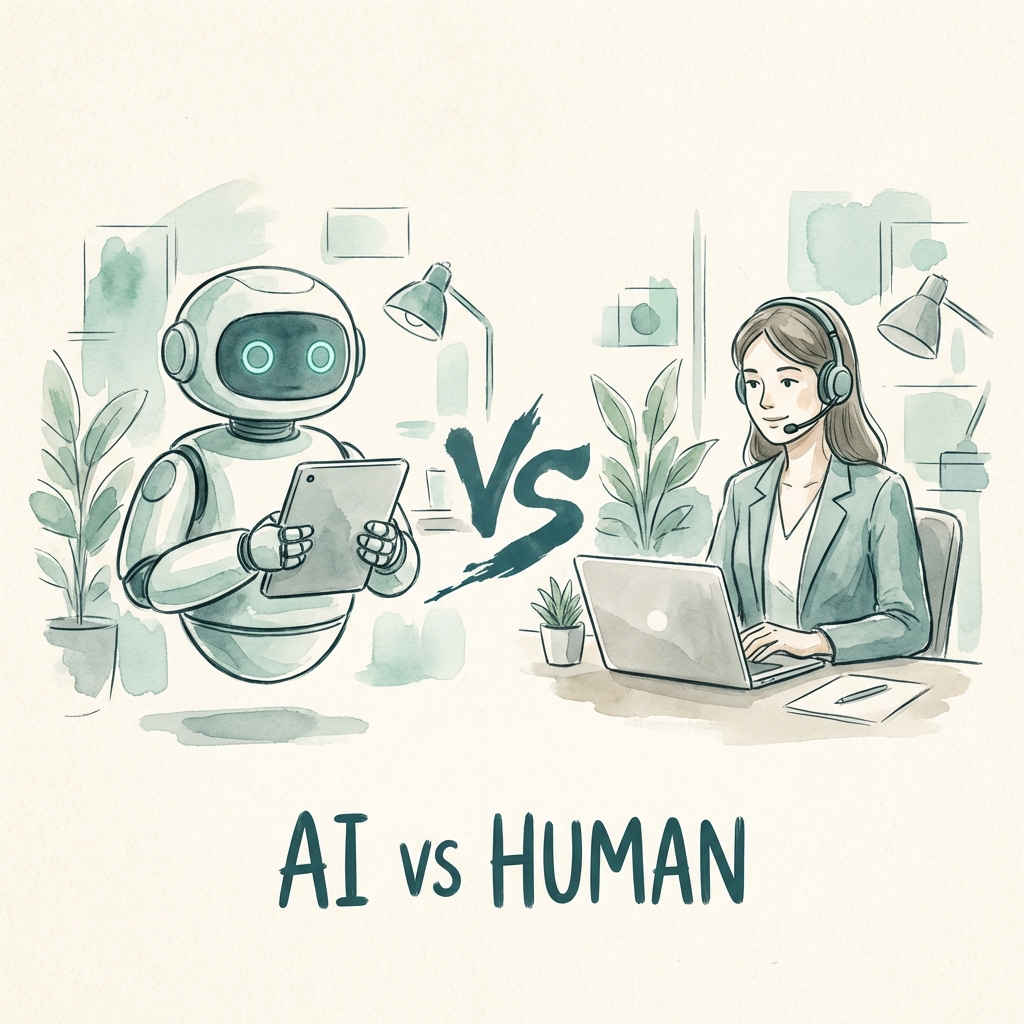
Comparing AI employees to human virtual assistants? Discover the pros, cons, costs, and when to use each—plus why a hybrid approach might be your best option.
Start with a refundable pilot — 100% refund within 14 days. A Dooza engineer scopes it with you on a free 30-minute call. Pricing depends on the product; see pricing.
Refundable pilot · 100% refund within 14 days · No contracts