Introduction
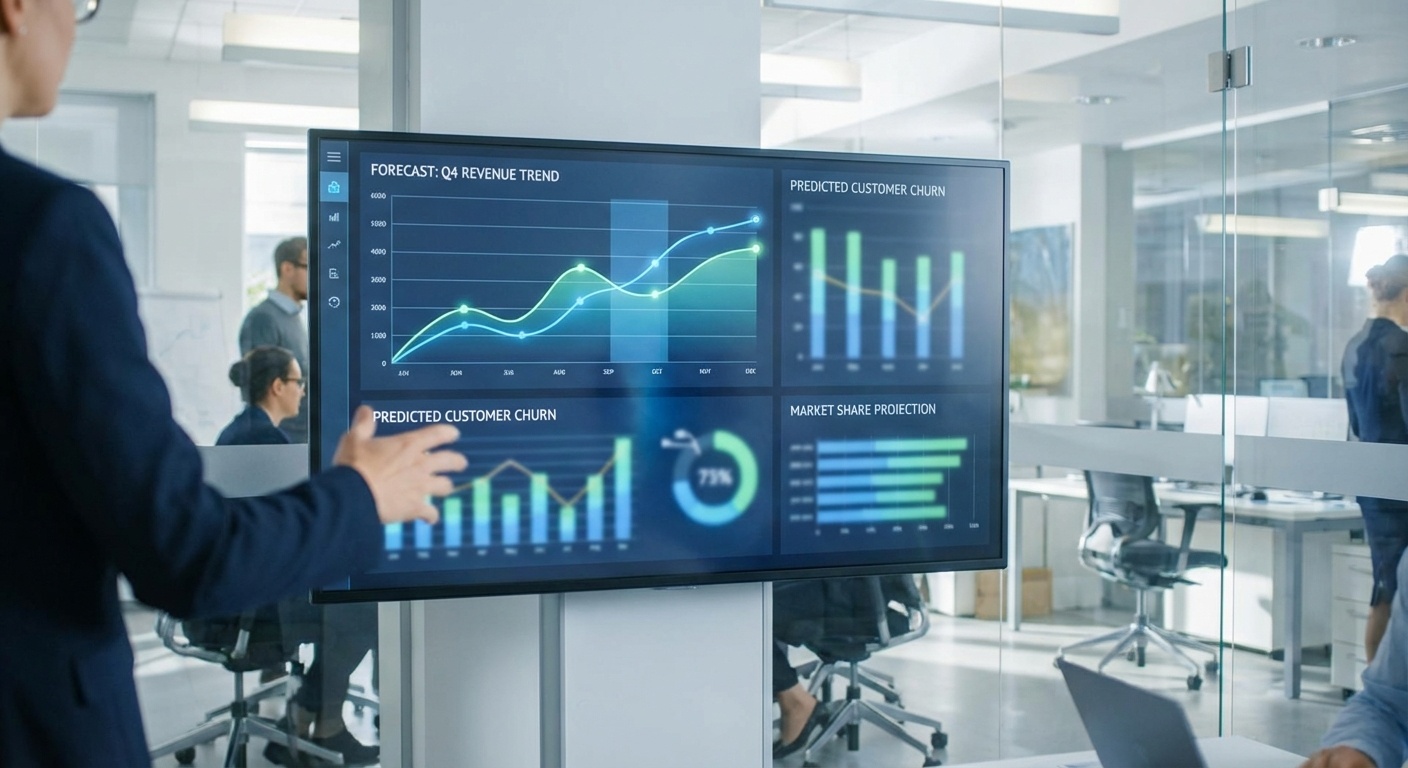
In today's fast-paced business environment, guessing is no longer a viable strategy. Predictive analytics has emerged as a game-changer, enabling businesses to forecast trends, understand customer behavior, and make data-driven decisions with unprecedented accuracy.
In this article, we'll explore how predictive analytics works, why it matters, and how your business can leverage it to stay ahead of the competition.
What is Predictive Analytics?
Predictive analytics uses historical data, statistical algorithms, and machine learning techniques to identify the likelihood of future outcomes. Rather than looking at what happened in the past, it answers the question: "What is likely to happen next?"
By analyzing patterns in existing data, businesses can predict:
- Customer churn probability
- Demand forecasting for products and services
- Potential equipment failures
- Market trend shifts
- Credit risk assessment
Key Benefits of Predictive Analytics
1. Improved Decision-Making
Replace gut feelings with data-backed insights. Predictive analytics provides actionable forecasts that help leaders make informed decisions about inventory, staffing, marketing spend, and more.
2. Reduced Risk
Identify potential problems before they occur. Whether it's detecting fraudulent transactions or anticipating supply chain disruptions, predictive models act as an early warning system.
3. Enhanced Customer Experience
Understand your customers better than ever. Predict what they need, when they need it, and how they want it delivered. This enables personalized experiences that drive loyalty and retention.
4. Cost Optimization
Reduce waste and improve efficiency. Predict demand accurately to optimize inventory, forecast staffing needs, and allocate resources where they matter most.
Common Use Cases in 2026
Retail & E-Commerce
Predictive analytics helps retailers optimize inventory, personalize recommendations, and forecast seasonal demand. Companies like Amazon use these models to predict what products you'll buy next.
Healthcare
From predicting disease outbreaks to identifying patients at risk for certain conditions, healthcare providers are using predictive analytics to improve patient outcomes and reduce costs.
Financial Services
Banks use predictive models to assess credit risk, detect fraud, and identify cross-sell opportunities. It's transforming how financial institutions manage risk and serve customers.
Manufacturing
Predictive maintenance has revolutionized equipment management. By analyzing sensor data, manufacturers can predict when machines need maintenance—before they break down.
Getting Started with Predictive Analytics
1. Define Your Business Question
Start with a specific problem. Do you want to reduce customer churn? Predict demand? Identify fraud? Clear objectives lead to better predictive models.
2. Gather Quality Data
predictive models are only as good as the data they're built on. Ensure your data is clean, accurate, and relevant. This includes customer data, transaction history, and operational metrics.
3. Choose the Right Tools
Modern predictive analytics platforms make it accessible to businesses of all sizes:
- Google Analytics - Predicts user behavior and conversion probability
- IBM Watson - Enterprise-grade predictive analytics
- Salesforce Einstein - Predictive CRM for sales and service
- Microsoft Azure ML - Build and deploy custom models
4. Start Small
Don't try to predict everything at once. Begin with one use case, measure results, and expand from there. Quick wins build momentum and demonstrate value.
5. Monitor and Refine
Predictive models need ongoing maintenance. As conditions change, models must be retrained and updated to maintain accuracy.
The Future of Predictive Analytics
In 2026, predictive analytics is becoming more accessible thanks to:
- AI-powered automation - Automated machine learning reduces the need for data scientists
- Real-time processing - Instant predictions enable immediate action
- Natural language queries - Ask questions in plain English and get insights
- Edge computing - Process data locally for faster responses
Conclusion
Predictive analytics is no longer a luxury for big corporations. Every business can now access tools and platforms that make forecasting accessible and affordable.
Whether you're a small retailer or a growing startup, predictive analytics can help you make smarter decisions, reduce risk, and deliver better customer experiences.
The businesses that embrace predictive analytics today will be the ones leading their markets tomorrow. Start small, think big, and let data guide your decisions.
Ready to Start Your Pilot?
Automate your business with AI employees that work 24/7. Start with a refundable pilot: 100% refund within 14 days.