Ecommerce Support
AI Order Status Support Automation for Online Stores
AI order status support automation helps online stores respond to where-is-my-order requests with context, policy, and escalation rules.
12 min read
ReadCompare ecommerce customer service outsourcing vs AI in 2026. See real costs, response times, and which approach fits your online store best.
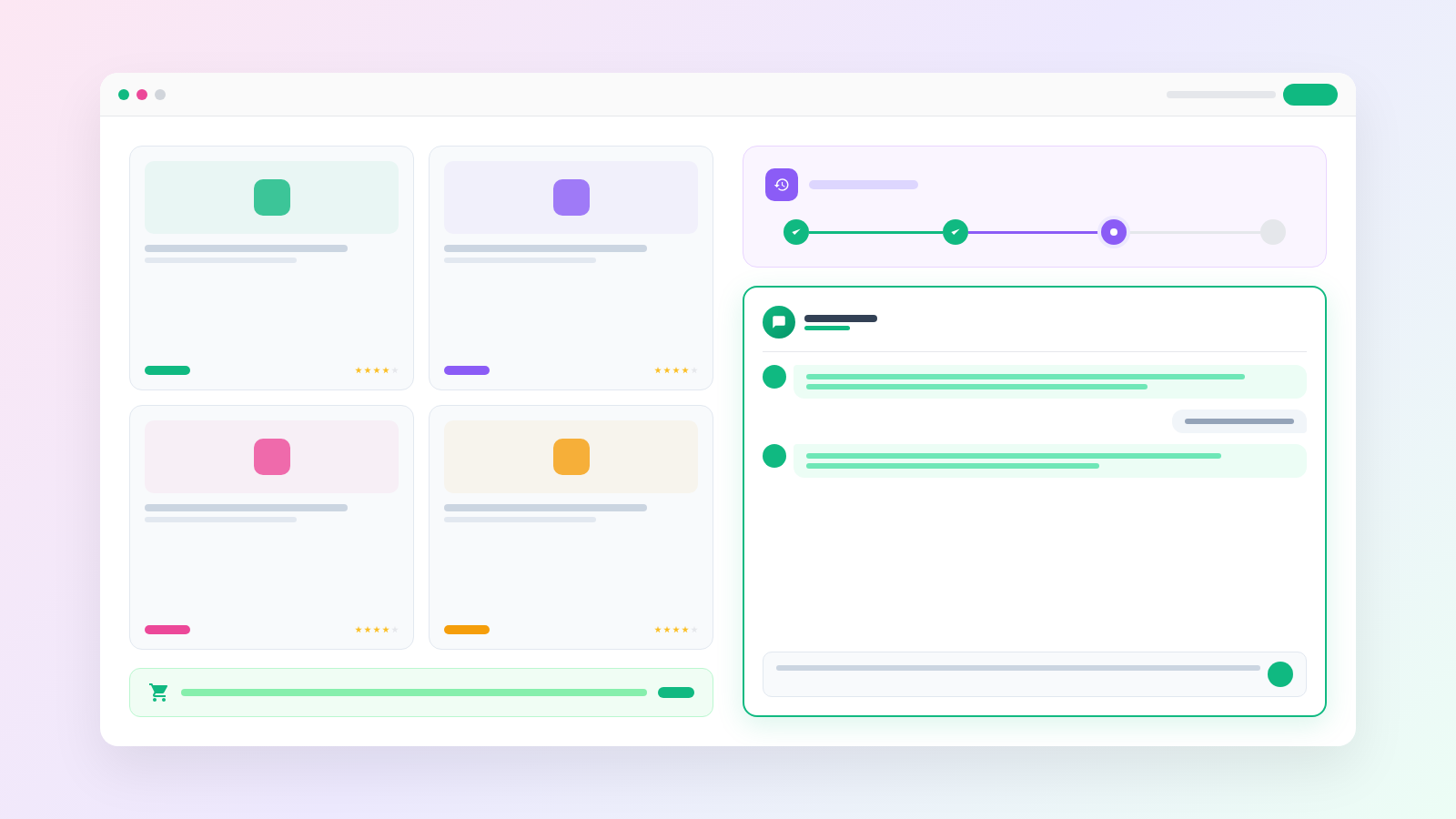
Ecommerce customer service outsourcing is the practice of hiring an external team or deploying AI to handle buyer inquiries, order issues, and post-purchase support for your online store. Zendesk research shows that 61 percent of customers will switch to a competitor after just one bad support experience. For ecommerce brands running on thin margins, every lost customer compounds fast. The question is whether help should come from an outsourced team or an AI support agent.
Ecommerce support is uniquely suited to automation because ticket patterns are highly predictable. Unlike B2B support where every issue differs, ecommerce queries cluster around a small set of topics that repeat thousands of times.
Ecommerce customer service has three characteristics that set it apart. First, roughly 60 percent of all tickets are about order status, shipping, and returns. These are repetitive, data-driven queries that follow the same pattern every time. Second, volume spikes are extreme. Black Friday and flash sales can triple ticket volume overnight. Third, ecommerce operates across multiple channels including website chat, email, social DMs, and marketplace messaging.
These traits create a specific challenge. Outsourcing works, but staffing up for peaks is slow. An outsourced team needs 4 to 6 weeks to hire and train. By the time they are ready, the spike may be over. AI-powered support scales instantly without staffing cycles, which is why ecommerce brands are adopting it faster than any other industry.
Here are the specific tasks that can be handled by outsourced agents or AI, ranked by automation potential:
Together these represent 80 to 85 percent of ecommerce support volume. An AI agent handles them without human intervention, freeing your team for damaged goods, fraud claims, and VIP issues.
Outsourcing ecommerce support means $8 to $15 per hour per offshore agent with minimums and contracts. Dooza replaces that model with an AI employee built for ecommerce workflows.
Pricing depends on the product, and every Dooza product starts with a refundable pilot — 100% refund within 14 days. See pricing for details. The AI connects directly to Shopify, WooCommerce, and other platforms to pull order data and process returns in real time.
During peak seasons the AI scales automatically. No hiring, no training, no overtime. When volume drops, you are not paying for idle agents. For a store processing 500 to 2,000 orders per month, Dooza handles support at a fraction of what one outsourced agent would cost.
Track these ecommerce-specific metrics:
This video demonstrates building a customer support AI for an ecommerce store, covering product catalog integration, order tracking, and choosing the right AI approach for your store size.
Ecommerce support is one of the best use cases for AI because queries are predictable, data-driven, and high-volume. Paying $1,500 per month per agent to answer "where is my order" a thousand times no longer makes sense. Start a refundable Dooza pilot (100% refund within 14 days) and let AI handle routine ecommerce tickets while your team focuses on cases that actually need a human touch.
Around 60 to 70 percent of ecommerce support tickets are routine queries about order status, shipping, returns, and product availability. These are ideal for AI automation. The remaining 30 to 40 percent involve complex issues like damaged goods or payment disputes that benefit from human attention.
Outsourcing ecommerce support typically costs $8 to $15 per hour for offshore agents or $15 to $25 per hour for nearshore teams. Most providers require 3 to 5 agent minimums and 6 to 12 month contracts. AI alternatives like Dooza have no minimums or lock-in and start with a refundable pilot (100% refund within 14 days).
Yes. Modern AI agents connect to your order management system and can process returns, initiate refunds, generate return labels, and update customers on refund status automatically. They follow your refund policy consistently without the judgment variance you get from different human agents.
AI scales instantly without hiring or training. During Black Friday or holiday rushes, AI handles the surge in order tracking and return queries without additional cost. Outsourced teams require 4 to 6 weeks advance planning to staff up and you still pay for idle agents when volume drops.
For most Shopify stores, AI is the better starting point. It handles high-volume routine queries instantly, costs a fraction of outsourced support, and integrates directly with your Shopify backend. Add human agents only for complex escalations like damaged product claims.
Most ecommerce businesses can deploy AI support within 1 to 3 days. The AI ingests your product catalog, shipping policies, and FAQ content, then starts handling queries immediately. Fine-tuning based on real interactions takes 2 to 4 weeks but the agent is functional from day one.
Automate your business with AI employees that work 24/7. Start with a refundable pilot: 100% refund within 14 days.
AI order status support automation helps online stores respond to where-is-my-order requests with context, policy, and escalation rules.
Learn how to automate customer support with AI using support categories, approval rules, connected tools, and Dooza AI deployment services.
Start with a refundable pilot — 100% refund within 14 days. A Dooza engineer scopes it with you on a free 30-minute call. Pricing depends on the product; see pricing.
Refundable pilot · 100% refund within 14 days · No contracts