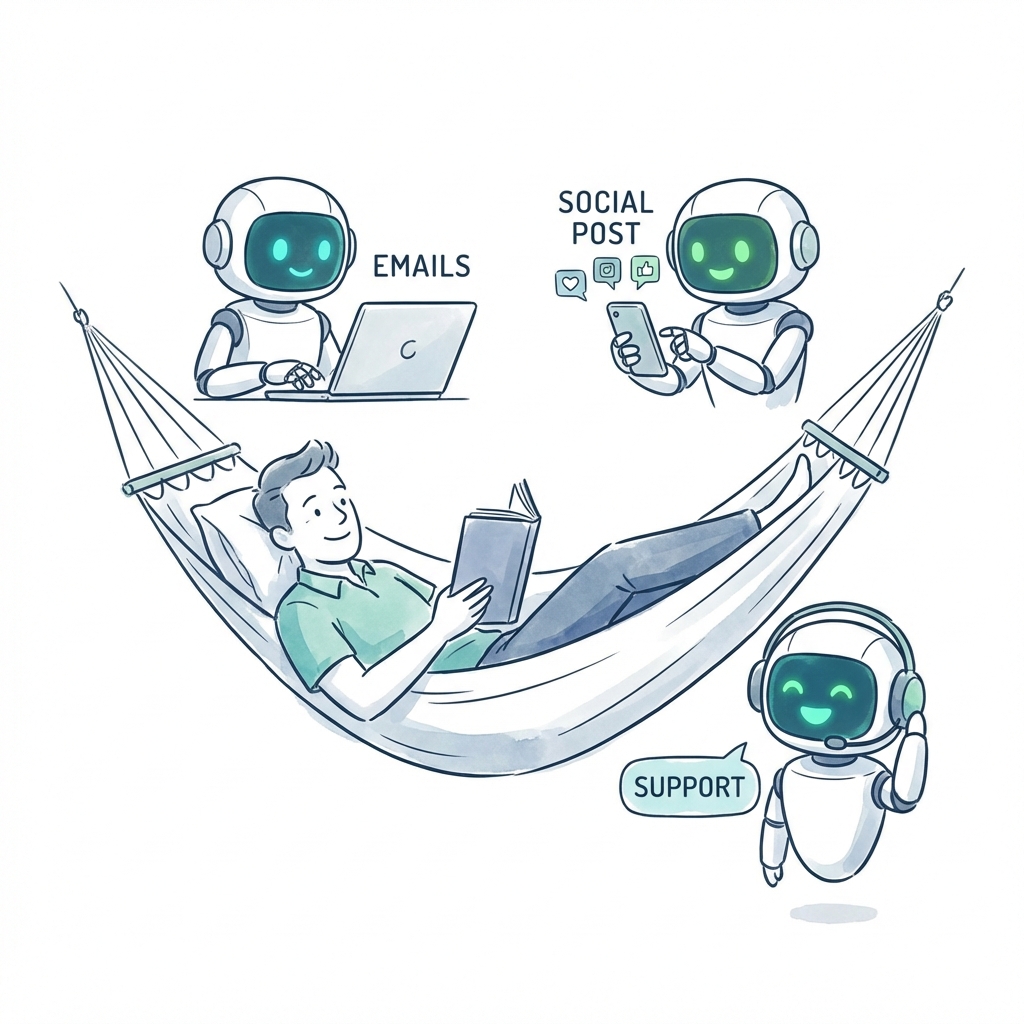
AI Automation
5 Proven Ways AI Employees Save Small Businesses 20+ Hours/Week
Discover how AI-powered employees are helping small businesses automate their daily operations, from email management to social media posting.
7 min read
ReadDiscover real-world AI in ecommerce examples that boost sales, automate support, and save hours. Learn how AI employees can transform your online store today.
Artificial intelligence is no longer a futuristic concept reserved for tech giants. Today, small and medium-sized ecommerce businesses are using AI in ecommerce examples to automate repetitive tasks, personalize shopping experiences, and boost revenue—all while saving countless hours. Whether you run a Shopify store, a WooCommerce site, or a custom online shop, AI can help you work smarter, not harder.
In this post, we’ll explore seven powerful AI in ecommerce examples that you can implement right now. From AI customer support agents that never sleep to intelligent lead generation systems, you’ll see how real businesses are leveraging AI to stay ahead. And the best part? You don’t need a technical degree to get started.
Let’s dive into the first example that every ecommerce store needs.
One of the most impactful AI in ecommerce examples is using AI agents for customer support. Imagine a virtual employee that answers questions about order status, returns, shipping times, and product details 24/7—without coffee breaks or overtime pay.
As explained in the video From Zero to Your First AI Agent in 25 Minutes, an AI agent is different from a simple automation. While an automation follows a fixed rule (e.g., “send an email every morning”), an AI agent can reason and adapt. For example, if a customer asks, “Will this dress arrive before my sister’s wedding on Friday?”, an AI agent can check the order status, calculate shipping times, and even suggest expedited shipping if needed.
This kind of intelligent support reduces your team’s workload and increases customer satisfaction. Dooza’s AI employees are designed to handle these interactions naturally, integrating with your existing helpdesk or chat system.
“AI agents are like digital employees that can think, remember, and get things done.” — From the video transcript
Key benefits:
Another powerful AI in ecommerce example is using AI to generate and qualify leads automatically. Instead of manually sifting through contact forms, an AI employee can engage website visitors, ask qualifying questions, and even schedule appointments directly on your calendar.
For instance, a Dooza AI employee can start a conversation with a visitor who browses your pricing page. It can ask about their needs, recommend products, and if they’re ready to buy, guide them to checkout. If they need more time, the AI can schedule a follow-up call with your sales team.
This approach has helped businesses increase lead conversion rates by over 40%. And because the AI learns from each interaction, it gets better over time. Deploying an AI lead generation agent takes just minutes and requires no coding.
Content marketing is essential for ecommerce, but creating product descriptions, blog posts, and social media updates is time-consuming. AI can generate high-quality, SEO-optimized content in seconds.
Consider this: you have 500 products in your store. Writing unique descriptions for each could take weeks. An AI content agent can produce compelling, keyword-rich descriptions that rank well on search engines. It can also write blog posts about your niche, answer common customer questions, and even generate email newsletters.
One of the best AI in ecommerce examples is using AI to create “how-to” guides and buying guides that attract organic traffic. For example, a furniture store could publish “How to Choose the Perfect Sofa” — written entirely by AI — and see a significant boost in search rankings.
Dooza’s AI employees specialize in content creation and SEO. Check out our blog for more tips on using AI for content marketing.
Ever wonder how Amazon suggests products you actually want to buy? That’s AI at work. Personalized recommendations can increase average order value by 20-30% and improve customer loyalty.
AI analyzes a customer’s browsing history, past purchases, and even items in their cart to suggest complementary products. For example, if someone buys a camera, the AI can recommend a memory card, a camera bag, and a tripod. This not only boosts sales but also enhances the shopping experience.
Small ecommerce stores can now access this technology through platforms like Dooza. Our AI employees integrate with your store’s data to deliver real-time, personalized suggestions without requiring a data science team.
Running out of stock on a bestseller is a nightmare. Overstocking slow-moving items ties up cash. AI can predict demand, optimize inventory levels, and even automate reordering.
Using historical sales data, seasonal trends, and external factors (like holidays or weather), AI forecasts which products will sell and when. This helps you maintain the right stock levels, reduce storage costs, and avoid lost sales.
One AI in ecommerce example is a clothing retailer that uses AI to predict demand for winter coats based on weather forecasts. When a cold snap is predicted, the AI automatically increases orders from suppliers. This kind of proactive management is a game-changer for ecommerce businesses.
Fraud is a growing concern for online stores. AI can analyze transaction patterns in real time to flag suspicious activity. For instance, if a customer tries to place multiple orders from different IP addresses in a short time, the AI can block the transaction and alert your team.
AI fraud detection systems learn from past fraud attempts, becoming more accurate over time. They can reduce chargebacks and protect your revenue. While this might sound complex, many AI platforms offer fraud detection as a built-in feature.
Dooza’s AI employees can monitor transactions and flag anomalies, giving you peace of mind. See our pricing page for plans that include security features.
Finally, AI can automate your marketing campaigns. From email sequences to social media ads, AI can segment your audience, craft personalized messages, and optimize ad spend.
For example, an AI employee can analyze which products a customer viewed but didn’t buy, then send a targeted email with a discount code. Or it can create lookalike audiences for Facebook ads based on your best customers.
This level of automation was once only available to large corporations with big budgets. Now, small ecommerce businesses can leverage AI to run sophisticated marketing campaigns that drive sales.
Ready to implement these AI in ecommerce examples in your store? Sign up for Dooza today and hire your first AI employee.
To truly understand how AI agents can transform your ecommerce business, watch this video tutorial. It explains the difference between simple automations and intelligent AI agents, and shows you how to build your own without writing a single line of code.
The video breaks down the three key components of an AI agent: the brain (large language model), memory (past interactions), and tools (ability to call APIs and access data). This framework is exactly what powers the AI in ecommerce examples we’ve discussed.
You don’t need to be a tech wizard to start using AI in your ecommerce store. Here’s a simple three-step plan:
The future of ecommerce is AI-powered. By adopting these AI in ecommerce examples, you can save time, reduce costs, and grow your revenue. Don’t wait until your competitors get there first.
Get started with Dooza now and experience the power of AI employees that never sleep.
Still have questions? Here are answers to the most common ones about AI in ecommerce.
AI in ecommerce refers to the use of artificial intelligence technologies—like machine learning, natural language processing, and automation—to improve online store operations, customer experience, and sales. Examples include AI chatbots, personalized product recommendations, and automated inventory management.
Costs vary widely depending on the solution. Basic AI chatbots can start at $50/month, while full AI employee platforms like Dooza include all AI employees and start with a refundable pilot (100% refund within 14 days).
AI can handle up to 80% of common support queries, such as order status, returns, and FAQs. However, complex or sensitive issues still benefit from human oversight. The best approach is a hybrid model where AI handles first-line support and escalates when needed.
Not at all. Modern AI platforms like Dooza are designed for non-technical users. You can set up AI employees for customer support, lead generation, and content creation with just a few clicks—no coding required.
The best tools are those that integrate easily with your existing platform (Shopify, WooCommerce, etc.) and offer pre-built templates. Dooza is a top choice because it provides ready-to-deploy AI employees for multiple roles, including support, sales, and content.
Ready to transform your ecommerce store with AI? Get started with Dooza today and see what AI employees can take off your plate.
AI in ecommerce refers to the use of artificial intelligence technologies—like machine learning, natural language processing, and automation—to improve online store operations, customer experience, and sales. Examples include AI chatbots, personalized product recommendations, and automated inventory management.
Costs vary widely depending on the solution. Basic AI chatbots can start at $50/month, while full AI employee platforms like Dooza include all AI employees and start with a refundable pilot (100% refund within 14 days).
AI can handle up to 80% of common support queries, such as order status, returns, and FAQs. However, complex or sensitive issues still benefit from human oversight. The best approach is a hybrid model where AI handles first-line support and escalates when needed.
Not at all. Modern AI platforms like Dooza are designed for non-technical users. You can set up AI employees for customer support, lead generation, and content creation with just a few clicks—no coding required.
The best tools are those that integrate easily with your existing platform (Shopify, WooCommerce, etc.) and offer pre-built templates. Dooza is a top choice because it provides ready-to-deploy AI employees for multiple roles, including support, sales, and content.
Automate your business with AI employees that work 24/7. Start with a refundable pilot: 100% refund within 14 days.
Discover how AI-powered employees are helping small businesses automate their daily operations, from email management to social media posting.
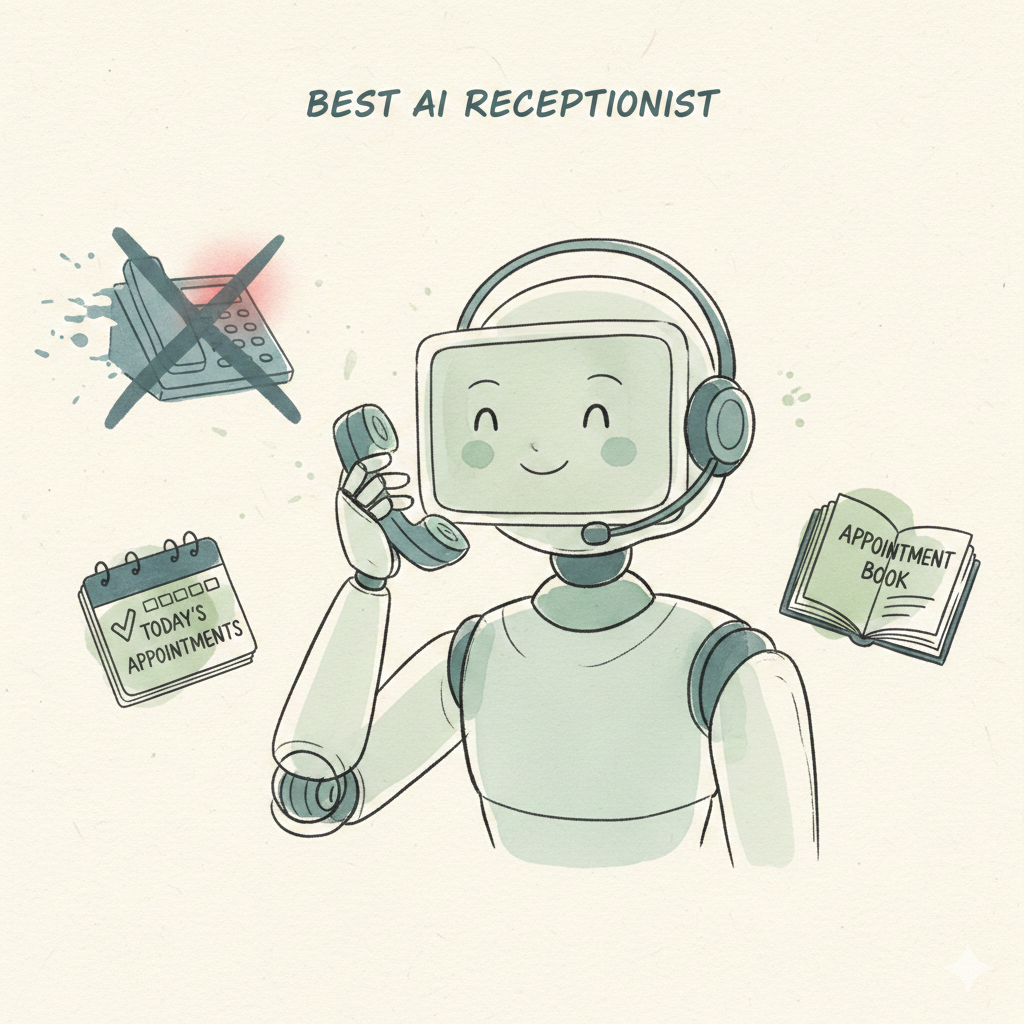
Most callers won't leave a voicemail — they just call your competitor. Discover why an AI receptionist captures more leads, books more appointments, and costs less than a full-time receptionist.
Start with a refundable pilot — 100% refund within 14 days. A Dooza engineer scopes it with you on a free 30-minute call. Pricing depends on the product; see pricing.
Refundable pilot · 100% refund within 14 days · No contracts