AI Education
Her Entire Team Was AI. Nobody Could Tell.
A founder's Slack team was secretly AI at 10 PM. The tweet went viral, and it shows how AI employees are changing small business work.
5 min read
ReadSatya Nadella named the biggest risk businesses using AI are ignoring. The Reverse Information Paradox means you're paying for AI twice — once with money, once with your proprietary knowledge.
Satya Nadella just put a name to something every business using AI should be worried about.
He calls it the Reverse Information Paradox.
The original Information Paradox, described by Nobel economist Kenneth Arrow, is about the seller's risk: you can't sell information without revealing it, and once revealed, the buyer has it for free.
AI flips this. Now the buyer has the problem.
Every time your team uses an AI tool, you're paying for it twice.
First with money. Second with something more valuable — the proprietary knowledge you feed into it to make it useful.
Your prompts. Your corrections. Your workflows. Your customer data. Your pricing strategy. The way you evaluate whether a response is good or bad.
"Every correction is distilled into institutional know-how. It's the kind of knowledge a competitor could never buy, and the kind that leaks almost imperceptibly: trace by trace, correction by correction, eval by eval." — Satya Nadella
The better you want the AI to perform, the more of your business you have to expose. And the model provider learns more about you with every interaction — while you learn nothing about what they're doing with that knowledge.
Satya frames this around enterprises. Microsoft, Palantir, Fortune 500 companies with legal teams and security budgets.
But small businesses are more exposed, not less.
An enterprise can negotiate data processing agreements, deploy models on-premise, hire a team to build trust boundaries. A 15-person agency using ChatGPT to write client proposals? They have no leverage, no visibility, and no fallback.
Think about what a typical small business feeds into AI tools every day:
Every one of these is competitive advantage leaking into someone else's training pipeline.
Satya outlines five things every business needs:
This is the right framework. The question is how to make it real — not just for Microsoft's customers, but for a 10-person marketing agency or a solo founder running a Shopify store.
At Dooza, this is how we've built from day one — not because we read Satya's post, but because we've seen what happens when businesses don't control their AI.
Per-tenant isolation. Every paying customer gets their own dedicated compute environment. Your data, conversations, agent memory, and workflows don't share infrastructure with anyone else. It's not a shared database with row-level security — it's a hard boundary.
Model independence. Our AI employees work across model providers. If one goes down, gets expensive, or changes their terms, your agents keep running. Your institutional knowledge — the brand voice, the approval patterns, the customer context — stays with you, not with any one model.
Your agents learn your business. When you train Ranky on your SEO strategy or teach Maily how you handle customer complaints, that learning stays inside your tenant. It compounds over time. It doesn't become someone else's training data.
Workflow automation you own. Our workflow platform runs in your boundary. The automations, the data flows, the triggers — they're yours. Not a feature of someone else's SaaS that disappears when you cancel.
This isn't about being paranoid. It's about treating your business knowledge the way you treat any other asset — with clear ownership and deliberate control over who gets to learn from it.
Satya's post is a signal. When the CEO of Microsoft publicly says the current regime "does precisely the transfer that companies fear," the market is about to shift.
Businesses that build their own trust boundaries now will compound their AI advantage. Businesses that keep feeding everything into shared models will wake up one morning and realize their competitive knowledge has been diluted across every competitor using the same tools.
The question isn't whether to use AI. It's whether the AI is working for you — or you're working for the AI.
Dooza builds AI employees that work inside your business boundary — per-tenant isolated, model-independent, and designed to compound your knowledge, not leak it. Book a free pilot call to see how it works.
The Reverse Information Paradox is a concept named by Satya Nadella. The original Information Paradox (Kenneth Arrow, Nobel Prize) is about the seller's risk — you can't sell information without revealing it. AI flips this: now the buyer has the problem. Every time you use an AI tool, you feed it your proprietary knowledge (prompts, corrections, workflows, customer data), and the model provider keeps the lesson. You're paying for AI twice — once with money, once with your institutional knowledge.
Small businesses are more exposed than enterprises. A 15-person agency using ChatGPT to write client proposals has no leverage, no visibility into data usage, and no fallback. They feed client strategies, pricing, communication patterns, and SOPs into AI tools daily. Unlike enterprises, they can't negotiate data processing agreements or deploy models on-premise. Every interaction is competitive advantage leaking into someone else's training pipeline.
A trust boundary is the perimeter within which your business data, AI learning, and workflows stay under your control. Satya Nadella outlines five components: Control (own your evals, memory, and feedback loops), Capability (train models inside your boundary), Choice (don't lock into one provider), Cost (decouple orchestration from any single vendor), and Compound (create a continuous learning loop that benefits your firm, not someone else's).
Dooza uses per-tenant isolation — every customer gets their own dedicated compute environment with a hard boundary. Your data, conversations, agent memory, and workflows don't share infrastructure with anyone else. Dooza also supports model independence, so your institutional knowledge stays with you regardless of which AI model you use. Your agents learn your business, and that learning compounds inside your tenant, not in someone else's training data.
Automate your business with AI employees that work 24/7. Start with a refundable pilot: 100% refund within 14 days.
A founder's Slack team was secretly AI at 10 PM. The tweet went viral, and it shows how AI employees are changing small business work.
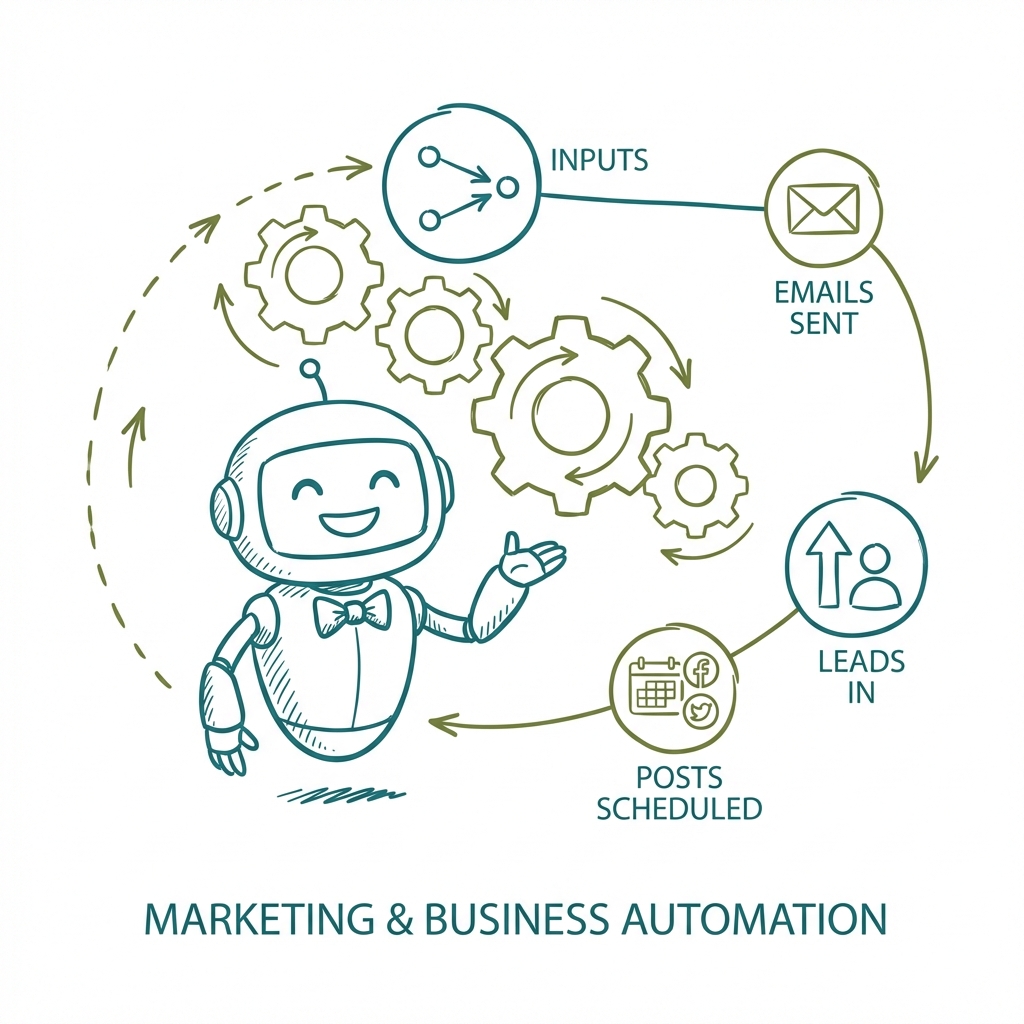
Compare the best email automation tools for small businesses and see why Dooza wins for inbox triage, smart replies, lead follow-up, pricing, and full business automation.
Start with a refundable pilot — 100% refund within 14 days. A Dooza engineer scopes it with you on a free 30-minute call. Pricing depends on the product; see pricing.
Refundable pilot · 100% refund within 14 days · No contracts