AI Automation
5 Proven Ways AI Employees Save Small Businesses 20+ Hours/Week
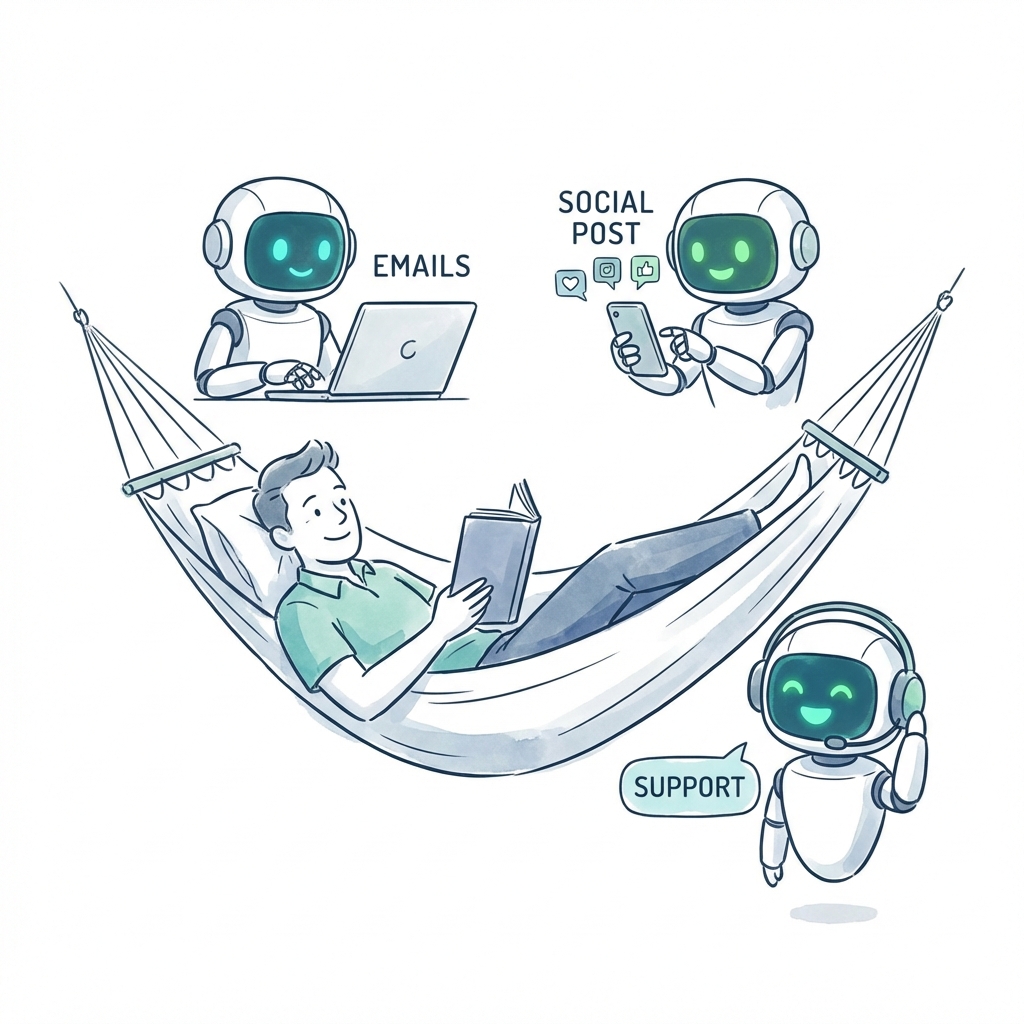
Discover how AI-powered employees are helping small businesses automate their daily operations, from email management to social media posting.
7 min read
ReadLearn how to improve customer satisfaction in 2026 with proven tactics, AI workflows, and measurement playbooks that drive real CX results.

Your support queue is moving faster than it did last quarter, but the dashboard still looks wrong. Replies are quicker, agents are friendlier, and tickets are closing, yet CSAT keeps drifting because the customer isn't judging only speed. They're judging whether the issue was easy, whether the promise held, and whether they had to come back again.
That's the trap many teams sit in right now. They treat customer satisfaction like a frontline service problem, then wonder why a faster queue doesn't fix the experience. The practical path is simpler, but it's stricter, measure the right touchpoints, close the loop after resolution, remove effort across the journey, and use AI employees to do work end to end instead of just deflecting chats.
A support manager opens the weekly report and sees the trend lines in the wrong direction for the right reasons. First response time is down, the backlog looks cleaner, and the team is working harder than ever, yet satisfaction keeps softening because the friction never left the customer journey. Support gets measured like a finish line, while the customer experiences it as recovery work.
Customer satisfaction is most useful when it is tied to a specific interaction, not treated as a vague brand mood. Industry guidance points toward measuring at touchpoints such as checkout, onboarding, or support resolution, then acting quickly on negative feedback so teams can fix broken flows, slow response times, or unclear instructions before frustration spreads. A response within 24 to 48 hours matters here, because early follow-up often catches the issue while it is still concrete, not generalized resentment. Qualaroo's guidance on improving customer satisfaction makes that operational connection explicit.
Support can feel faster and still leave the customer with more work. If checkout is confusing, if onboarding leaves steps unexplained, or if resolution requires a second contact, the customer remembers the effort, not the speed of the first reply. That is why strong programs treat satisfaction as end-to-end experience management, with direct attention to proactive outreach, omnichannel continuity, and self-service handoffs. Kustomer's CSAT guidance captures that shift well.
Practical rule: if the customer had to repeat themselves, chase an update, or guess the next step, the experience was not really resolved.
A live support queue shows the same pattern every day. An AI first response can acknowledge the issue, collect context, and route the case without making the customer start over, and Dooza's AI first response automation approach fits that kind of workflow. But when automation stops at “we answered the chat,” satisfaction can still fall because the journey stayed broken.
The operating model follows a simple sequence, measure the right moment, fix the cause, verify the result, and then scale the change.
A single score doesn't tell you enough. CSAT, NPS, and CES answer different questions, so the move is to build a measurement stack around the touchpoint, the relationship, and the effort involved. CSAT tells you how a specific interaction landed, NPS reflects the longer relationship, and CES shows how hard the task felt.

Run CSAT on transactional touchpoints like checkout, support resolution, onboarding, or delivery. Use NPS when you want to understand relationship health and loyalty over time. Use CES when the question is effort, because customers usually don't mind a problem if it was easy to solve. A practical benchmark some guidance uses is at least 80% satisfied responses on CSAT. Qualaroo's CSAT guidance is one of the places that benchmark appears.
The timing matters as much as the metric. Collect enough data to see patterns, typically 2 to 3 weeks for a touchpoint view, and re-run surveys every quarter if you want to know whether the experience is improving. That cadence keeps you from mistaking a quiet week for a solved problem.
Measure the experience where it happened, not where it was easiest to report it.
The dashboard shouldn't just show the score. It should show who owns the issue, what touchpoint it came from, and which operational team can move it. A low CSAT tied to checkout belongs with product and operations, not just support. A bad onboarding score needs the team that owns first-use setup, not only the people replying to tickets.
Post-interaction micro-surveys outperform broad relationship surveys for root-cause work, because they isolate one moment instead of forcing you to infer the cause from a vague quarterly result. SmartSurvey's VoC workflow guidance aligns with that closed-loop approach, and it's also why support leaders should read daily summaries, not just monthly rollups, such as the approach described in Dooza's support reporting guide.
A support team can collect feedback all day and still miss the point if nothing changes after the survey comes back. A spreadsheet full of comments is not a workflow. A closed-loop Voice of Customer process turns feedback into owners, deadlines, follow-up, and a second measurement that shows whether the fix held.
The loop is simple enough to run in live operations. Capture feedback at the right touchpoint, tag and cluster the themes, sort issues by frequency, severity, and business impact, assign a named owner, make the change, and then measure the same metric again after launch. That is the point where sentiment becomes operational work instead of another report that sits untouched in a folder. Teams that need a practical example of how that handoff fits into service operations can also read about customer support workflow automation, because the workflow only works when the steps are owned and repeatable.
Strong VoC programs start with the actual jobs customers are trying to complete. I'd rather see a team replay onboarding, billing help, or a standard resolution path end to end than debate dashboard theory, because the friction usually hides in the handoffs, exceptions, and confusing steps that look fine in a report but feel clumsy in practice. Drive Research's customer journey guidance points in that direction, and customer walkthroughs usually surface more than a stack of survey comments.
Operational discipline matters here. If a complaint appears once, it may be noise. If the same complaint shows up across multiple interactions, in the same flow, at the same point of confusion, it needs a fix with a named owner and a deadline. B2B International makes the same case in its improvement framework, identify what is driving satisfaction, form workgroups, get approval, and use simple measures to confirm the change. B2B International on improving customer satisfaction lays out that structure clearly.
A useful VoC queue does not treat every angry message as equal. Frequency matters. Severity matters. Business impact matters more than the loudest complaint in the room. If billing confusion keeps coming up, that is usually more important than a one-off escalation from an edge case.
The same discipline applies to the feedback process itself. If your team wants a practical companion for the admin side, you can find feedback management tips that help keep the loop moving after the first survey round. The goal is not to collect more commentary, it is to keep the same issue from resurfacing in the next quarter.
The win is not “we heard the customer.” The win is “we fixed the thing that kept making them call back.”
If the team does not own the fix, the score will not move in any meaningful way, even when the survey looks polished and the dashboard looks busy.
The fastest satisfaction gains usually come from removing the stupid friction first. Long waits are one of the quickest ways to erode satisfaction, even when the final answer is correct. If the queue is backed up, the customer feels it before they ever judge the quality of the resolution.

The order of work matters. Fix response-time outliers first, because they are the most visible source of frustration. Then give agents authority for common exceptions, start evidence-based coaching, and move on to the contact drivers that keep creating avoidable tickets.
Kaizo's operating guidance is unusually useful because it gives you a working sequence. Kaizo's customer service performance framework puts response-time outliers in the first pass, common exceptions in the first week, coaching in the first month, and contact-driver reduction after that.
That sequence prevents a common trap. If you coach before you remove the biggest delay, you end up refining a broken flow. If agents still have to escalate routine exceptions, customers carry extra effort and the queue stays heavier than it needs to be. The teams that move satisfaction fastest remove the cases that need special handling before they polish how those cases are handled.
Expectation-setting is one of the highest-return changes because missed timelines feel like poor service even when the underlying product is fine. Clear status updates, explicit next steps, and proactive outreach do a lot of the work here. Customers usually do not need instant resolution, they need to know what happens next and when to expect it.
A support system also gets easier when simple issues are handled without a live agent. Searchable help content, task-based guides, and self-service handoffs reduce repeat contact and keep the customer from re-explaining the same issue. Contentsquare's customer satisfaction techniques covers that balance well, especially the warning that over-automation can create more frustration if it adds steps instead of removing them.
Practical rule: if a help article does not fully complete the job, it is a detour, not self-service.
The dashboard for this work should stay lean, CSAT for experience, IQS for quality, first response time for speed, and repeat-contact rate for efficiency. That mix tells you whether the team is reducing effort, not just replying faster. Kaizo's customer service performance framework puts those metrics together as an operating model, and how to improve operational efficiency is the right place to connect that metric set to workflow design.
Most advice on how to improve customer satisfaction stops at the reply. That's too early. Customers judge the brand by whether the promise was kept, whether the next step was clear, and whether they had to contact support again to finish the same issue.
A short micro-survey after resolution is useful, but the value comes from what you track beside it. If the same issue triggers a second contact, that's a follow-through problem, not just a sentiment problem. If the customer says the answer was fine but the process was confusing, the root cause lives in workflow design, not tone.
Many teams misread satisfaction. A polite agent can still leave the customer carrying the burden of the process. That's why post-resolution feedback should be tied to whether promises were met, next steps were explained, and repeat effort was prevented. Drive Research is right to push customers and teams back toward the journey, not just the score.
The goal is to move from “we resolved the ticket” to “we removed the thing that kept making tickets.” That's the difference between a temporary dashboard win and a durable customer experience improvement.
AI can make support feel immediate, or it can make it feel colder and more exhausting. The difference is not whether automation exists, it's where it stops. Routine billing, password resets, and order updates are good candidates for autonomous handling, while emotionally charged, ambiguous, or high-value cases need a quick human handoff.
This is the core trade-off. Automation reduces effort when it removes repeated steps, surfaces the right context, and resolves the common case without forcing a customer to wait. It hurts when it pushes a customer through extra prompts, refuses to understand the issue, or delays escalation on something sensitive.
That's why human-in-the-loop controls matter more than chatbot deflection. AI-assisted QA, sentiment detection, and routing can protect the customer experience by sending the right case to the right person before the customer repeats themselves. Talkdesk's guidance on AI in customer satisfaction points toward that workflow-level view, not the shallow “add a bot” version of automation.
A useful resource for the operational side of this is GitDocAI's documentation workflow guide, especially if your team is trying to keep AI responses, follow-up notes, and case context clean enough that humans can trust the handoff. Good documentation is part of satisfaction because it prevents customers from being dragged back into the same story twice.
Dooza Agents sit in the workflow layer as AI employees, not as a support widget. They can reply, take action, escalate, and log everything with human-in-the-loop controls, which matters when the work crosses support, lead gen, outbound, and voice. They're useful when the task is repeatable enough to automate, but important enough that the record, context, and escalation path still have to be right.
The right use of AI isn't “replace the team.” It's remove the friction the team keeps tripping over, then let humans handle the edge cases that need judgment.
A real rollout starts with one workflow, not six. Put Dooza Agents into one live queue, let them handle actual workloads for free, and measure the result against CSAT and first response time before you expand. If the pilot doesn't prove ROI, don't scale it.
Dooza Agents can handle customer support, lead generation, outbound sales, social media management, and voice calls. In practice, that means an AI support employee can resolve tickets and escalate edge cases, a lead gen employee can qualify inbound interest, a sales outreach employee can run personalized outbound, a social media employee can reply to and route DMs, and a voice employee can answer routine calls. The stack connects through Gmail, Outlook, WhatsApp, CRMs, Zapier, and custom APIs via MCP connectors.
The rollout sequence should stay tight. Pilot one workflow on real workloads, keep the pay-on-results economics in place, then expand only after the numbers make sense. If you want a practical reference point for workflow automation in this context, Dooza's AI agents for workflow automation is the right place to see the broader operating model.
Dooza is built by Adam Laboratory Inc., a Delaware C-Corp, and the founder is Sibi Narendran. The useful part for support leaders is not the company label, it's the operating behavior, AI employees that can carry work end to end instead of leaving the customer halfway through a handoff.
If you're trying to improve customer satisfaction, don't start with another survey deck. Start with one high-friction workflow, one owner, one micro-survey, and one AI employee that can remove the steps customers hate most.
If you want to see how Dooza Agents can take real support, sales, and voice workflows off your team's plate without adding another tool to babysit, visit Dooza and book a live pilot. Use one workflow, measure the customer response, and expand only when the results are visible in the queue and the dashboard.
Automate your business with AI employees that work 24/7.
Discover how AI-powered employees are helping small businesses automate their daily operations, from email management to social media posting.
![AI Agents vs Agentic AI — What Nobody Tells You [2026]](/blog/ai-agents-vs-agentic-ai.png)
Confused by the jargon? We break down the differences between Generative AI, AI Agents, and Agentic AI in simple terms.
Join thousands of companies using Workforce to automate their work. Get started for free today.
No credit card required · 7-day money-back guarantee · Cancel anytime