AI Employees vs Human Employees: Full Comparison
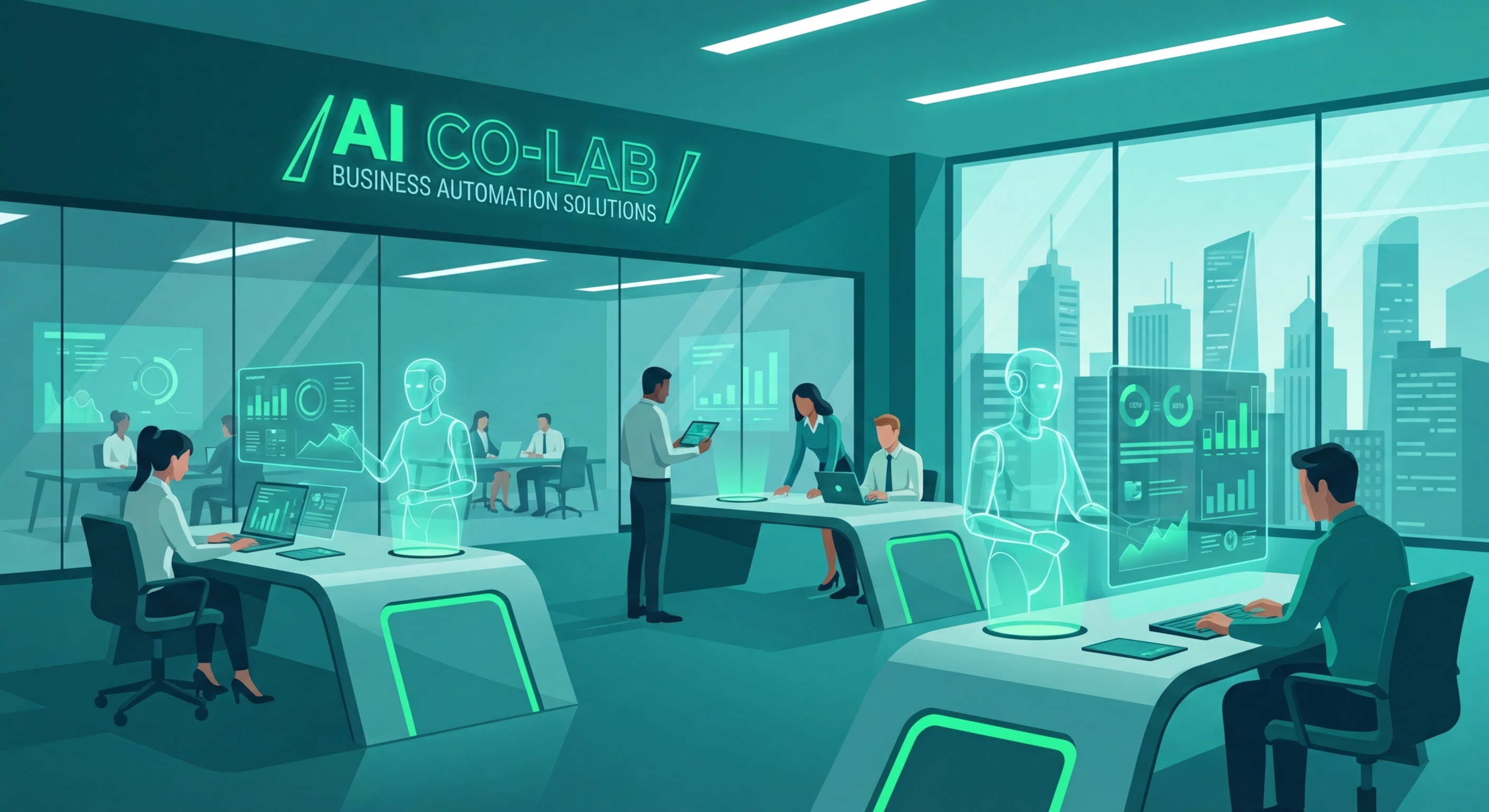
The workplace is undergoing a seismic shift. As we move through 2025, businesses face a fundamental question: should we hire AI employees, human employees, or both?
Dooza is an AI-native company that builds AI products and services for small businesses, including AI employees for email, social media, SEO, lead generation and phone calls. But we're not here to tell you AI is always the answer. We're here to give you an honest comparison that helps you make the right decision for your business.
Let's dive into the complete breakdown of AI employees vs human employees.
Understanding the Landscape in 2025
The debate around AI employees versus human employees has changed quickly, and more small businesses now look at AI for front-line work such as answering calls and email.
Businesses aren't asking if they should consider AI anymore. They're asking when and how. This guide breaks down everything you need to know.
What Are AI Employees?
AI employees are software-powered virtual workers designed to perform specific business tasks autonomously. Unlike basic automation or chatbots, AI employees can:
- Handle complex customer inquiries across email and chat
- Manage social media accounts — posting, responding, and engaging
- Conduct SEO tasks — keyword research, content optimization, and rank tracking
- Make sales calls — qualifying leads and scheduling appointments
- Learn and improve from interactions over time
Think of AI employees as digital team members who don't need sleep, don't take vacations, and don't burn out.
What Are Human Employees?
Human employees are your traditional workforce — real people with physical presence, emotional intelligence, creative capabilities, and the ability to handle nuanced situations that require empathy, judgment, and cultural awareness.
Human employees bring:
- Emotional intelligence — understanding context, tone, and feelings
- Creative problem-solving — tackling novel situations innovatively
- Cultural sensitivity — navigating complex social dynamics
- Physical presence — needed for certain roles (sales, events, hands-on work)
- Long-term relationship building — deep client connections
Head-to-Head Comparison
1. Availability & Operating Hours
🏆 AI Employees Win
AI employees work 24/7/365 without overtime pay, sick days, or vacation time. An AI employee can answer an inquiry at 3 AM the same way it does at 3 PM.
Human employees work an average of 40 hours per week, need weekends off, and require coverage for sick days and holidays. Round-the-clock human coverage means hiring for several shifts.
2. Cost Efficiency
🏆 AI Employees Win
Let's look at the numbers:
| Factor | AI Employee | Human Employee |
|---|
| Base Cost | Subscription (see each vendor's pricing page) | Salary + benefits |
| Overtime | None | Overtime pay where required |
| Training | Built-in + continuous | Ongoing |
| Turnover Cost | None | Recruiting and training a replacement |
For routine, high-volume tasks, an AI employee usually costs less than the total cost of a human employee. Compare your own numbers before you decide.
3. Scalability
🏆 AI Employees Win
Need to handle a spike in volume during holiday season? AI employees scale quickly. Dooza Workforce employees can start working the same day.
Hiring human employees takes weeks or months — job postings, interviews, onboarding, training. Scaling human capacity is a major operational undertaking.
4. Consistency & Quality
🤝 It's a Tie (Context-Dependent)
AI employees deliver consistent responses based on trained parameters. No mood swings, no bad days, no variability in output quality (when properly configured).
Human employees bring variability — some days they're exceptional, others less so. However, for complex, nuanced situations requiring emotional intelligence, humans often maintain higher quality.
5. Emotional Intelligence
🏆 Human Employees Win
This is where humans clearly lead. AI has made massive strides, but understanding deeply upset customers, navigating office politics, and building authentic relationships still require human touch.
Dooza recommends using AI employees for first-line support and routine tasks, with human escalation for complex emotional situations.
6. Creative Problem-Solving
🏆 Human Employees Win
When facing genuinely novel situations — a crisis, an unprecedented challenge, or truly creative work — humans excel. AI excels at pattern recognition and optimization within defined parameters.
For strategic planning, innovative campaigns, and out-of-the-box thinking, human creativity remains essential.
7. Speed & Response Time
🏆 AI Employees Win
AI employees respond in seconds, without a queue.
Human employees need time to research, craft responses, and escalate when needed. Average response times range from hours to days, depending on workload.
8. Language & Multilingual Support
🏆 AI Employees Win
Many AI models can reply in several languages, so one AI employee can cover customers who write in different languages.
Hiring human employees fluent in multiple languages is expensive and often impractical.
9. Data & Analytics
🏆 AI Employees Win
AI employees generate detailed analytics automatically. Every interaction, response time, and outcome is tracked and analyzable.
Human employee analytics require manual tracking, surveys, and management oversight. The data quality and depth simply aren't comparable.
10. Retention & Knowledge Management
🏆 AI Employees Win
When a human employee leaves, they take institutional knowledge with them. An AI employee's instructions and knowledge base stay with your business.
When to Choose AI Employees
AI employees are ideal for:
- 24/7 customer support — Never miss a customer inquiry
- High-volume tasks — Inbox management, appointment scheduling
- Repetitive processes — Order tracking, FAQ responses
- Multilingual support — Global customer base
- Sales lead qualification — Screening and nurturing leads
- Social media management — Consistent posting and engagement
- SEO tasks — Ongoing optimization and monitoring
When to Choose Human Employees
Human employees are essential for:
- Complex problem-solving — Unique situations requiring judgment
- High-stakes negotiations — Major deals and relationships
- Emotional support — Dealing with upset or vulnerable customers
- Creative work — Brand strategy, innovative campaigns
- Physical tasks — Product handling, events, installations
- Cultural diplomacy — Navigating sensitive organizational dynamics
The Hybrid Model: The Best of Both Worlds
Here's the secret most articles won't tell you: the best solution is almost always both.
At Dooza, we don't recommend replacing your entire human workforce. Instead, we recommend the AI-first, human-second model:
- AI handles first-line interactions — Customer inquiries, basic support, scheduling
- AI qualifies and routes — Leads are pre-qualified and sent to the right human
- Humans handle complex cases — Escalations that require emotional intelligence
- AI supports human employees — Providing context, history, and suggestions
This model gives you:
- 24/7 coverage (AI)
- Cost efficiency (AI)
- High-quality complex interactions (Human)
- Scalability (AI)
- Authentic relationships (Human)
Example Use Cases
- E-commerce support: an AI employee answers order and shipping emails around the clock and hands refunds or complaints to a person.
- B2B lead qualification: an AI employee screens inbound leads and books meetings, so the sales team talks only to qualified prospects.
- Social media: an AI employee drafts and schedules posts and replies to common comments, with a person approving anything sensitive.
The Future of Work: What to Expect by 2026-2027
Based on current trends, here's our prediction for the near future:
- AI adoption will keep growing — more small businesses will use AI employees for routine work
- Job roles will evolve — Human employees will shift to higher-value strategic work
- Hybrid teams will become standard — The "AI + human" model will dominate
- AI capabilities will expand — Emotional intelligence in AI will improve significantly
Businesses that adopt AI employees now will have a significant competitive advantage.
Making the Decision: A Framework
Use this decision matrix to evaluate your needs:
| Task Characteristic | Best Choice |
|---|
| High volume, repetitive | AI Employee |
| Requires emotional intelligence | Human Employee |
| 24/7 coverage needed | AI Employee |
| Creative/strategic | Human Employee |
| Multilingual needed | AI Employee |
| Complex problem-solving | Human Employee |
| Cost-sensitive | AI Employee |
| Relationship-building critical | Human Employee |
How to Get Started with AI Employees
Ready to explore AI employees for your business? Here's how to start:
- Audit your current workflows — Identify repetitive, high-volume tasks
- Calculate current costs — Include salary, benefits, overhead
- Start small — Pilot with one function (inbox, social, or sales)
- Measure results — Track response time, cost, satisfaction
- Scale incrementally — Add more AI employees as you see success
Dooza is an AI-native company that builds AI products and services for small businesses, from the Dooza Workforce app to the Dooza Agents platform, with 1,000+ app integrations. Every product starts with a refundable pilot: 100% refund within 14 days. Book a free 30-minute call.
Conclusion: The Future Is Hybrid
The debate between AI employees vs human employees isn't about choosing one over the other. It's about finding the right balance for your business.
AI employees excel at scale, speed, consistency, and cost efficiency. Human employees bring creativity, emotional intelligence, and relationship-building capabilities that remain essential.
The businesses winning in 2025 and beyond aren't choosing sides — they're building hybrid teams that leverage the best of both.
At Dooza, we're committed to helping you build that hybrid workforce. Our AI employees handle the heavy lifting so your human team can focus on what they do best: building genuine relationships and driving strategic growth.
The future of work isn't AI or human — it's AI and human. Are you ready to build your hybrid team?
This post was created by Dooza, an AI-native company that builds AI products and services for small businesses. Every product starts with a refundable pilot: 100% refund within 14 days.
FAQ: AI Employees vs Human Employees
1. Are AI employees going to replace human employees?
No — AI employees are designed to augment human employees, not replace them. The most successful businesses use a hybrid model where AI handles routine tasks and humans focus on complex, creative, and relationship-building work.
2. How much do AI employees cost compared to human employees?
For routine tasks, AI employees usually cost less than a human hire once you count salary, benefits, training, overtime, and turnover. Pricing depends on the product. Every Dooza product starts with a refundable pilot; see Dooza pricing.
3. Can AI employees handle complex customer issues?
AI employees excel at handling routine and moderate-complexity issues. For complex situations requiring deep emotional intelligence, AI employees can triage and escalate to human agents with full context.
4. How long does it take to deploy an AI employee?
A Dooza engineer scopes your pilot on a free 30-minute call. Dooza Workforce employees can start working the same day; custom agents are live in days.
5. Do AI employees work 24/7?
Yes — one of the biggest advantages of AI employees is they work 24/7/365 without overtime pay, sick days, or vacation time. This provides round-the-clock coverage for your business.
6. What tasks are AI employees best suited for?
AI employees are ideal for: inbox management, customer support, social media engagement, SEO tasks, sales lead qualification, appointment scheduling, and multilingual communication.
7. What tasks should only be handled by humans?
Humans should handle: complex negotiations, crisis management, creative strategy, deeply emotional customer situations, physical tasks, and high-level relationship building.
8. How do AI employees learn and improve?
AI employees improve as you refine their instructions, update their knowledge base, and give feedback on their work.
9. Are AI employees secure and compliant?
Ask every vendor how they protect your data. Dooza uses encrypted connections and asks for your approval on anything sensitive. Dooza is not SOC 2 certified.
10. Can AI employees integrate with my existing tools?
Yes — Dooza offers 1,000+ app integrations, including CRM systems, email platforms, and social media accounts.
11. How do I measure ROI from AI employees?
Track metrics like: response time reduction, cost savings, customer satisfaction scores, conversion rates, and employee productivity.
12. What's the learning curve for managing AI employees?
Start with one task and review the AI employee's work closely at first. With Dooza, an engineer scopes your pilot on a free 30-minute call.
13. Can AI employees handle multiple languages?
Many AI models can reply in several languages, which helps businesses with customers in more than one language. Test the languages you need before you rely on them.
14. Do customers prefer AI or human interactions?
Customers often appreciate fast AI responses for simple queries but prefer human agents for complex issues. The hybrid model provides the best of both worlds.
15. How do I transition from human to AI employees?
We recommend a phased approach: start with one function (like inbox management), measure results, then gradually expand to other areas. This ensures smooth transition and continuous improvement.