AI Sales Assistant vs Human Sales Representative: The Complete Comparison for 2025
Which is better for your business in 2025: AI sales assistants or human sales representatives? This is one of the most important questions facing business owners today. As artificial intelligence continues to transform the sales landscape, understanding the differences between AI sales assistants and human sales representatives has become essential for business growth. In this comprehensive guide, we'll examine every aspect of both approaches, helping you make informed decisions about building your sales team.
The debate between AI sales assistants and human sales representatives isn't simple. Both have unique strengths and limitations that make them suitable for different situations. Whether you're a startup founder, small business owner, or enterprise decision-maker, this guide will provide you with the insights needed to optimize your sales operations and drive revenue growth.
Table of Contents
- Understanding AI Sales Assistants
- Understanding Human Sales Representatives
- Capabilities Comparison
- Cost Analysis
- Performance Metrics
- Lead Generation and Qualification
- Customer Relationship Management
- Scaling Considerations
- Integration Capabilities
- Future Trends in AI Sales
- Implementation Guide
- Frequently Asked Questions
- Conclusion
Understanding AI Sales Assistants
AI sales assistants are sophisticated artificial intelligence systems designed to automate, augment, and enhance various aspects of the sales process. These digital workers can handle everything from initial lead outreach and qualification to follow-up communications and appointment scheduling. Unlike traditional sales tools, AI sales assistants powered by modern platforms like Dooza.ai can engage in natural conversations, understand context, and provide personalized responses that feel remarkably human-like.
The capabilities of AI sales assistants have expanded dramatically in recent years. According to research on AI sales tools, modern AI assistants can now handle complex sales conversations, understand customer needs, and provide relevant product information—all without human intervention. These systems learn from each interaction, continuously improving their performance and becoming more effective at converting leads over time.
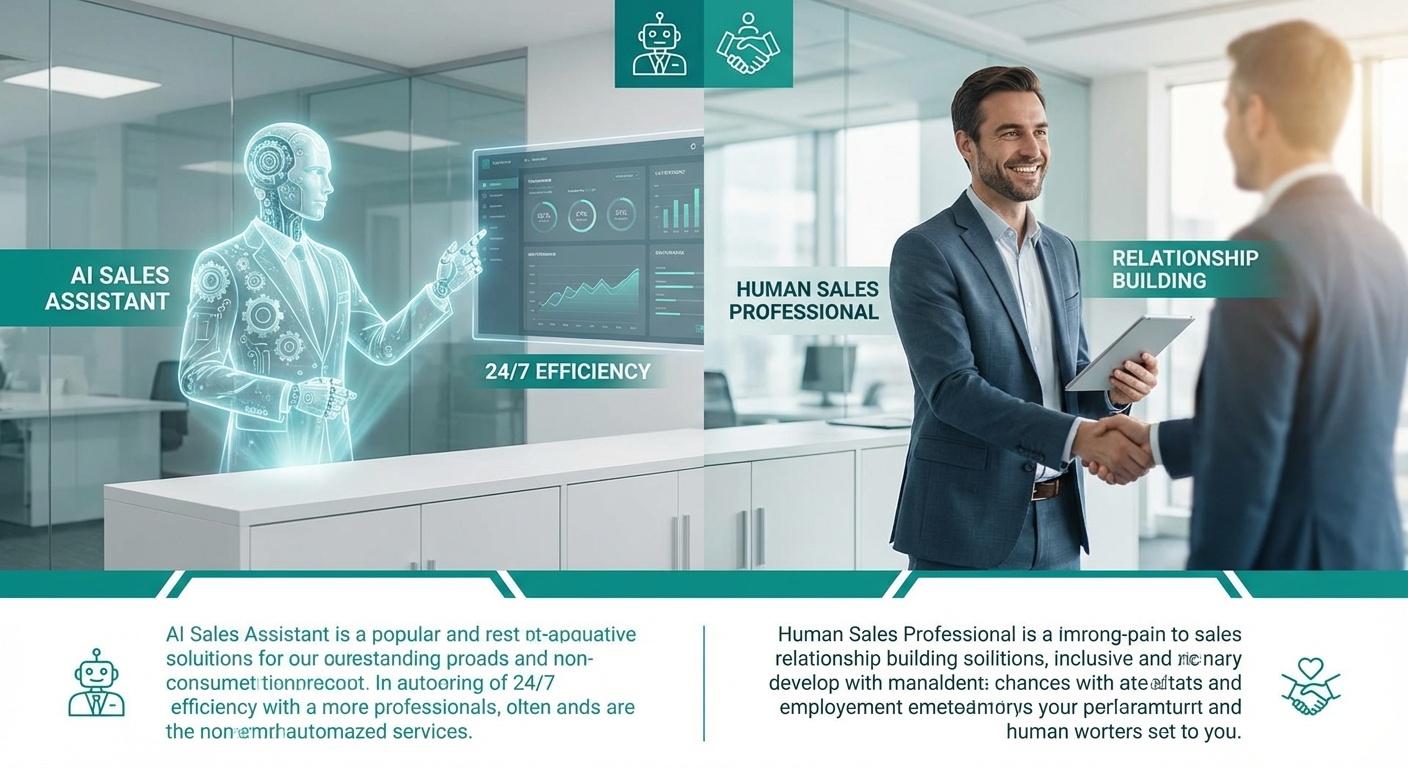
One of the most significant advantages of AI sales assistants is their ability to work around the clock. While human sales representatives need sleep, breaks, and time off, AI assistants can engage with prospects 24 hours a day, 7 days a week, 365 days a year. This ensures that no potential lead ever goes unanswered, regardless of when they reach out to your business.
The technology behind AI sales assistants has reached a point where these systems can now match or exceed human performance in many sales tasks. From processing thousands of leads simultaneously to maintaining consistent messaging and follow-up sequences, AI sales assistants offer capabilities that would be impossible for human teams to replicate cost-effectively.
Modern AI sales assistants like those offered by Dooza.ai represent a paradigm shift in how businesses approach sales. These digital employees can automate your inbox, handle social media inquiries, manage SEO-optimized communications, and conduct sales calls 24/7. The result is a more efficient, scalable, and cost-effective sales operation that can grow with your business.
Understanding Human Sales Representatives
Human sales representatives have been the backbone of sales operations for centuries. These professionals bring uniquely human qualities to the sales process: emotional intelligence, intuition, creative problem-solving, and the ability to build deep relationships with prospects. While AI has made significant strides, human sales representatives continue to play a crucial role in complex sales scenarios.
The value of human sales representatives extends beyond simply closing deals. They bring intuition that allows them to read subtle cues during conversations, adapt their approach in real-time based on prospect responses, and build trust through genuine human connection. These relationships often lead to repeat business, referrals, and long-term customer loyalty that can be difficult for AI to replicate.
Human sales representatives excel in situations that require complex negotiation, handling objections that fall outside standard patterns, and navigating the intricate dynamics of B2B sales cycles. They can read between the lines, understand unspoken concerns, and craft customized solutions that address specific business needs. This level of personalization requires the kind of nuanced understanding that AI is still developing.
However, human sales representatives come with inherent limitations. They can only work during business hours, need breaks, require training and ongoing development, and are subject to burnout, turnover, and performance variability. The costs associated with hiring, training, compensating, and retaining human sales representatives can be substantial, especially when you factor in benefits, commissions, and the overhead of managing a sales team.
The most successful sales organizations recognize that human sales representatives are most valuable when focused on high-value activities that require human touch—complex negotiations, relationship building, and closing critical deals—while delegating routine tasks to AI assistants.
Capabilities Comparison: AI vs Human
Lead Processing and Qualification
AI Sales Assistant:
- Process thousands of leads simultaneously without delay
- Qualify leads based on predefined criteria instantly
- Score leads with consistent, data-driven accuracy
- Work 24/7 without breaks or downtime
- Maintain perfect memory of all interactions
- Follow up instantly on every lead
Human Sales Representative:
- Handle limited number of leads at once effectively
- Qualify leads based on experience and intuition
- Subjective lead scoring variability
- Limited to standard working hours
- May forget details across multiple leads
- Follow-up delays based on workload
Communication and Follow-up
AI Sales Assistant:
- Send personalized emails at scale instantly
- Maintain consistent messaging and tone
- Never miss a follow-up opportunity
- Communicate in multiple languages simultaneously
- Adapt communication style based on prospect data
- Automate entire follow-up sequences
Human Sales Representative:
- Personal communication but time-intensive
- Tone may vary based on mood or fatigue
- May miss follow-ups during busy periods
- Limited language capabilities
- Communication style relatively fixed
- Manual follow-up management required
Data Analysis and Insights
AI Sales Assistant:
- Analyze massive datasets in seconds
- Identify patterns humans might miss
- Provide real-time performance analytics
- Predict lead conversion probability
- Optimize outreach timing automatically
- Generate detailed sales reports instantly
Human Sales Representative:
- Limited data processing capabilities
- Relies on intuition and experience
- Reporting requires manual effort
- Predictions based on past experience
- Manual optimization needed
- Time-consuming report generation
Cost Analysis: AI vs Human Sales
Understanding the cost implications of AI sales assistants versus human sales representatives is crucial for making informed business decisions. Let's break down the comprehensive costs associated with each approach.
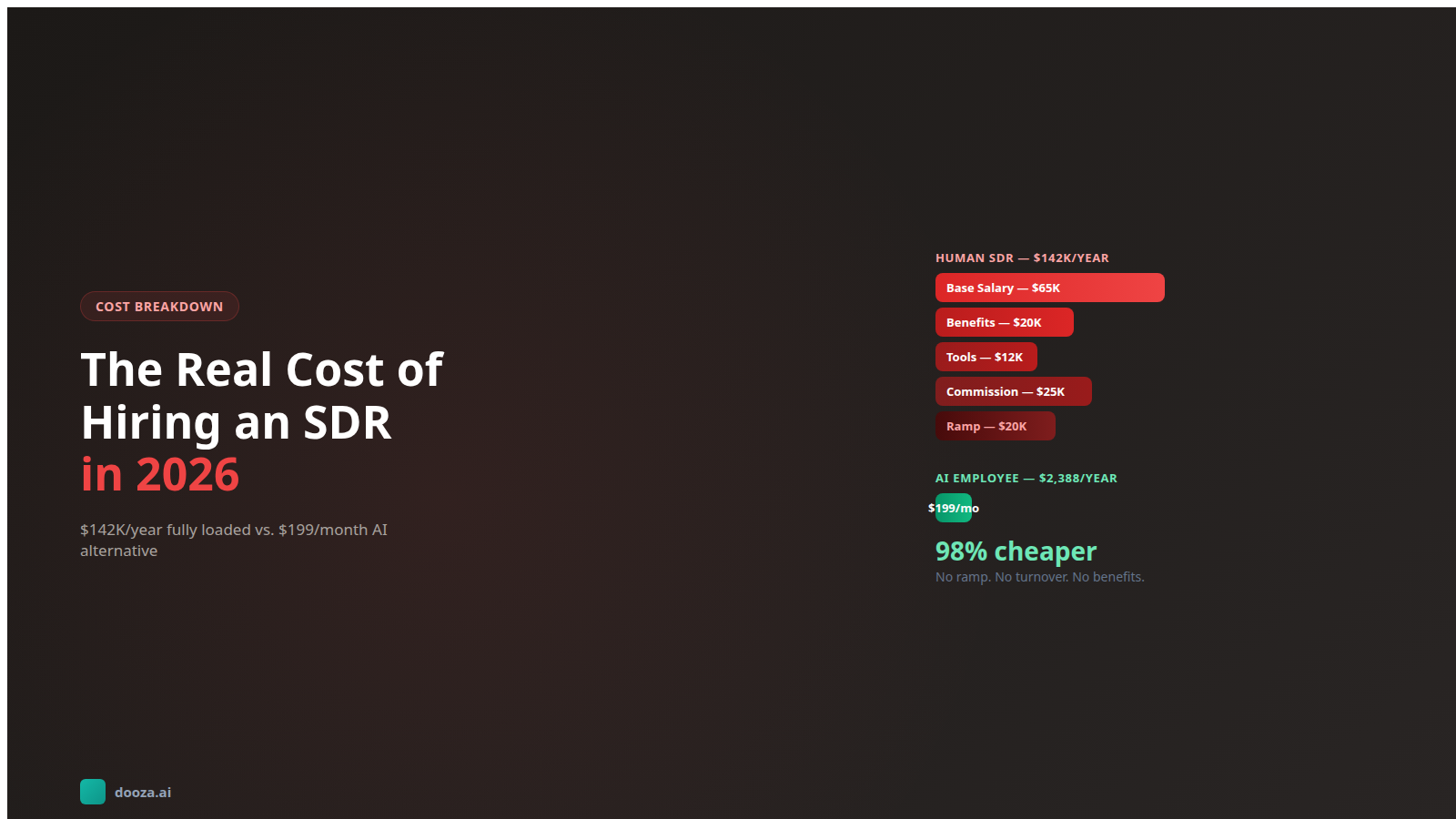
Human Sales Representative Costs
- Base Salary: $40,000 - $150,000+ annually depending on experience and location
- Commissions: Typically 5-20% of deal value
- Benefits Package: Adding 25-40% to base salary (health insurance, retirement, paid time off)
- Recruitment Costs: $3,000 - $15,000 per hire (advertising, recruiting fees, interviewing time)
- Training and Development: $2,000 - $10,000+ annually per representative
- Equipment and Workspace: $2,000 - $10,000 annually (computer, desk, software licenses)
- Management Overhead: 15-25% of time spent managing the team
- Turnover Costs: 50-200% of annual salary per replacement
- Software and Tools: CRM, sales enablement, and communication tools
When you add it all up, the true cost of a human sales representative can range from $75,000 to $300,000+ annually per employee, depending on their level and the complexity of your sales process.
AI Sales Assistant Costs
- Monthly Subscription: $200 - $2,000+ depending on capabilities and scale
- Implementation and Setup: One-time fee typically ranging from $500 - $5,000
- Training and Configuration: Usually included or minimal additional cost
- No Benefits Required: Massive cost savings compared to human employees
- No Recruitment Costs: Instant deployment without hiring process
- Minimal Management Overhead: Self-managing systems that require minimal supervision
- No Turnover: Permanent team members that never quit
- Infrastructure Costs: Cloud-based operation with minimal equipment needs
The cost savings with AI sales assistants are substantial. Businesses can reduce sales operation costs by 50-80% by leveraging AI for routine sales tasks while keeping human representatives for high-value activities.
For example, a business spending $200,000 annually on a human sales representative might pay only $20,000-40,000 per year for an AI sales assistant with comparable throughput. This represents significant savings that can be reinvested in growth or passed on to customers.
Measuring sales performance requires understanding multiple metrics. Let's examine how AI sales assistants and human sales representatives compare across key performance indicators.
Response Time
According to research on sales response times, speed is critical in converting leads. AI sales assistants can respond to inquiries instantly—within seconds of receiving a lead. Human sales representatives, even the most diligent ones, typically respond within hours or days.
This speed advantage translates directly to conversion rates. Studies show that contacting a lead within 5 minutes of initial inquiry can increase conversion rates by 8 times or more. AI assistants ensure every lead receives instant attention, maximizing your conversion opportunities.
Consistency and Quality
AI sales assistants deliver consistent quality across every interaction. They follow predefined best practices, maintain brand messaging, and never have "bad days" that affect performance. Human sales representatives, regardless of their skill level, experience performance variations based on mood, health, and personal circumstances.
However, human representatives may provide more nuanced responses in complex situations that require creative problem-solving or emotional intelligence. The key is knowing when each approach delivers optimal results.
Conversion Rates
When properly configured, AI sales assistants can achieve conversion rates that match or exceed human representatives for routine sales tasks. For complex, high-value sales, human representatives typically outperform AI, but the gap is narrowing as AI technology advances.
Many businesses report significant improvements in overall conversion rates by using AI to handle initial qualification and follow-up, then routing qualified leads to human representatives for closing. This hybrid approach leverages the strengths of both AI and human sales capabilities.
Lead Generation and Qualification
Lead generation and qualification represent areas where AI sales assistants particularly excel. Let's examine the specific capabilities in detail.
AI Lead Generation Capabilities
AI sales assistants can automatically generate leads through multiple channels: outbound prospecting, inbound inquiry handling, social media engagement, and automated follow-up sequences. They can research prospects, personalize outreach based on publicly available information, and execute outreach campaigns at scale.
According to experts in AI sales automation, these systems can now identify ideal customer profiles, find decision-makers within target companies, and craft personalized messages that resonate with prospects. This level of personalization at scale was previously impossible without a large sales team.
AI assistants also excel at lead qualification. They can ask discovery questions, score responses, and determine ready-to-buy status with remarkable accuracy. This ensures your human sales team only spends time on leads that are genuinely ready to purchase, dramatically improving sales efficiency.
Human Lead Generation Capabilities
Human sales representatives bring creativity and intuition to lead generation that AI struggles to replicate. They can identify opportunities through subtle cues, build relationships that extend beyond transactional exchanges, and adapt their approach based on real-time feedback in ways that AI currently cannot.
Human representatives also excel at generating referrals and building networks—activities that require genuine relationship building over time. While AI can facilitate these efforts, the human touch remains essential for generating high-quality referrals.
Customer Relationship Management
Managing customer relationships effectively is crucial for long-term sales success. Both AI and human approaches have distinct advantages in this area.
AI-Powered Relationship Management
AI sales assistants excel at maintaining detailed records of every customer interaction, ensuring perfect continuity across the customer journey. They can track preferences, remember previous conversations, and provide context that creates seamless customer experiences.
AI systems can also automate routine relationship maintenance tasks: follow-up emails, check-in messages, birthday greetings, and renewal reminders. This ensures every customer receives attention without requiring manual effort from your team.
According to research on customer relationship management, AI-powered systems can significantly improve customer retention by ensuring consistent, timely communication throughout the customer lifecycle.
Human Relationship Management
Human sales representatives excel at building deep, lasting relationships that extend beyond business transactions. They can understand complex emotional dynamics, navigate interpersonal challenges, and create connections that lead to strong brand loyalty.
The most successful businesses use AI to handle routine relationship management while human representatives focus on high-touch relationships that require genuine human connection.
Scaling Considerations
Scaling your sales operation is often the determining factor when choosing between AI and human approaches. Let's examine the scalability implications of each.
Scaling with AI Sales Assistants
AI sales assistants offer unparalleled scalability. Adding capacity is as simple as upgrading your subscription or adding more AI workers. There's no need to hire, train, or manage additional personnel. This makes AI particularly valuable for businesses experiencing rapid growth or seasonal demand fluctuations.
You can scale from handling 100 leads per month to 10,000 leads per month without significant operational changes. The AI system simply handles the increased volume without requiring additional management overhead.
This elasticity also works in reverse. During slow periods, you can scale down your AI usage without the complications of reducing human staff. This flexibility makes AI ideal for businesses with variable demand patterns.
Scaling with Human Sales Representatives
Scaling a human sales team requires significant time and resources. Each new representative needs to be hired, trained, and onboarded—a process that typically takes 3-6 months before they become fully productive. This creates inherent delays in responding to growth opportunities.
Human teams also have practical limits on scalability. Even the best sales managers can effectively oversee a limited number of representatives. Beyond that threshold, you'll need additional management layers, creating organizational complexity.
The costs of scaling human teams are also substantial. Recruitment fees, training costs, equipment, and workspace all add up quickly when adding new representatives.
Integration Capabilities
Modern AI sales assistants integrate seamlessly with your existing technology stack, enhancing your overall sales infrastructure.
AI Integration Features
AI sales assistants can integrate with popular CRM systems, email platforms, social media tools, helpdesk software, and marketing automation tools. This creates a unified sales ecosystem where information flows automatically between systems.
According to resources on AI sales tools, modern AI assistants offer integrations with virtually every major business tool, ensuring smooth data flow and eliminating manual data entry.
Dooza.ai's AI employees integrate seamlessly with your existing tools, enabling automated inbox management, social media automation, SEO optimization, and sales call automation—all working together as a cohesive system.
Human Integration Considerations
Human sales representatives require training on your tools and processes, which takes time and ongoing reinforcement. They're also dependent on using the tools correctly, which requires management oversight and enforcement.
While humans can adapt to new tools over time, the learning curve can be significant, and the adoption process is often incomplete or inconsistent across the team.
Future Trends in AI Sales
The future of sales is increasingly AI-driven. Understanding emerging trends helps you prepare for what's ahead.
Emerging AI Sales Technologies
AI sales technology continues to advance rapidly. Natural language processing, machine learning, and predictive analytics are becoming more sophisticated, enabling AI to handle increasingly complex sales tasks that previously required human intervention.
Voice AI is improving dramatically, with AI sales assistants now capable of conducting natural-sounding phone conversations. Video AI is emerging as a new frontier, with AI-powered virtual presenters becoming increasingly realistic and capable.
According to experts on AI sales trends, the next few years will see AI take on an even larger role in sales processes, with many predicting that AI will handle 80% or more of routine sales tasks within the next decade.
The Hybrid Model Future
The most likely future involves a hybrid approach where AI handles routine, high-volume tasks while human representatives focus on relationship building, complex negotiations, and high-value closings. This combination delivers the efficiency of AI with the relationship-building capabilities of humans.
Businesses that adopt this hybrid approach early will have significant competitive advantages over those relying solely on either AI or human sales approaches.
Implementation Guide: Making the Switch
Transitioning to AI-assisted sales requires thoughtful planning. Here's your step-by-step guide to implementation.
Step 1: Audit Your Current Sales Process
Begin by documenting your current sales process from lead generation through closing. Identify tasks that are repetitive, rule-based, and high-volume—these are ideal candidates for AI automation.
Step 2: Identify Quick Wins
Start with functions that offer immediate return on investment. Common starting points include initial lead response, follow-up automation, and appointment scheduling. These areas typically show rapid improvement with AI assistance.
Step 3: Choose Your AI Platform
Select an AI sales assistant platform that aligns with your business needs. Look for platforms offering customization, seamless integrations, and proven track records. Dooza.ai provides comprehensive AI employees that can automate your entire sales process.
Step 4: Configure and Train
Work with your AI platform to configure your sales assistant with your brand guidelines, product information, and sales processes. Proper initial configuration ensures optimal performance from day one.
Step 5: Monitor and Optimize
Track performance metrics and gather feedback. Use this data to continuously optimize your AI sales assistant, improving its effectiveness over time.
Frequently Asked Questions
Can AI sales assistants completely replace human sales representatives?
Not entirely. While AI excels at many sales tasks, human representatives remain essential for complex negotiations, relationship building, and closing high-value deals. The best approach is a hybrid model that leverages both AI and human strengths.
How long does it take to implement an AI sales assistant?
Implementation time varies, but most businesses can deploy basic AI sales assistants within days or weeks. More complex implementations may take longer, depending on customization requirements.
What tasks are best suited for AI sales assistants?
AI sales assistants excel at lead qualification, initial outreach, follow-up automation, appointment scheduling, data entry, and routine customer inquiries. Leave complex negotiations and relationship building to human representatives.
How do AI sales assistants affect my existing sales team?
AI should be positioned as an enhancement, not a replacement. Your human team can focus on higher-value activities while AI handles routine tasks. This typically leads to higher job satisfaction and better results.
Are AI sales assistants secure and compliant?
Reputable AI platforms prioritize security and compliance. Look for platforms offering data encryption, access controls, and compliance with relevant regulations like GDPR.
How do I measure ROI on AI sales assistants?
Track metrics like conversion rates, response time, lead throughput, and cost per sale before and after implementation. Compare these metrics to calculate your return on investment.
Can AI integrate with my existing CRM and sales tools?
Most modern AI platforms integrate seamlessly with popular CRM systems, email platforms, and sales tools. Check with your platform provider for specific integration capabilities.
What happens when AI encounters complex situations?
Configure your AI to recognize limitations and escalate to human representatives when appropriate. This ensures every prospect receives appropriate attention.
How do AI sales assistants learn and improve?
AI sales assistants use machine learning to analyze interactions and improve over time. They learn from successful conversions, failed attempts, and feedback to continuously optimize performance.
What's the future of AI in sales?
The future involves increasingly sophisticated AI that handles more complex sales tasks. The trend is toward hybrid models where AI and human representatives work together for optimal results.
Conclusion
The choice between AI sales assistants and human sales representatives isn't about selecting one over the other—it's about understanding how each can contribute to your business success. AI offers unmatched efficiency, scalability, and consistency for routine sales tasks. Human representatives bring emotional intelligence, creativity, and relationship-building capabilities that AI cannot replicate.
The most successful sales organizations in 2025 and beyond will be those that strategically leverage both AI and human talent. By understanding the strengths and limitations of each, you can build a sales operation that maximizes efficiency while maintaining the human elements that drive customer loyalty and long-term success.
Whether you're looking to reduce costs, improve efficiency, or scale your sales operation, AI sales assistants offer a compelling solution. The key is to start with clear objectives, choose the right implementation partner, and maintain a balanced perspective on the role of AI in your sales strategy.
Ready to transform your sales operations with AI? Discover how Dooza.ai's AI employees can automate your sales process—handling lead qualification, follow-ups, scheduling, and customer interactions 24/7. Build, grow, and scale your business with AI-powered sales automation today.
Visit Dooza.ai to learn more about AI sales assistants for your business.