AI vs Hiring Employees: The Real Cost and Capability Breakdown for 2026
Comparing the true cost of AI employees versus human hires. We break down salaries, overhead, productivity, and when each option makes sense for small businesses.
9 min read
July 8, 2026
If you run a small business or startup in 2026, you have probably asked yourself this question at least once: should I hire another person, or can AI handle it? The debate around ai vs hiring employees is no longer theoretical. Businesses of every size are making this decision right now, and the answer is not as straightforward as either side wants you to believe.
The truth is, both options have real strengths and real limitations. This guide breaks down the actual costs, capabilities, and tradeoffs so you can make a decision based on your situation, not hype.
The Real Debate: AI vs Hiring Employees in 2026
The conversation around ai vs hiring employees has shifted dramatically over the past two years. In 2024, most businesses were experimenting with ChatGPT and calling it innovation. By 2026, AI agents can run outbound campaigns, manage social media accounts, qualify leads, book meetings, and generate reports without human supervision.
But here is what the AI evangelists do not always tell you: AI is not a universal replacement for people. It is a replacement for specific types of work. Understanding which types is the key to making the right call.
McKinsey Global Institute has estimated that a large share of work activities could in theory be automated with current technology, but it describes that as technical potential, not a forecast. Not everything. The businesses winning right now are the ones that figured out which work to hand off and which still needs a human touch.
The True Cost of Hiring a Human Employee
Most founders underestimate what a hire actually costs. The salary is just the beginning. Here is what a typical employee really costs when you add everything up:
Direct Costs
Base salary: For a sales development rep (SDR), the salary is the biggest line item. Check current pay data for your market and role before you budget.
Virtual assistants: Offshore and US-based VAs are priced very differently, usually by the hour or by a monthly retainer
BPO services: Outsourced teams are quoted per scope and volume, so get written quotes
Hidden Costs Most People Forget
Benefits and insurance: The BLS Employer Costs for Employee Compensation release put benefits at 30.0 percent of total employer compensation costs for private industry workers in June 2026 (wages and salaries were 70.0 percent)
Payroll taxes: Employers pay 6.2 percent Social Security and 1.45 percent Medicare tax on wages (7.65 percent combined), per the IRS, plus unemployment taxes
Equipment and software: Laptop, phone, CRM licenses, and other tools, which add up quickly
Recruiting costs:SHRM benchmarking reports a median of 39 calendar days to fill a nonexecutive position; cost-per-hire figures sit behind SHRM's membership, so check your own recruiting spend
Training and ramp-up: New hires take weeks to months to reach full productivity, depending on the role
Management overhead: Someone has to manage, review, and coach every employee you add
Turnover risk: The BLS Employee Tenure release shows median tenure of just 3.0 years for workers ages 25 to 34 (4.1 years across all workers, January 2026). When they leave, you start over.
When you add it all up, a single full-time employee costs a small business meaningfully more than the salary number on the offer letter. Add up your own salary, benefits, taxes, equipment, and recruiting costs to get your real figure.
What AI Employees Actually Do (And Do Well)
Modern AI employees are not just chatbots. In 2026, they are autonomous agents that can execute multi-step workflows without hand-holding. Here is what they genuinely handle well:
Outbound sales and lead generation: Finding prospects, enriching contact data, writing personalized emails, and following up automatically
Content creation and social media: Drafting blog posts, writing LinkedIn content, scheduling posts, and even generating images
Customer support triage: Handling first-line support questions, routing complex issues, and maintaining FAQ databases
Research and reporting: Pulling market data, competitor analysis, and generating formatted reports
CRM management: Updating records, logging activities, and keeping your pipeline clean
Appointment booking: Qualifying inbound leads and scheduling calls directly on your calendar
The common thread is that these are high-volume, process-driven tasks where consistency and speed matter more than creative judgment. An AI employee can work through outreach volume far faster than a human SDR can by hand.
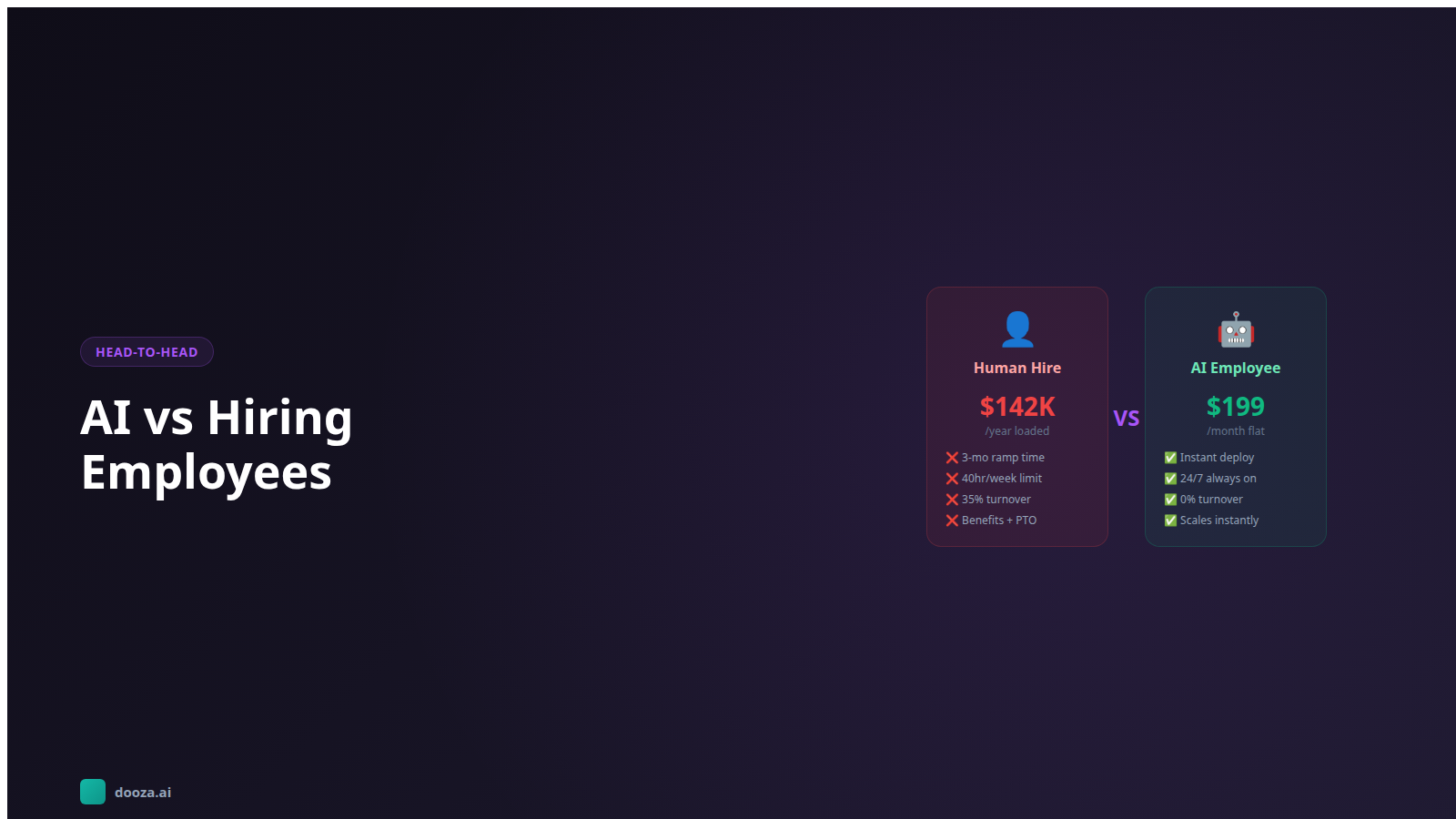
AI vs Hiring Employees: The Cost Comparison
Here is how the numbers stack up when you compare ai vs hiring employees side by side across common roles that small businesses need to fill:
The cost difference can be large. A business paying for a full-time SDR could cover much of the repetitive work with an AI employee for less and redirect budget toward closing deals, product development, or marketing. See pricing for Dooza's numbers.
When You Still Need Human Employees
Being honest about AI's limitations is just as important as understanding its strengths. Here are the areas where humans still outperform AI and probably will for years to come:
Complex Relationship Management
If your sales process involves six-figure enterprise deals with multiple stakeholders, nuanced negotiations, and relationship building over months, you need a human. AI can get you the meeting, but a seasoned account executive closes the deal.
Creative Strategy and Brand Voice
AI can draft content, but setting the creative direction, developing brand strategy, and making judgment calls about messaging still requires human intuition. AI is the writer; you still need the editor and strategist.
Crisis Management and Edge Cases
When an angry customer threatens to go public, when a PR situation develops, or when something completely unexpected happens, you need human judgment, empathy, and adaptability.
Leadership and Team Building
Managing people, building culture, mentoring team members, and making strategic decisions about company direction are fundamentally human activities.
Highly Regulated Work
Legal advice, financial compliance, healthcare decisions, and other regulated activities often require licensed human professionals by law.
How to Decide: AI, Human, or Both
The smartest approach to the ai vs hiring employees question is not treating it as either-or. Here is a practical framework for deciding:
Choose AI when the task is:
Repetitive and follows a clear process
High volume with low variation
Data-driven rather than relationship-driven
Time-sensitive and needs to run outside business hours
Currently eating up your most expensive employees' time
Choose a human when the task requires:
Complex judgment and creative problem-solving
Deep relationship building and trust
Handling sensitive or emotionally charged situations
Physical presence or hands-on work
Legal or regulatory compliance expertise
The Hybrid Model
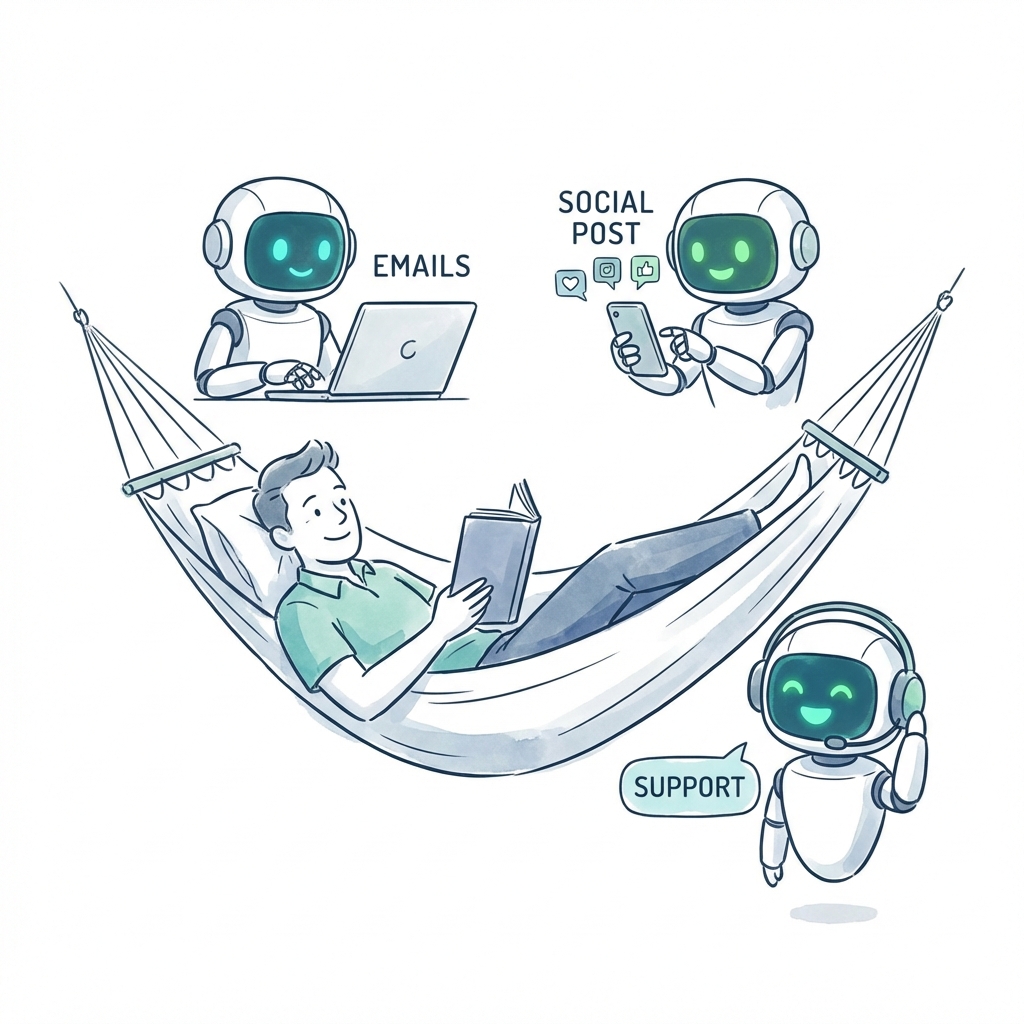
Most successful small businesses in 2026 are running a hybrid model. AI handles the top of the funnel, the repetitive back-office work, and the after-hours tasks. Humans focus on closing deals, building relationships, and making strategic decisions. This gives you the output of a much larger team without the payroll to match.
For example, an AI employee can prospect and qualify leads at volume, but your human salesperson closes them. An AI employee can draft a month of social media posts, but your marketing lead approves and refines them. You get leverage without losing quality.
Dooza Agents: The Done-for-You AI Employee
If you have read this far and you are thinking that AI employees sound right for some of your workload, Dooza Agents is built exactly for this.
Dooza is not another AI tool you have to learn and manage yourself. It is a done-for-you AI agentic platform. Starting with a refundable pilot (100% refund within 14 days), you get AI employees that handle:
Outbound lead generation and prospecting across LinkedIn and email
Content creation and social media management with your brand voice
SEO-optimized blog content that actually drives organic traffic
Research and competitive intelligence delivered on a schedule
Customer outreach and follow-up sequences that run on autopilot
The difference between Dooza and just using ChatGPT is that Dooza employees are autonomous agents. They do not wait for prompts. They run workflows end to end, connect to your existing tools, and deliver results without you babysitting them.
For a startup or small business that cannot afford a full-time SDR or VA, Dooza covers much of that repetitive work, starting with a refundable pilot (100% refund within 14 days).
The question of ai vs hiring employees does not have a single right answer. It depends on the task, the complexity, the relationship requirements, and your budget. But here is what is clear: if you are a small business still paying a full salary for repetitive work that an AI employee can do for less, you may be leaving money on the table.
Start by identifying the repetitive, high-volume tasks on your team's plate. Deploy AI there first. Keep your humans focused on the work that only humans can do. That is how you build a lean, competitive business in 2026 without burning through your runway.
Frequently Asked Questions
Is AI really cheaper than hiring employees?
In most cases, yes. A full-time employee costs well more than the salary on the offer letter once you add benefits, taxes, equipment, recruiting, and management time (benefits alone were 30 percent of private-industry employer compensation costs in June 2026, per the BLS). AI employee platforms like Dooza Agents (see dooza.ai/pricing) start with a refundable pilot (100% refund within 14 days), and can handle tasks like lead generation, content creation, and customer outreach around the clock without benefits or time off.
Can AI employees fully replace human workers?
Not entirely. AI employees excel at repetitive, data-driven, and high-volume tasks such as outbound prospecting, social media management, and research. However, complex negotiations, relationship-heavy roles, creative strategy, and leadership still require human judgment and emotional intelligence. The best approach for most businesses is a hybrid model.
What tasks are AI employees best suited for?
AI employees perform best at lead generation and outreach, data entry and CRM management, content drafting and scheduling, email follow-ups, appointment booking, market research, and reporting. These are high-volume, process-driven tasks where consistency and speed matter more than nuance.
How long does it take to set up an AI employee versus hiring a human?
An AI employee can typically be deployed in a matter of hours or days. Hiring a human employee takes a median of 39 calendar days for nonexecutive roles according to SHRM benchmarking, plus additional weeks for onboarding and training before they reach full productivity. AI employees also do not require ongoing HR management or performance reviews.
What is the ROI of using AI employees for a small business?
ROI depends on the work you automate. Replacing part of an SDR or virtual assistant role with an AI employee can save a large share of that payroll. Additionally, AI employees work 24/7, never call in sick, and can scale output instantly without additional hiring costs.
Ready to Start Your Pilot?
Automate your business with AI employees that work 24/7. Start with a refundable pilot: 100% refund within 14 days.
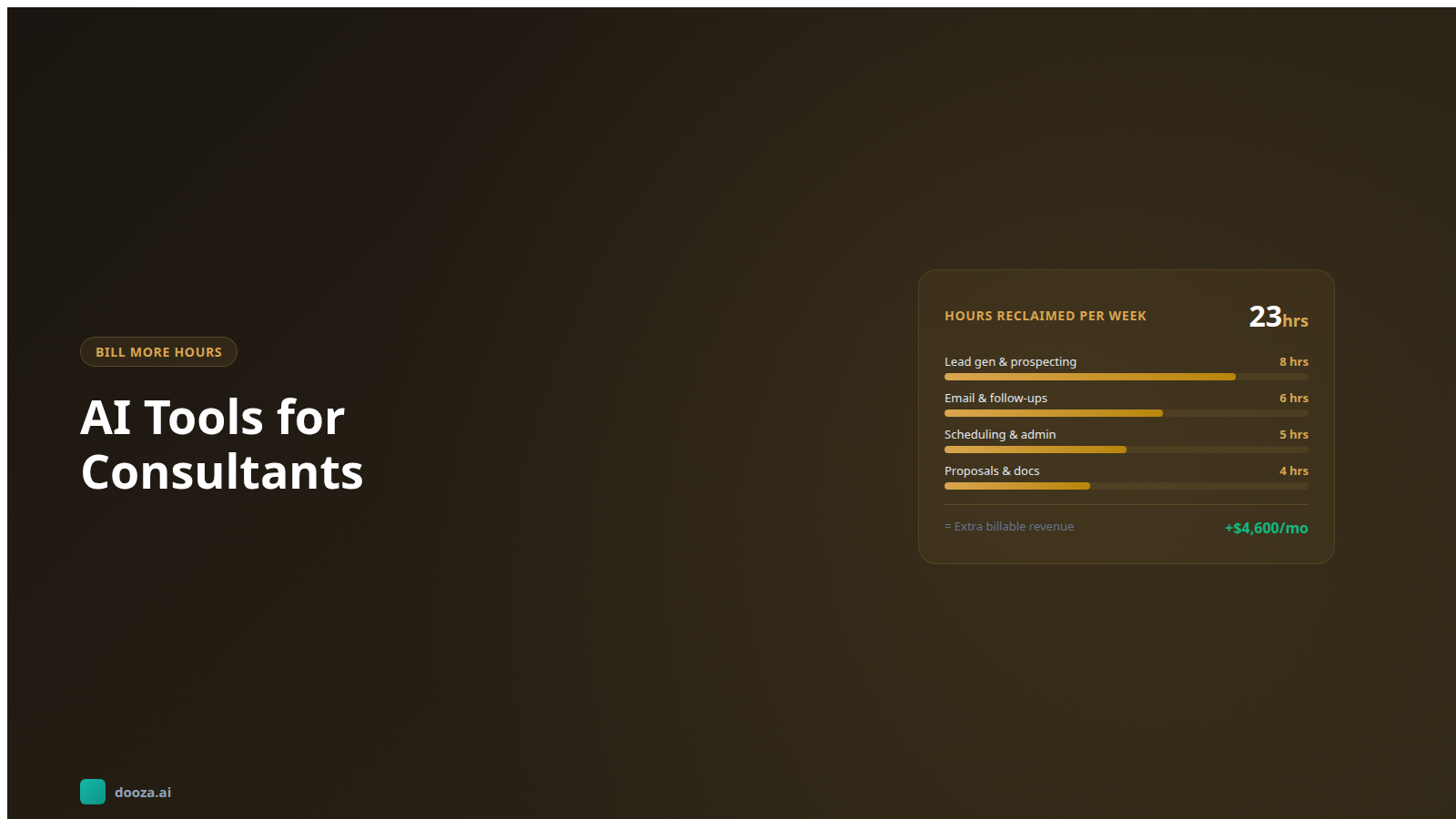
AI Tools for Consultants: Automate the Busywork, Bill More Hours
Consultants spend up to 40% of their time on non-billable tasks. Discover the best AI tools for consultants to automate admin, proposals, lead gen, and client communication.
Start with a refundable pilot — 100% refund within 14 days. A Dooza engineer scopes it with you on a free 30-minute call. Pricing depends on the product; see pricing.