AI agents are moving from hype to utility fast. If you are trying to figure out the best AI agent, the real question is not which tool is hottest — it is which one fits the job you actually need done.
For founders and business teams, that usually means one of three things: automate repetitive work, improve response speed, or create a system that scales without adding headcount. The best platform is the one that handles your workflows reliably and integrates with the tools you already use.
What Is an AI Agent?
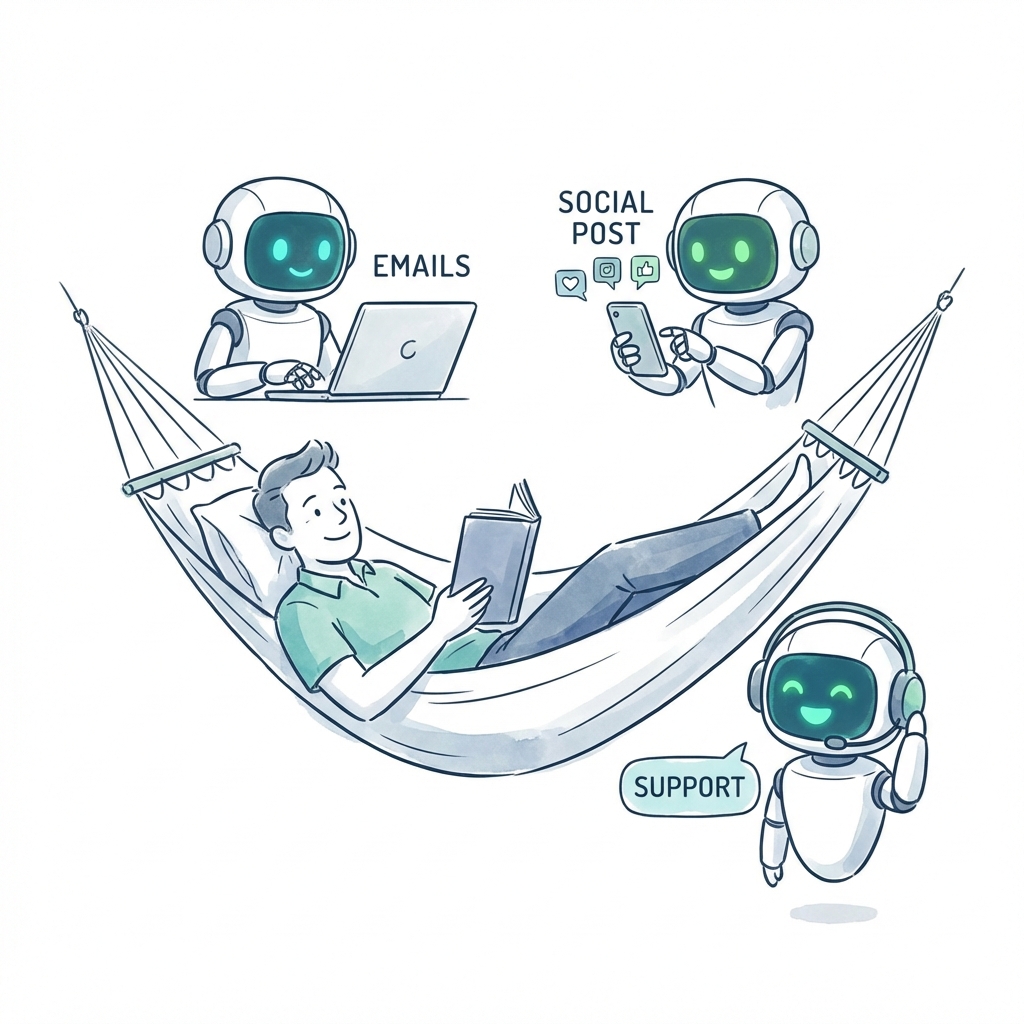
An AI agent is software that can reason, decide, and take action across tools and workflows. Instead of only answering questions, it can complete tasks such as drafting replies, summarizing inboxes, updating records, and triggering automations.
That is the shift that matters: chatbots respond, but agents execute.
Best AI Agent Use Cases
The right AI agent depends on your workflow. Based on current search demand and market patterns, the strongest use cases include:
- Personal assistant workflows — email triage, calendar coordination, reminders
- Business operations — recurring reporting, task routing, internal updates
- Customer support — ticket handling, draft responses, FAQ automation
- Coding and product work — planning, debugging, code generation, deployment assistance
- Custom no-code workflows — multi-step automations across apps
How to Choose the Best AI Agent
Use these criteria before you buy:
- Task fit: Does it solve your exact problem, or just look impressive?
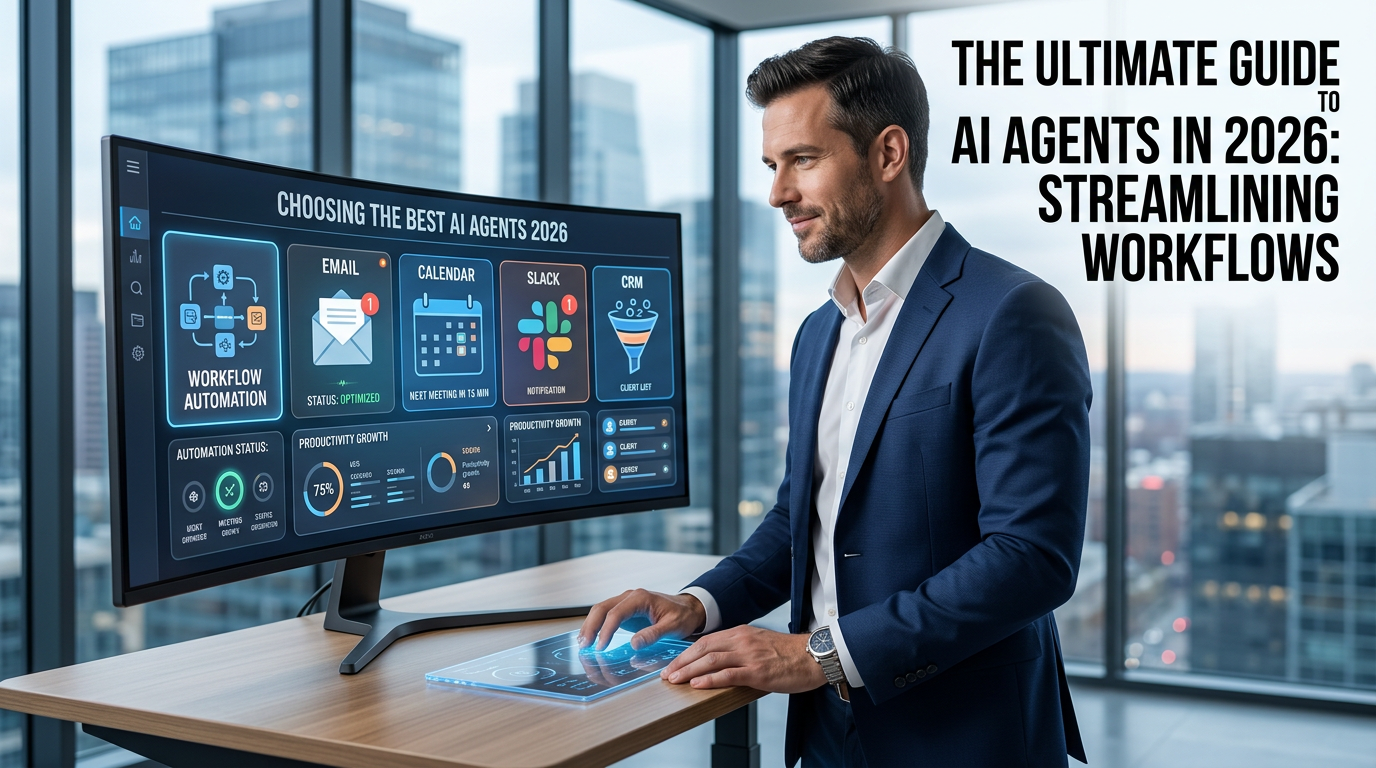
- Integrations: Can it connect to Gmail, Slack, Calendar, CRM, and docs?
- Reliability: Does it work in repeatable workflows, not just demos?
- Control: Can you define rules, permissions, and approvals?
- Scalability: Will it still work when usage grows?
For most businesses, the best AI agent is not the most autonomous one — it is the one that is controllable, transparent, and useful every day.
Top AI Agent Categories in 2026
Industry coverage and search results point to a few clear categories:
- No-code AI employees: best for operators who want quick automation
- Developer frameworks: best for teams building custom systems
- Enterprise agents: best for compliance, governance, and scale
- Workflow builders: best for flexible, cross-app automations
That is why comparison articles often highlight tools like Lindy for broad automation, CrewAI for orchestration, and Gumloop for flexible workflows. In other words, the “best” platform depends on whether you want an AI employee or an AI framework.
Video Walkthrough: AI Agent Tutorial for Beginners
Here is a practical walkthrough that shows how an AI agent can monitor email, draft replies, and use connected tools in a real workflow:
One useful takeaway from the tutorial: the strongest agents are not just prompts — they are built around permissions, memory, integrations, and clear rules. That is exactly what makes them useful in a business setting.
What the Transcript Shows
The transcript reinforces a few key points worth borrowing for your own strategy:
- Start with a clear job: monitoring inboxes, drafting replies, sending summaries
- Connect real tools: Gmail, Calendar, Slack, Drive, and external APIs
- Define identity and rules: the agent needs boundaries, not just prompts
- Use memory carefully: better context improves performance over time
That is the difference between a demo and a deployable agent.
Best AI Agent for Business?
If your goal is practical business automation, the best AI agent is usually the one that can do these three things:
- reduce manual admin work
- connect to the systems you already use
- operate with enough control that you trust it
For founders, that often means choosing a platform built around workflows rather than novelty. The highest-value use cases are typically operations, support, sales follow-up, and internal reporting.
Final Thoughts
The best AI agent is not the one with the loudest marketing. It is the one that saves time, fits your workflow, and supports better decisions without creating new chaos.
If you are evaluating options, start with your business process first — then match the agent to the job. That approach will get you farther than chasing the newest tool.
FAQs
What is the best AI agent right now?
The best AI agent depends on the task. For general no-code automation, choose a workflow-friendly platform; for coding, choose a developer-focused agent; for enterprise support, choose a governed system with integrations.
What makes an AI agent different from a chatbot?
A chatbot answers questions. An AI agent can reason across steps, use tools, and complete tasks inside connected systems.
Are AI agents worth it for small businesses?
Yes, if they remove repetitive work like inbox triage, scheduling, reporting, or customer follow-up. The ROI comes from saved time and fewer manual errors.
What should I look for before buying an AI agent?
Check integrations, reliability, control, and whether it matches your actual workflow. Do not buy for features you will not use.