AI Agent and Virtual Assistant: A Complete Comparison Guide
As artificial intelligence continues to reshape how businesses operate, many entrepreneurs and business leaders find themselves evaluating different automation solutions. Two terms that frequently come up are AI Agents and Virtual Assistants. While they might sound similar, understanding the difference could save your business significant money and time.
Dooza is an AI-native company that builds AI products and services for small businesses, including ready-made AI employees in Dooza Workforce. In this guide, we'll break down everything you need to know about AI Agents versus Virtual Assistants, helping you make an informed decision for your business.
What Is an AI Agent?
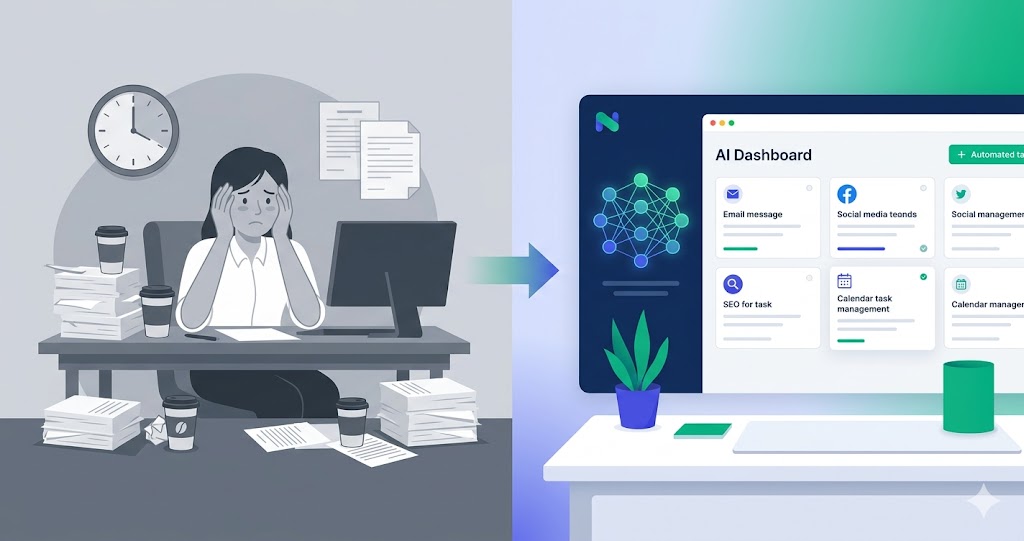
An AI Agent represents the next evolution in business automation. Unlike traditional software or basic tools, AI Agents are sophisticated systems designed to perform job-like functions autonomously within a business.
Think of an AI Agent as a digital team member who:
- Understands context and makes decisions based on your specific business rules
- Works continuously without supervision on assigned tasks
- Integrates deeply with your CRM, email, databases, and other business tools
- Learns from interactions to improve performance over time
- Handles nuanced situations that require judgment and problem-solving
- Operates autonomously without constant hand-holding
Vendors now offer AI Agents for specific roles like customer support, sales development, email, and more. The key differentiator is autonomy—AI Agents get work done without needing constant direction.
💡 Dooza Insight: An AI Agent can run around the clock on repetitive workflows. Keep a person in the loop for anything sensitive.
What Is a Virtual Assistant?
A Virtual Assistant (VA) is typically a human-powered service or a basic AI tool that handles specific, often repetitive, tasks under direction. Traditional VAs are real people working remotely who follow your instructions to complete tasks.
The term "Virtual Assistant" encompasses two main categories:
Human Virtual Assistants
Remote workers who handle tasks like:
- Email management and scheduling
- Basic customer service responses
- Data entry and research
- Calendar management
- Social media posting
AI-Powered Virtual Assistants
Software tools that use basic AI or rule-based logic:
- Simple chatbots for FAQs
- Automated scheduling tools
- Basic response routing systems
- Template-based email responders
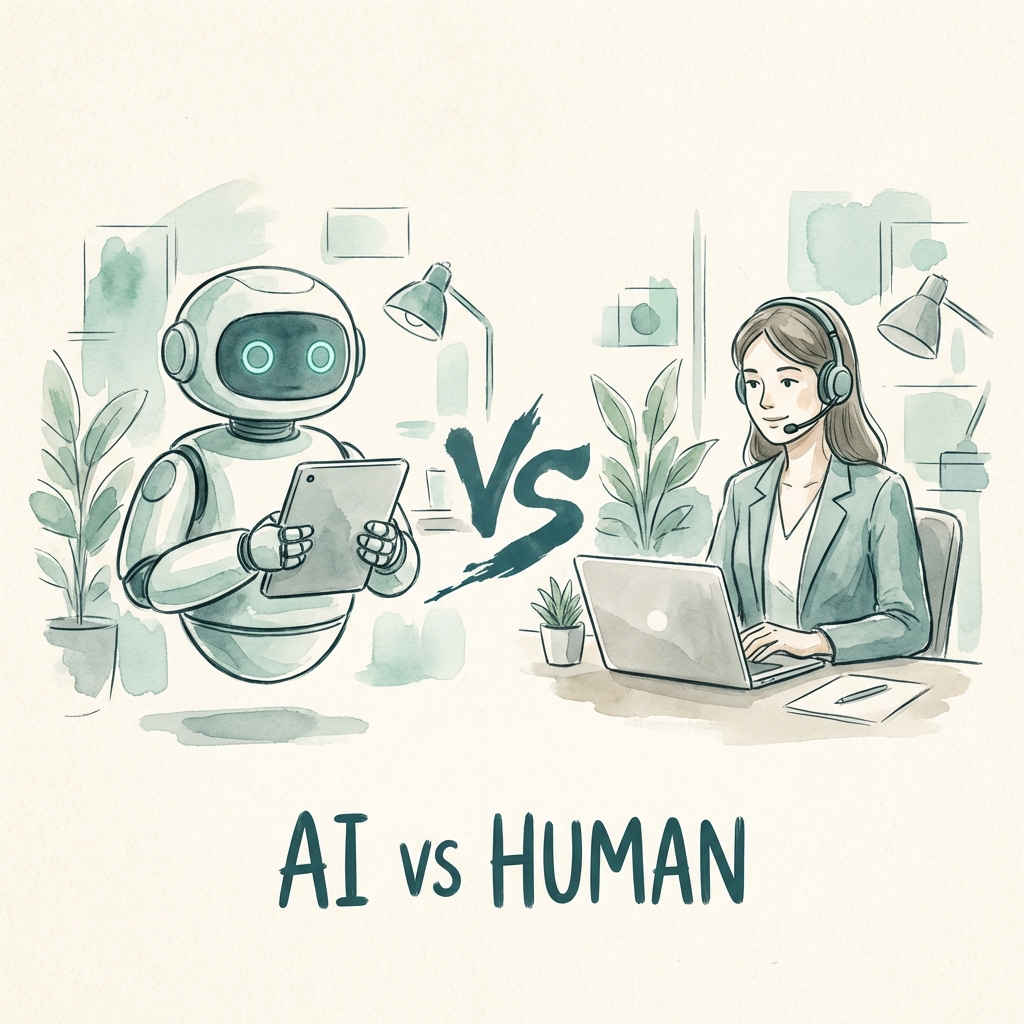
While Virtual Assistants can be helpful for certain tasks, they operate quite differently from AI Agents in terms of capability, scalability, and cost-effectiveness.
Key Differences: AI Agent and Virtual Assistant
Now let's dive into the critical differences that matter for your business.
1. Autonomy and Independence
AI Agent: High autonomy. Once configured, an AI Agent operates independently, making decisions and completing tasks without ongoing input. You set the goals; the AI Agent figures out the best way to achieve them.
Virtual Assistant: Low to moderate autonomy. Most VAs—whether human or AI-powered—require detailed instructions for each task. They're reactive rather than proactive.
Example: Tell an AI Agent to "handle customer support tickets" and it will prioritize, categorize, respond, and escalate as needed. Tell a VA the same, and you'll need to specify exactly how to handle each type of ticket.
2. Complexity Handling
AI Agent: Can handle complex, multi-step workflows involving conditional logic, branch scenarios, and nuanced decision-making. An AI Agent can navigate a complex customer complaint, assess the situation, and resolve it appropriately.
Virtual Assistant: Excels at simple, linear tasks. Ask a VA to schedule a meeting, and it's great. Ask it to handle a complex customer issue with multiple variables, and it will likely need to escalate to a human.
3. Integration Capabilities
AI Agent: Deep system integration. AI Agents connect with your CRM, ERP, email platforms, databases, and custom applications. They can pull data, update records, trigger workflows, and coordinate across systems.
Virtual Assistant: Limited integration. Most VAs operate in their own environment or connect to basic APIs. They typically don't have the capability to orchestrate complex business processes across multiple platforms.
4. Scalability
AI Agent: Scales with volume. Need more customer support capacity? Add agent capacity instead of hiring. Agents can work simultaneously, 24/7, without the logistics of managing additional team members.
Virtual Assistant: Limited scalability. Adding more VA capacity means onboarding more human assistants or purchasing additional tool licenses—each with its own learning curve and management overhead.
5. Cost Structure
AI Agent: Usually a subscription, with no benefits or recruiting costs. You still need someone to set it up and review its work. Dooza's pricing depends on the product and is listed on the pricing page. Every product starts with a refundable pilot: 100% refund within 14 days.
Virtual Assistant: Variable costs. Human VAs require salaries (often hourly), benefits (for full-time), and training investment. AI-powered VAs have licensing costs that can add up with usage.
| Cost Factor | AI Agent | Human VA |
|---|
| Base Cost | Monthly subscription (see vendor pricing) | Hourly or monthly rate |
| 24/7 Coverage | Usually included | Needs several people or shifts |
| Training | Setup and rules up front | Onboarding, then ongoing |
| Management Overhead | Reviewing logs and escalations | Day-to-day supervision |
| Turnover | Not a factor | Rehiring and retraining when people leave |
6. Contextual Understanding
AI Agent: Advanced contextual awareness. AI Agents understand your business context, customer history, and can maintain conversation context across interactions. They remember previous exchanges and build on them.
Virtual Assistant: Basic contextual understanding at best. Traditional chatbots and basic VAs typically treat each interaction in isolation. They don't truly "remember" or understand the broader context of your business.
7. Learning and Adaptation
AI Agent: Continuous learning. AI Agents improve through interactions, learning from feedback, and adapting to your business preferences over time. They get better at their jobs.
Virtual Assistant: Static or slow-learning. Most VAs require manual updates to improve. Human VAs learn but have turnover. Basic AI VAs need explicit retraining or updates to change behavior.
The Business Impact: Why the Choice Matters
According to Microsoft and LinkedIn's 2024 Work Trend Index, 75% of knowledge workers already use AI at work (Microsoft, May 2024). But not all automation is created equal.
Here's where the difference shows up:
- Operating costs can fall when repetitive work moves from people to an agent
- Customer response times can drop when an agent sends the first reply
- Employee satisfaction can rise when repetitive tasks are automated
- Scaling takes days of setup rather than months of hiring
🚀 Ready to Transform Your Business? Book a free pilot call with Dooza. Every product starts with a refundable pilot: 100% refund within 14 days.
When to Choose an AI Agent
Choose an AI Agent when you need:
- 24/7 operations: AI Agents never sleep, take breaks, or call in sick
- Complex workflows: Multi-step processes requiring judgment and adaptation
- High volume capacity: Handling thousands of customer interactions daily
- Consistent quality: Standardized processes that must be executed the same way every time
- Cost efficiency: Reducing overhead while maintaining productivity
- Scalability: The ability to ramp up or down instantly
- Deep integration: Connecting multiple business systems seamlessly
- Continuous improvement: Systems that get better over time
Dooza Workforce has ready-made AI employees for roles like:
- Maily for email
- Somi for social media
- Ranky for SEO and AI visibility
- Stan for lead generation and sales outreach
- Linda for legal documents
- Rachel for phone calls and reception
For other roles, Dooza Agents are custom AI agents built and maintained by Dooza engineers.
When to Choose a Virtual Assistant
Choose a Virtual Assistant when:
- Simple, repetitive tasks: Basic scheduling, data entry, or FAQ responses
- Creative or strategic work: Tasks requiring human creativity, complex negotiations, or relationship building
- Limited budget for automation: When basic tools meet your needs
- Human touch required: Situations where customers specifically want to interact with a human
- One-time projects: Tasks that don't repeat enough to justify AI investment
Many businesses find they need both—VAs for creative and strategic tasks, AI Agents for operational execution. The key is understanding what each brings to the table.
Implementation: Getting Started with AI Agents
Ready to bring an AI Agent into your business? Here's how to get started:
- Assess your needs: Identify repetitive, high-volume tasks that don't require human creativity
- Choose your AI Agent type: Select the role that matches your needs (support, sales, etc.)
- Integration setup: Connect your tools and provide necessary access
- Configuration: Set up workflows, responses, and business rules
- Launch and monitor: Go live and track performance
- Iterate and improve: Refine based on feedback and results
With Dooza, an engineer scopes your pilot on a free 30-minute call. Workforce employees can start working the same day, and custom agents are live in days.
⚡ Fast Deployment: Custom Dooza Agents are live in days, not months.
The Future of Work: AI Agents Leading the Way
The concept of "AI as Employee" is gaining traction, and AI Agents are becoming a standard category in business software.
The shift isn't about replacing humans—it's about creating a new layer of digital workforce that handles the heavy lifting. People stay essential for work that needs interpersonal skills, creativity, and judgment.
This is the "human-in-the-loop" model that forward-looking companies are adopting: humans as the judgment layer, AI as the execution layer. Both are essential; neither replaces the other.
How Dooza Fits Into This Picture
Dooza is an AI-native company that builds AI products and services for small businesses, from the Dooza Workforce app to the Dooza Agents platform. Here's what you get:
- Ready-made AI employees: Dooza Workforce covers email, social media, SEO, leads and sales outreach, legal documents, and phone calls
- Custom agents: Dooza Agents are built and maintained by Dooza engineers
- Integrations: 1,000+ app integrations
- Public pricing: Listed on the pricing page
- Refundable pilot: Every product starts with one: 100% refund within 14 days
- Security: Encrypted connections and your approval on anything sensitive
Whether you need help with email, social media, sales, or phone calls, Dooza's AI employees work alongside your human team, handling the repetitive work that would otherwise burden your staff.
Making the Right Choice for Your Business
The choice between AI Agent and Virtual Assistant isn't about which is "better"—it's about which is right for your specific needs. Here's a quick decision framework:
Choose AI Agent if:
- You need to handle high volumes of complex interactions
- You want to reduce operational costs while increasing capacity
- You need 24/7 coverage without shift scheduling headaches
- You want consistent, quality-controlled outcomes
- You're looking to scale quickly without proportional cost increases
- Deep system integration is important to your operations
Choose Virtual Assistant if:
- Your tasks are simple, well-defined, and low-volume
- You need human creativity or judgment for specific interactions
- Your budget doesn't allow for AI investment
- You have unique circumstances requiring human empathy
- One-time or infrequent tasks don't justify automation
Many businesses find they need both—VAs for creative and strategic tasks, AI Agents for operational execution. The key is understanding what each brings to the table.
🤝 The Best of Both Worlds
Dooza can help you build a hybrid team of people and AI.
Conclusion: The AI Agent Era is Here
The debate between AI Agents and Virtual Assistants reflects a broader transformation in how we think about work. Businesses that embrace AI Agents are gaining competitive advantages in efficiency, scalability, and customer experience.
Virtual Assistants have their place—they're great for simple tasks and human-driven creativity. But for businesses ready to scale, reduce costs, and deliver consistent excellence, AI Agents are the clear choice.
At Dooza, we believe in the power of AI to augment human capability, not replace it. Our AI Agents handle the work that weighs down your team, freeing them to do what humans do best: create, connect, and innovate.
The future of work isn't about choosing between humans and AI. It's about building the right team—human and AI together. Dooza can help you build it.
Ready to meet your new AI Agent? Book a free pilot call to scope your pilot. Every product starts with a refundable pilot: 100% refund within 14 days.
Frequently Asked Questions
1. What is the main difference between an AI Agent and a Virtual Assistant?
The primary difference lies in autonomy and capability. An AI Agent operates independently, handling complex multi-step workflows with contextual understanding. A Virtual Assistant typically requires more direction and excels at simpler, more defined tasks.
2. Can AI Agents replace human employees entirely?
No—not at Dooza, and not responsibly. AI Agents are designed to handle repetitive, high-volume tasks that don't require human creativity, empathy, or complex judgment. They augment your team, freeing humans to focus on strategic, relationship-driven work.
3. How much does an AI Agent cost compared to hiring a human VA?
An AI Agent usually costs less than a full-time hire because there are no benefits or recruiting costs, but the saving depends on the role and how much work you hand over. Dooza's pricing depends on the product and is listed on the pricing page. Every product starts with a refundable pilot: 100% refund within 14 days.
4. How long does it take to implement an AI Agent?
Timelines depend on complexity. With Dooza, Workforce employees can start working the same day, and custom agents are live in days.
5. Are AI Agents secure and compliant?
Ask any vendor exactly what it does. Dooza uses encrypted connections and asks for your approval on anything sensitive. Dooza is not SOC 2 certified.
6. Can AI Agents integrate with my existing business software?
Usually, yes. Dooza connects to 1,000+ apps, including common CRM, helpdesk, and email tools.
7. What happens if the AI Agent can't handle a situation?
AI Agents are designed to know their limits. When faced with complex situations requiring human intervention, they seamlessly escalate to your human team, providing full context so nothing falls through the cracks.
8. Do AI Agents learn and improve over time?
Yes! One of the key advantages of AI Agents is continuous learning. They improve with each interaction, learning from feedback and adapting to your business preferences and processes.
9. Can I have multiple AI Agents for different roles?
Yes. Dooza Workforce has separate AI employees for email, social media, SEO, sales, legal documents, and phone calls, and Dooza Agents can be built for other functions. You can scale up or down based on your business needs.
10. Is AI Agent technology new? Is it proven?
AI Agent technology has matured significantly. Companies across industries successfully use AI Agents for everything from customer support to data analysis. The technology is proven, reliable, and improving rapidly.
11. How do I measure the ROI of an AI Agent?
Key metrics include time saved (hours of work displaced), cost reduction (lower labor costs), throughput increase (more interactions handled), response time improvement, and customer satisfaction scores. Measure them before the pilot and again at the end of it.
12. What kind of support does Dooza provide?
A Dooza engineer scopes your pilot on a free 30-minute call and helps with setup. Dooza Agents are built and maintained by Dooza engineers.
13. Can AI Agents work alongside human teams?
Yes, and this is the ideal model. AI Agents handle the repetitive, high-volume work while humans focus on complex issues, creative work, and relationship building. This hybrid approach maximizes both efficiency and quality.
14. What industries benefit most from AI Agents?
AI Agents benefit virtually any industry with repetitive processes—e-commerce, SaaS, finance, healthcare, real estate, and more. Any business with high-volume customer interactions or data processing needs can gain significant value.
15. How do I get started with Dooza?
Book a free pilot call. A Dooza engineer scopes your pilot on a free 30-minute call. Every product starts with a refundable pilot: 100% refund within 14 days.
16. What's the difference between an AI Agent and a chatbot?
While both use AI technology, AI Agents are far more advanced. Chatbots are typically rule-based or simple NLP-driven tools that respond to specific inputs. AI Agents, on the other hand, can make autonomous decisions, learn from interactions, handle complex workflows, and integrate deeply with business systems. Think of a chatbot as a reactive tool and an AI Agent as a proactive team member.
17. Can AI Agents handle customer objections?
Yes, AI Agents are trained to handle common customer objections. They can provide empathetic responses, offer alternatives, and navigate complex conversations. When unable to resolve an issue, they smoothly escalate to human team members with full context.