AI Employee vs Virtual Employee: The Complete Comparison for 2025
The workplace revolution is here, and it's forcing business owners to make a critical decision: Should they hire AI employees or stick with human virtual employees? This isn't a question most CEOs expected to answer in 2025, yet here we are.
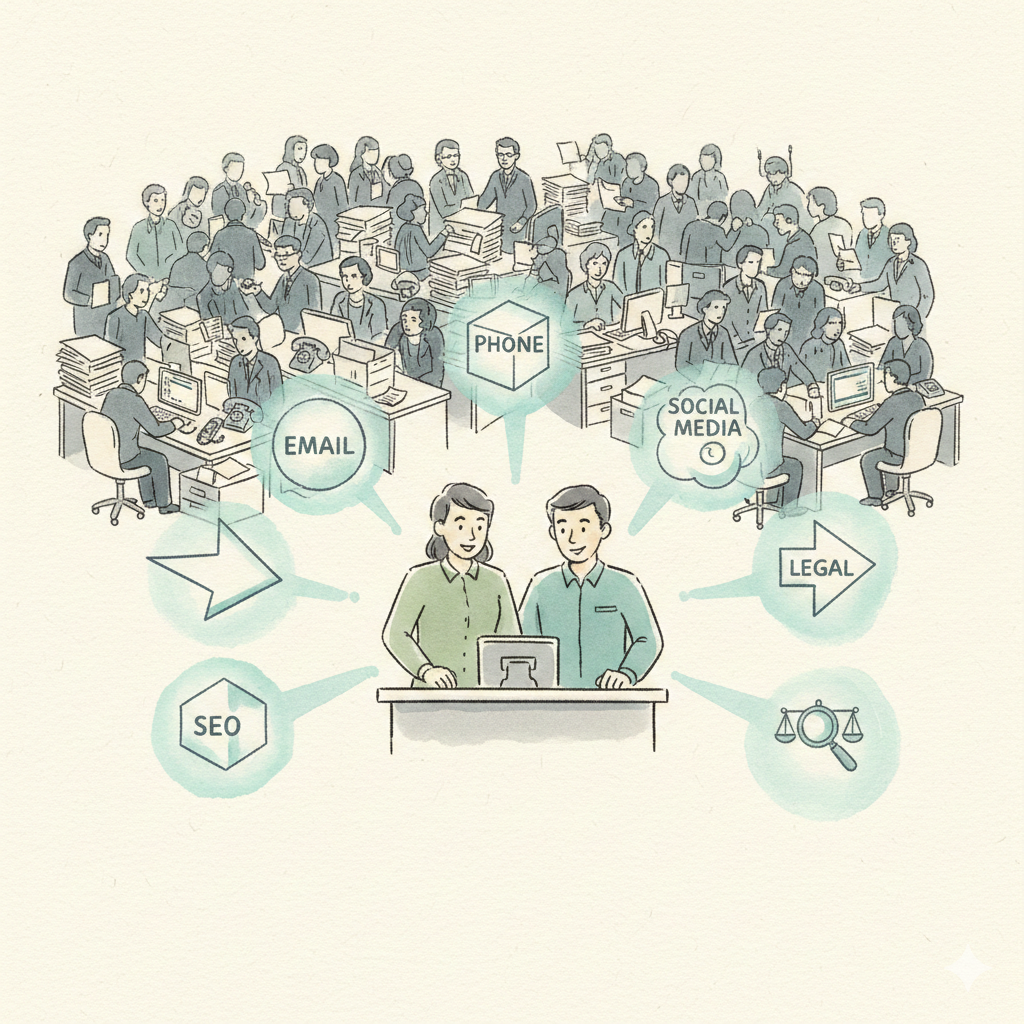
At Dooza, an AI-native company that builds AI products and services for small businesses, we make AI employees for email, social media, SEO, lead generation, legal documents, and phone calls. But we also understand that traditional virtual employees still play a vital role in many organizations. So let's dive deep into the ultimate showdown: AI Employee vs Virtual Employee.
Understanding the Basics
What Is an AI Employee?
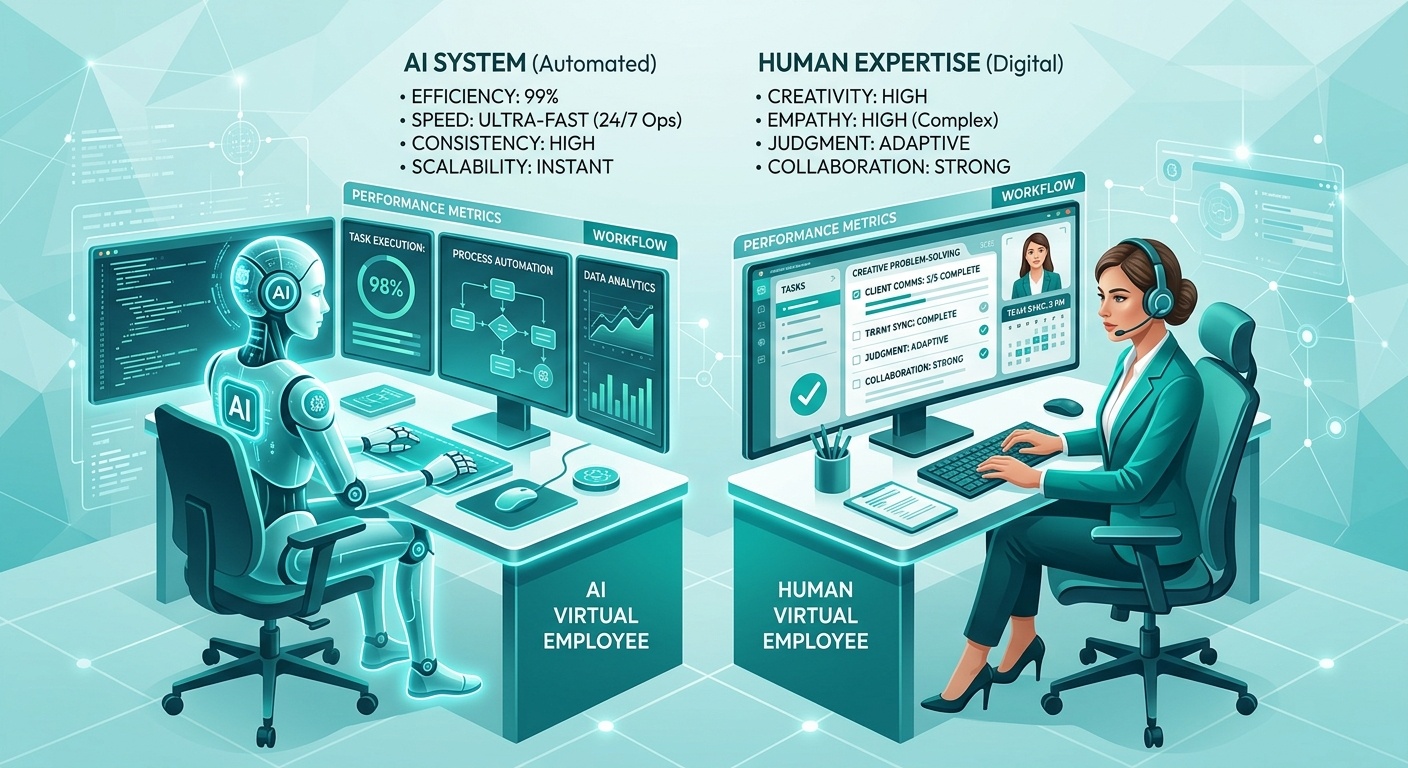
An AI employee is a sophisticated artificial intelligence system designed to perform specific business tasks autonomously. Unlike basic chatbots or rule-based automation tools, AI employees, such as those in Dooza Workforce, can:
- Process natural language and understand context
- Make decisions within defined parameters
- Learn from interactions to improve over time
- Work continuously without breaks, holidays, or sick days
- Integrate with multiple business systems seamlessly
AI employees represent the next evolution in workplace automation. They're not just tools—they're digital workers that can handle complex workflows, from managing customer inquiries to executing SEO strategies.
What Is a Virtual Employee?
A virtual employee is a human worker who operates remotely, providing professional support services from a different location. Virtual employees have been a staple of modern business for over two decades, offering:
- Human judgment and emotional intelligence
- Creative problem-solving capabilities
- Cultural understanding and nuanced communication
- Flexibility in handling unstructured tasks
- Personal accountability and ownership
Virtual employees typically work as part of remote teams, handling tasks like administrative support, customer service, content creation, and more.
Key Comparison Factors
1. Availability and Working Hours
AI Employee: Works 24/7/365 without overtime pay
- No sick days, vacation time, or holidays
- Instant response times across all time zones
- Handles peak loads without burnout
Virtual Employee: Limited to standard working hours
- Typically 8-hour shifts with overtime costs
- Time zone limitations affect coverage
- Requires backup coverage for absences
Where AI helps: AI employees can cover nights and weekends, when staffing people is hardest. Set clear rules for what they can answer and when they hand off to a person.
2. Cost Structure
AI Employee: Predictable, scalable pricing
- No recruitment costs
- No training expenses
- No benefits, insurance, or payroll taxes
- Scale usage up or down instantly
Virtual Employee: Variable costs with hidden expenses
- Recruitment and onboarding fees
- Training and development costs
- Benefits packages (health insurance, paid time off)
- Equipment and software provision
- Management overhead
Because one AI employee can handle many conversations at once, cost per interaction can fall as volume grows. Measure it on your own workload before you commit.
3. Response Time and Efficiency
AI Employee: Instantaneous responses
- Process thousands of inquiries simultaneously
- No waiting time for customer queries
- Automated follow-ups and reminders
- Instant data processing and analysis
Virtual Employee: Human-paced workflow
- Limited by typing speed and cognitive processing
- Sequential task handling
- Need for breaks and rest periods
- Subject to fatigue and errors under load
4. Scalability
AI Employee: Scales with volume
- Handle any volume of requests
- Copy instantly across multiple functions
- No recruitment timeline
- Instant deployment
Virtual Employee: Linear scaling
- One hire = one unit of capacity
- Recruitment takes weeks or months
- Training takes additional time
- Management complexity increases linearly
5. Consistency and Quality
AI Employee: Consistent performance
- Same quality regardless of time or day
- No mood variations
- Standardized responses
- Controlled by quality parameters
Virtual Employee: Variable quality
- Performance varies by individual
- Subject to personal circumstances
- Training gaps and knowledge rot
- Cultural and language nuances can affect consistency
Detailed Feature-by-Feature Comparison
Customer Service and Support
| Feature | AI Employee | Virtual Employee |
|---|
| Available 24/7 | ✅ Yes | ❌ No |
| Handle high volume | ✅ Yes | ❌ Limited |
| Multi-language | ✅ Yes | ❌ Limited |
| Emotional intelligence | ⚠️ Limited | ✅ Yes |
| Complex problem-solving | ⚠️ Context-dependent | ✅ Yes |
| Escalation management | ✅ Yes | ✅ Yes |
AI employees can take routine customer questions, freeing your virtual employees to focus on complex issues that need creative problem-solving.
Email and Inbox Management
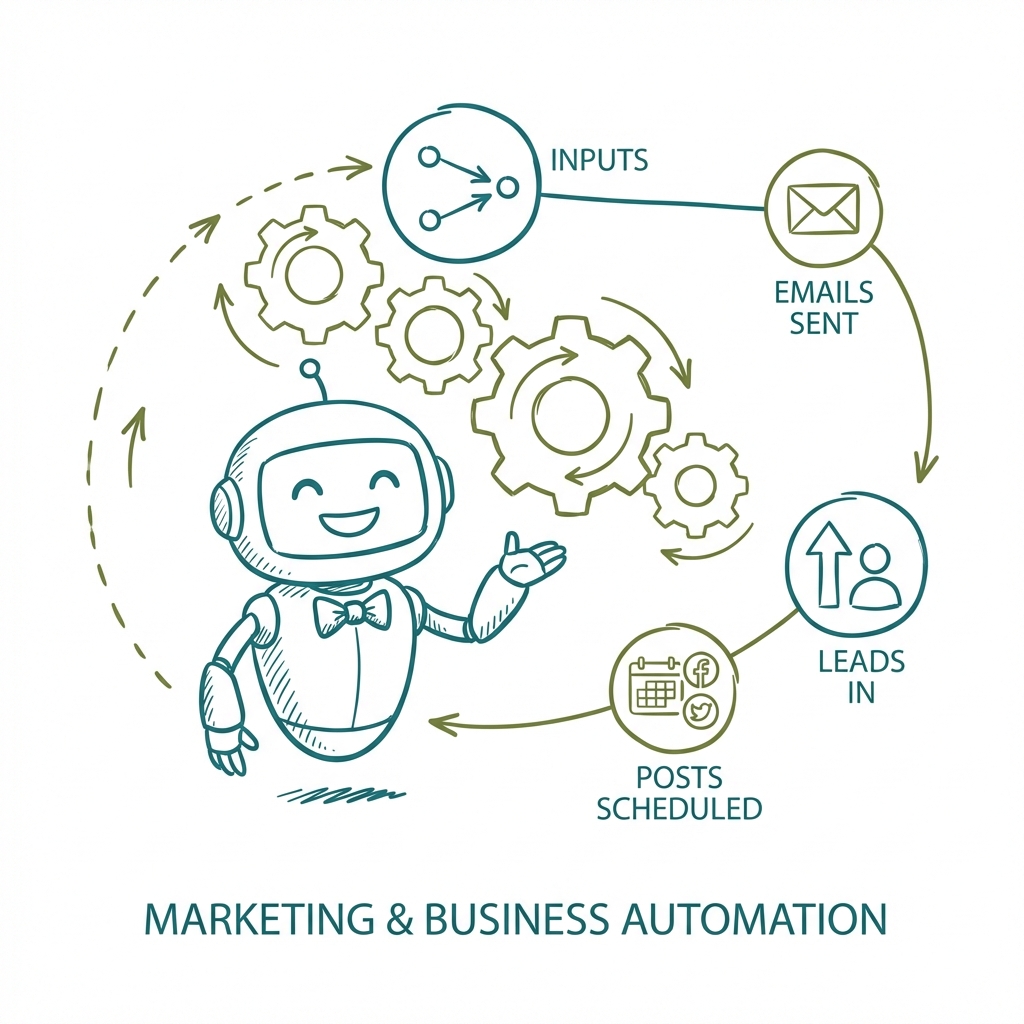
AI employees excel at:
- Sorting and prioritizing emails
- Auto-responding to common queries
- Extracting and organizing data
- Scheduling follow-ups
- Spam filtering and categorization
Virtual employees bring:
- Nuanced communication judgment
- Handling sensitive conversations
- Building relationships
- Understanding context beyond keywords
Social Media Management
AI employees can:
- Schedule posts across platforms
- Generate content suggestions
- Monitor engagement metrics
- Auto-respond to comments
- Analyze competitor activity
Virtual employees offer:
- Authentic engagement
- Trend awareness and viral content creation
- Crisis communication management
- Brand voice authenticity
Sales and Lead Generation
AI employees excel at:
- Cold outreach at scale
- Lead qualification
- Meeting scheduling
- Follow-up automation
- CRM data entry
Virtual employees provide:
- Complex negotiation skills
- Relationship building
- Customized proposals
- High-touch client management
Example Use Cases
These are illustrative setups, not customer results.
E-Commerce Support
An AI employee answers order-tracking, FAQ, and return questions around the clock and hands anything unusual to a person.
Marketing Agency
An AI employee handles content scheduling, SEO research, and performance reporting. A virtual employee keeps creative direction and client relationships. The workflow is "AI-first, human-approved".
B2B SaaS Sales
An AI employee handles lead scoring, first outreach, and meeting scheduling. The human sales team focuses on closing.
The Hybrid Model: Best of Both Worlds
The most successful businesses in 2025 aren't choosing between AI employees and virtual employees—they're combining both for maximum efficiency.
Recommended Workflow:
- AI handles the volume – Initial contact, basic queries, data processing
- Virtual handles the complex – Escalations, relationships, creative work
- AI learns from virtual – Improvement through human feedback
- Continuous optimization – Both improve over time
This hybrid approach gives you:
- 24/7 coverage (AI)
- Human touch for complex situations (Virtual)
- Cost efficiency (AI)
- Scalability (AI + Virtual)
- Quality control (Human oversight)
Making the Decision: Which Is Right for Your Business?
Choose AI Employee If:
- You need 24/7 coverage
- You have high-volume, repetitive tasks
- You want predictable, scalable costs
- You need instant deployment
- You're looking to reduce operational overhead
- You want to free human talent for strategic work
Choose Virtual Employee If:
- You need complex judgment calls
- You have highly nuanced communication needs
- You're building long-term client relationships
- Your tasks are highly creative or unstructured
- You need deep cultural understanding
- You have budget for full-time staff with benefits
Choose Both If:
- You want maximum efficiency
- You have diverse task requirements
- You're scaling rapidly
- You need both volume and quality
- You want to future-proof your operations
The Future of Work: AI Employees Leading the Way
By 2025, the debate is no longer whether to use AI employees—it's how quickly you can integrate them. AI hasn't replaced humans in most companies; instead, it's changed how they work, altering team dynamics, decision-making speed, and overall productivity.
The most successful organizations are those that embrace AI as an augmentation to human capabilities, not a replacement. At Dooza, we believe the future of work is collaborative—AI employees handling the routine, virtual employees handling the relationship, and humans making the strategic decisions.
Frequently Asked Questions (FAQ)
1. What is the main difference between an AI employee and a virtual employee?
The primary difference is that an AI employee is an artificial intelligence system that automates tasks autonomously, while a virtual employee is a human worker operating remotely. AI employees work 24/7 without breaks, while virtual employees provide human judgment and emotional intelligence.
2. Can AI employees completely replace virtual employees?
No, AI employees cannot completely replace virtual employees. While AI excels at high-volume, repetitive tasks, virtual employees bring creative problem-solving, emotional intelligence, and relationship-building skills that AI cannot fully replicate. The best approach is a hybrid model.
3. How much do AI employees cost compared to virtual employees?
AI employees are usually priced as a subscription, while virtual employees require salaries, benefits, training, and management overhead. Because AI employees handle many conversations at once, they tend to cost less per task for high-volume work. Dooza pricing depends on the product (see pricing). Every product starts with a refundable pilot: 100% refund within 14 days.
4. Are AI employees reliable for customer service?
They can be, for routine questions with clear answers. They give consistent responses, work 24/7 without breaks, and can handle many inquiries at once. Set them up on your own business context, with your approval on anything sensitive and a human handoff for the rest.
5. How long does it take to deploy an AI employee?
It depends on complexity. With Dooza, Workforce AI employees can start working the same day, and custom agents are live in days. Hiring a virtual employee usually takes weeks to months.
6. Do AI employees require training?
AI employees require initial configuration and training on your business processes, but this happens much faster than training human employees. They can also learn and improve from interactions over time.
7. Can AI employees handle complex customer issues?
AI employees handle most routine issues automatically. For complex problems requiring nuanced judgment, they can seamlessly escalate to human virtual employees or your team, ensuring customers always get the help they need.
8. What tasks are best suited for AI employees?
AI employees excel at: email management, customer support, lead qualification, data entry, scheduling, social media posting, SEO optimization, and other high-volume, repetitive tasks.
9. What tasks require virtual employees instead?
Virtual employees are better for: complex negotiations, creative content strategy, crisis management, building deep client relationships, handling sensitive HR matters, and tasks requiring emotional intelligence.
10. How do I get started with AI employees?
Start by identifying your highest-volume, most repetitive tasks. Then, choose a platform like Dooza that offers AI employees configured for your specific needs. Begin with one function (like inbox management) and expand from there.
11. Is my business too small for AI employees?
No, businesses of all sizes can benefit from AI employees. Even small businesses can use AI to provide 24/7 customer support that would be impossible with only human staff.
12. Can AI employees work alongside virtual employees?
Absolutely! The most effective model is a collaboration where AI handles volume and routine tasks while virtual employees focus on complex, relationship-driven work. This hybrid approach maximizes both efficiency and quality.
Conclusion
The choice between AI employees and virtual employees isn't about picking one over the other—it's about understanding how each can contribute to your business success. In 2025, the most forward-thinking companies are leveraging both to create efficient, scalable, and human-centric operations.
At Dooza, we're committed to helping businesses harness the power of AI employees while complementing human talent. Whether you're looking to automate your inbox, supercharge your social media, streamline your sales process, or build a complete AI workforce, we have the solutions you need.
Ready to transform your business operations? Book a free pilot call to see how Dooza's AI employees can work for you. Start with a refundable pilot — 100% refund within 14 days.
This comparison was written by Dooza, an AI-native company that builds AI products and services for small businesses.