Sales Automation
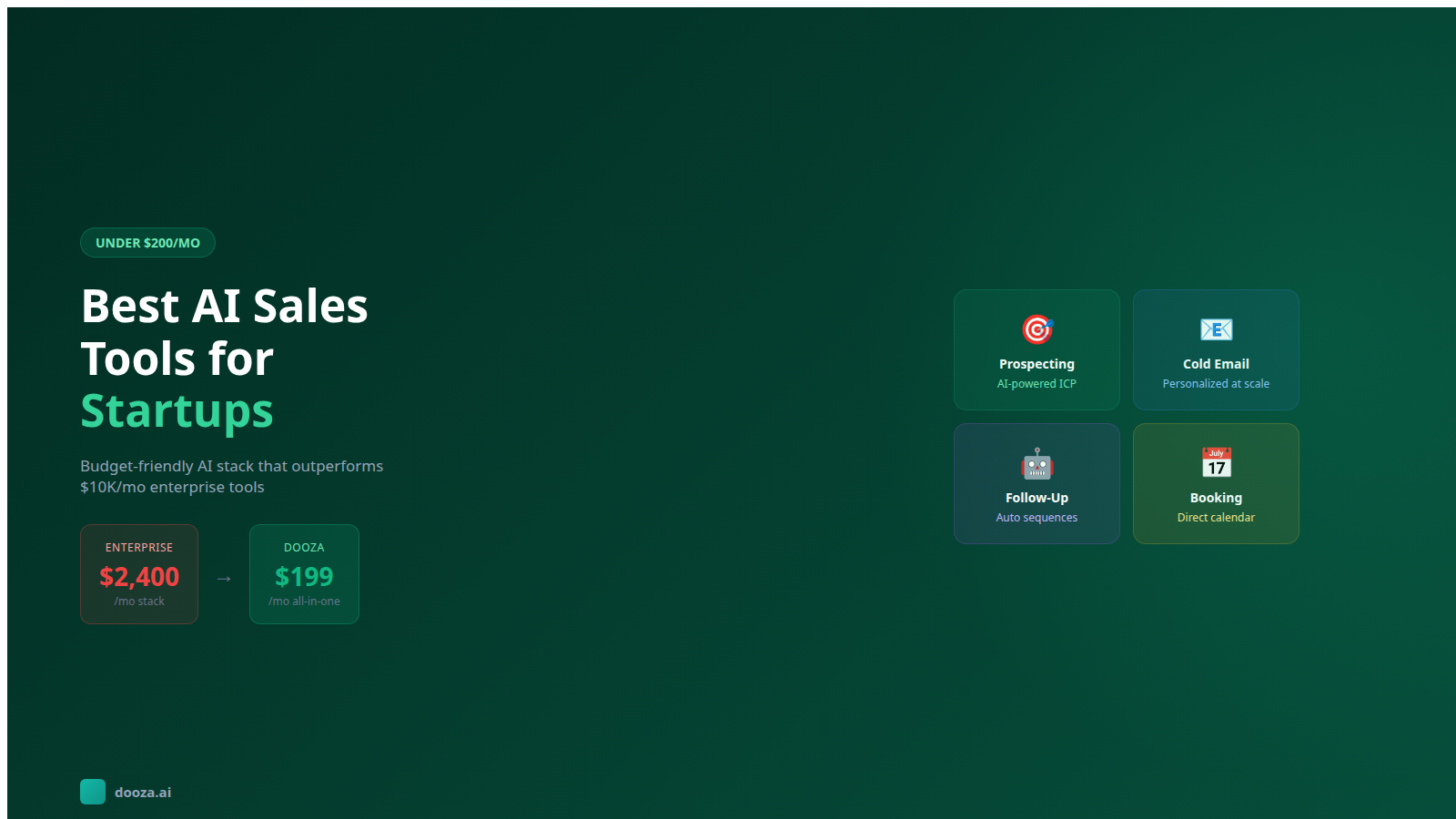
Best AI Sales Tools for Startups in 2026 (Compared)
Compare practical AI sales tools for startup prospecting, outreach, qualification, and follow-up—without buying an enterprise-sized stack.
13 min read
ReadCompare the top AI SDR tools for automated prospecting and outreach. DIY platforms vs done-for-you AI employees for sales development.
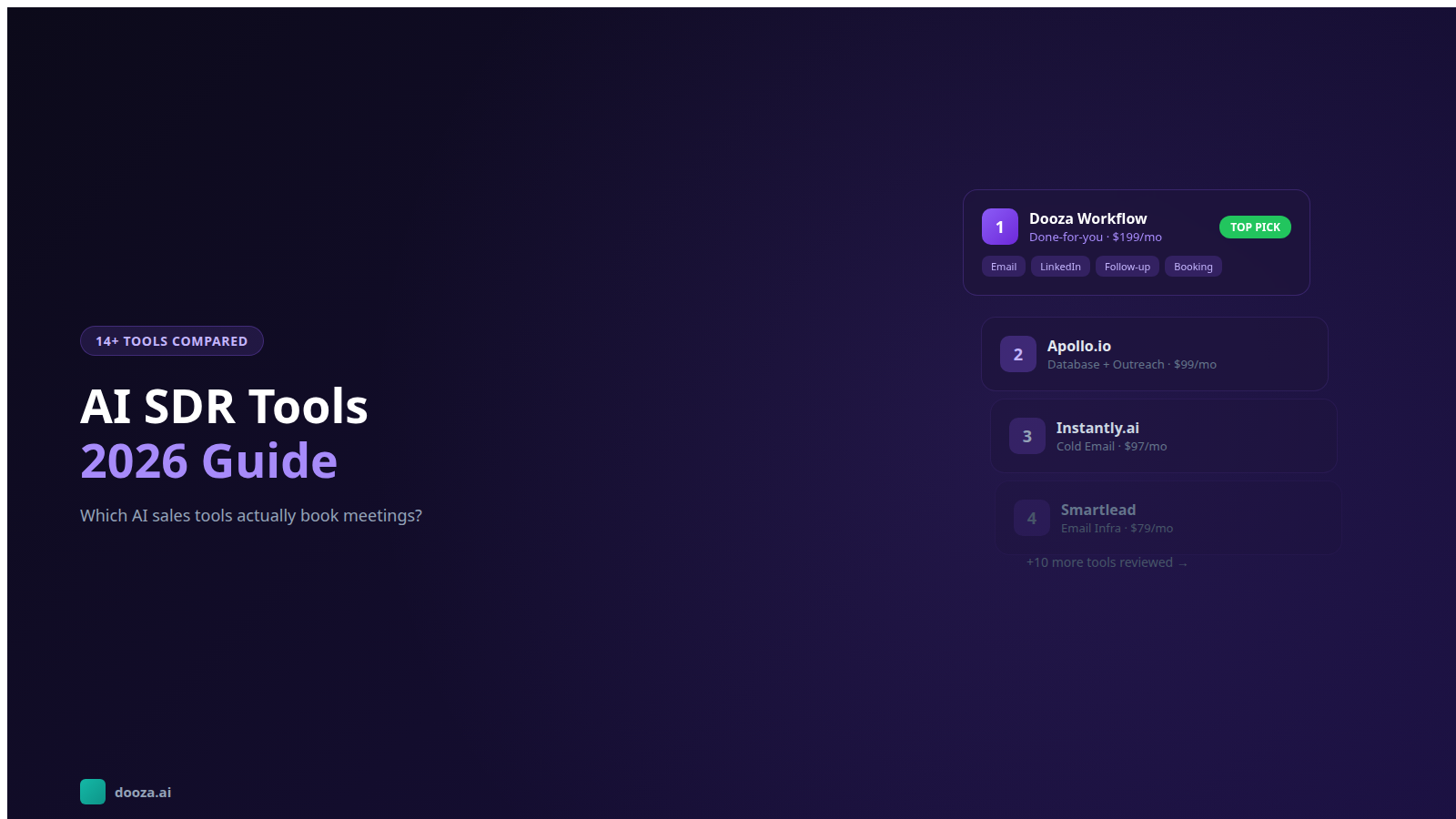
The AI SDR tools market exploded in 2025 and shows no signs of slowing down. Dozens of platforms now promise to automate sales development: finding prospects, writing personalized emails, sending sequences, handling replies, and booking meetings. The problem is not a lack of options. It is figuring out which approach actually works for your business, your budget, and your technical comfort level.
This guide breaks down the major AI SDR tools on the market, compares their strengths and weaknesses, and explains the critical difference between DIY tool stacks and done-for-you AI employee platforms. If you are paying a human SDR or considering your first hire, this comparison will save you months of trial and error.
The AI SDR category has split into three distinct approaches, and understanding the differences is critical before you spend a dollar:
These tools handle one step of the SDR workflow well. You need to connect multiple point solutions together to build a complete pipeline:
The advantage: you pick the best tool for each step. The disadvantage: you become the integration engineer. You are connecting 3-5 tools, managing 3-5 subscriptions, troubleshooting 3-5 potential failure points, and spending hours each week on pipeline plumbing instead of pipeline results.
These tools combine multiple SDR steps into one platform with AI-powered features. They handle more of the workflow but still require significant setup and ongoing management:
These platforms provide AI employees that handle the entire SDR function from prospecting to booking. You define the target, and the AI does the work. Minimal setup, minimal management, maximum output per dollar spent.
Here is a practical breakdown of the most popular tools, what they do well, and where they fall short:
Best for: Teams that want a large contact database with built-in outreach
Pricing: Free tier available, paid plans from $49-119/user/month
Apollo has the largest B2B contact database with over 275 million contacts. Its AI features include email writing assistance, sequence optimization, and lead scoring. The platform covers data, outreach, and basic CRM in one place. The weakness: Apollo is a tool, not an employee. You still write the sequences, manage the campaigns, monitor deliverability, and handle replies yourself. For teams with SDR experience, this works. For founders who just want meetings on their calendar, it is a lot of work.
Best for: High-volume cold email with best-in-class deliverability
Pricing: Outreach Growth plan $47/month billed monthly; lead credits are a separate plan (checked October 7, 2026 on Instantly's pricing page)
Instantly focuses on the sending infrastructure. Unlimited email accounts, automated warmup, rotation, and deliverability monitoring. Their AI personalizes email copy and optimizes send times. The strength is volume and inbox placement. The weakness: you need a separate data source (Apollo, Clay, or manual lists) and you manage the strategy yourself.
Best for: Deep prospect enrichment and data workflows
Pricing: From $149/month
Clay is an enrichment powerhouse. It pulls data from 75+ sources, runs AI research on each prospect, and creates highly personalized data points for outreach. Think of it as a research assistant that prepares the intelligence your outreach needs. The weakness: Clay does not send emails. You need to connect it to a sending tool and manage the workflow end to end.
Best for: Enterprise sales teams with multiple reps
Pricing: Custom pricing, typically $100-150/user/month
These are the heavyweight platforms designed for sales orgs with 10+ reps. Powerful workflow automation, AI-assisted coaching, multi-channel sequencing, and deep CRM integration. The weakness for small businesses: overkill complexity, enterprise pricing, and lengthy implementation. If you are a solo founder or a team of 3, these tools are not built for you.
Best for: Agencies managing outreach for multiple clients
Pricing: Base plan $39/month (checked October 7, 2026 on Smartlead's pricing page)
Smartlead competes directly with Instantly on sending infrastructure. Unlimited mailboxes, automated warmup, and a clean interface for managing high-volume campaigns. Popular with agencies because of its multi-client architecture. Similar weakness to Instantly: sending-focused, data and strategy are your responsibility.
Best for: Multi-channel outreach (email + LinkedIn + calls)
Pricing: From $49/user/month
Reply.io combines email sequences with LinkedIn automation and calling features. Their AI assistant helps write emails and suggest next steps. Good for teams that want to run coordinated multi-channel campaigns. The weakness: the LinkedIn automation features require careful use to avoid account restrictions, and the platform has a steeper learning curve than simpler tools.
This is the most important decision in the AI SDR space, and most comparison articles skip it entirely. The question is not which tool is best. The question is: do you want to build and manage a sales machine, or do you want a sales machine that runs itself?
You pick 3-5 tools, connect them together, write the outreach strategy, build the sequences, manage deliverability, monitor replies, qualify leads, and iterate on performance. Monthly cost: $200-500 in software plus 10-20 hours per week of your time.
This works if you enjoy the process, have sales experience, and consider outreach optimization a core skill for your business. Many agency owners and experienced sales leaders prefer this approach because they want full control over every variable.
You describe your ideal customer, connect your email and calendar, and an AI employee handles the rest: prospecting, research, writing, sending, following up, qualifying, and booking. Monthly cost: see dooza.ai/pricing; every Dooza product starts with a refundable pilot. Hours per week: 1-2 for review and strategy adjustments.
This works if you are a founder, solopreneur, or small team that needs meetings on the calendar without becoming a full-time sales operations manager. You want results, not another skill tree to climb.
The software costs look similar on paper. But the DIY approach has a massive hidden cost: your time. If you value your time at $100/hour (reasonable for a founder), spending 15 hours per week on outreach operations costs $6,000/month in opportunity cost. Add the $300-500 in tools, and your "cheap" DIY stack costs $6,300-6,500/month. That is a steep price for outreach operations.
The done-for-you approach eliminates the time cost. You spend 1-2 hours per week reviewing results and adjusting strategy. At $100/hour, that is $400-800/month in time plus the software, still well below what you would pay a human SDR.
Use these criteria to evaluate any AI SDR tool, whether DIY or done-for-you:
Here is what each approach actually costs when you include software, time, and results:
When you factor in time costs, the done-for-you approach delivers the best cost-per-meeting for businesses that are not sales-operations experts.
Most AI SDR tools give you the parts. Dooza Agents gives you the employee. Here is the difference in practice:
If you have been comparing AI SDR tools and feeling overwhelmed by the options, Dooza is the answer for businesses that want results without becoming sales-operations experts. See pricing or start with Dooza Agents and have your first outreach campaign running today.
An AI SDR tool automates the work of a Sales Development Representative: finding prospects, researching their companies, writing personalized outreach emails, sending follow-up sequences, qualifying replies, and booking meetings. Instead of paying a human SDR a salary plus benefits (median US base about $55,000 a year, Bridge Group 2025), AI SDR tools handle the same pipeline for $100-500/month.
For small businesses that want results without technical setup, done-for-you platforms like Dooza Agents are the best fit, and every Dooza product starts with a refundable pilot (100% refund within 14 days). If you prefer a hands-on approach and have time to manage multiple tools, a combination of Apollo (data) + Instantly (sending) + Clay (enrichment) works but requires more setup and ongoing management.
AI SDR tools send 500-1,000+ personalized emails per day versus 40-60 for a human SDR. A human SDR’s median base salary is about $55,000 a year before commission and benefits (Bridge Group, 2025). AI is more consistent and never takes days off. However, human SDRs are better at complex phone conversations, relationship building, and navigating unusual objections. The best approach for most businesses is AI for volume outreach and humans for high-value conversations.
Yes. Modern AI SDR tools can classify reply intent (interested, not now, wrong person), respond to positive replies with calendar links or direct booking, handle scheduling back-and-forth, and send meeting confirmations. Most businesses using AI SDR tools report 2-4% meeting booking rates from cold outreach, which translates to 10-40 meetings per month depending on volume.
Reply rates vary widely by market, list quality, offer and inbox health, so benchmark against your own earlier campaigns rather than a headline number. If replies are low, check your ICP definition, subject lines and deliverability first. If they are strong and meetings follow, scale volume carefully.
Automate your business with AI employees that work 24/7. Start with a refundable pilot: 100% refund within 14 days.
Compare practical AI sales tools for startup prospecting, outreach, qualification, and follow-up—without buying an enterprise-sized stack.
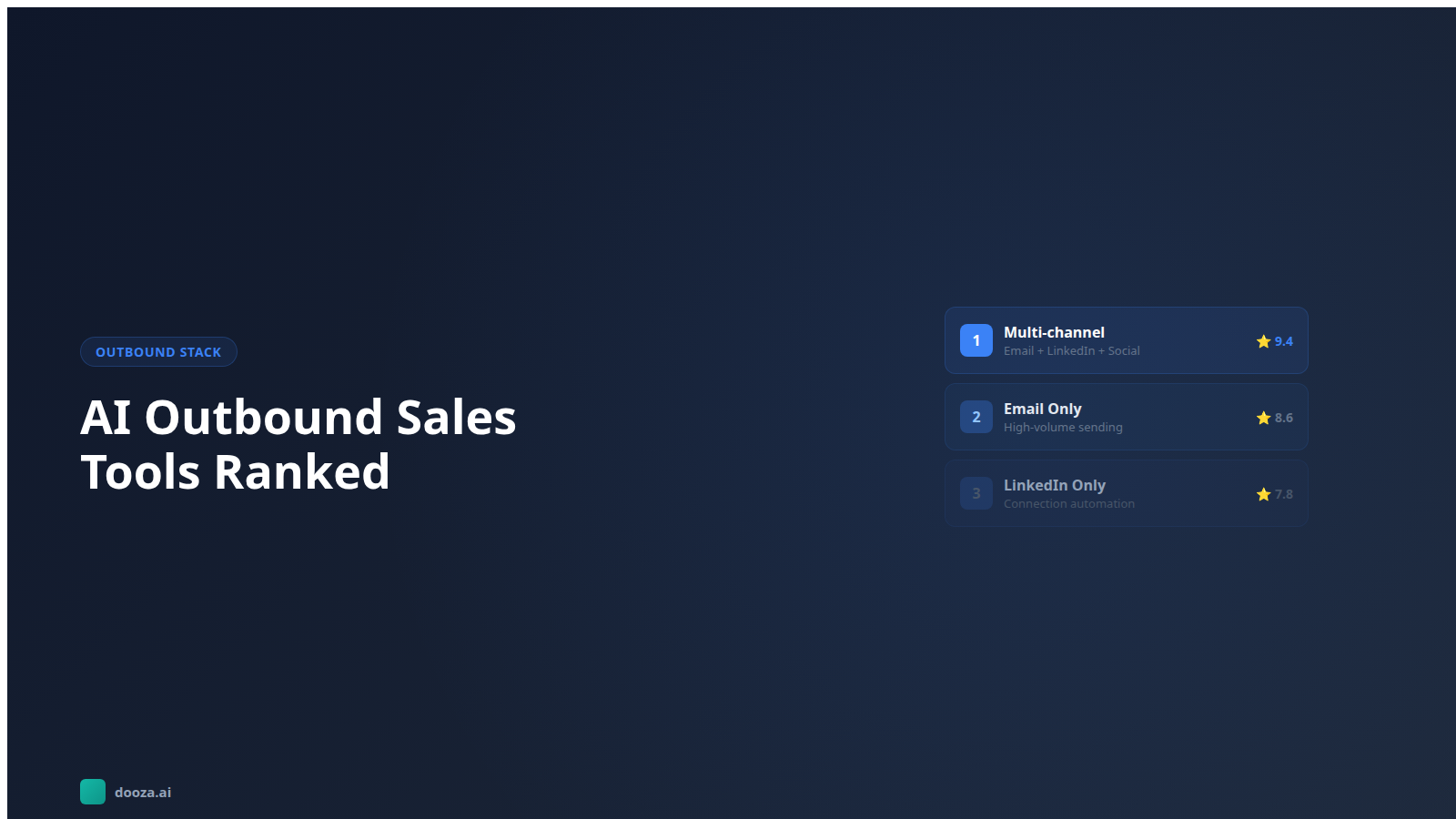
Compare the best AI outbound sales tools for 2026. DIY tool stacks vs done-for-you platforms, pricing breakdowns, and what actually books meetings.
Start with a refundable pilot — 100% refund within 14 days. A Dooza engineer scopes it with you on a free 30-minute call. Pricing depends on the product; see pricing.
Refundable pilot · 100% refund within 14 days · No contracts