I Fell for 100 AI Scams (yikes): How to Spot AI Scam Ads in 2026
In "I Fell for 100 AI Scams," YouTuber yikes buys products pushed by AI-generated ads and tests every claim. Here is what held up, the warning signs to watch for, and how honest small businesses can use AI in marketing without looking like a scam.
8 min read
October 6, 2026
What is "I Fell for 100 AI Scams" about?
"I Fell for 100 AI Scams" is a September 2026 video by the YouTube creator yikes in which he buys products advertised with AI-generated ads and tests whether they do what the ads show. It starts when his great-aunt sends him a Facebook reel that is obviously fake. Instead of telling her, he clicks on AI ads, mostly from TikTok Shop, orders the products, tests the claims at home, and scores each one on a homemade "scam-o-meter."
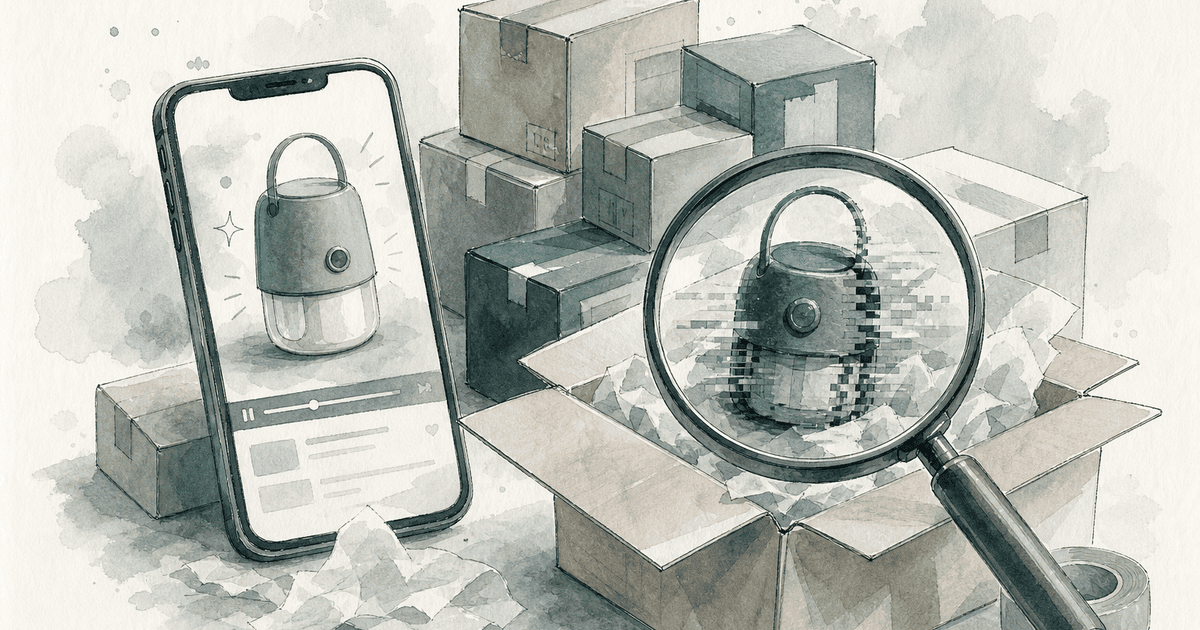
Despite the title, the video tests about a dozen products, not 100. The results are mixed. Some products were fun and roughly matched the ad. Others were much smaller, weaker, or simply didn't do what the ad promised. The lesson for shoppers and for business owners is the same: AI makes it cheap to show a product doing things it can't do.
Most of the products existed and worked in some basic way. The scam was in the exaggeration.
The gap was almost always size, power, sound, or a claim that breaks physics.
AI giveaways included garbled on-screen text, strange captions, and actors who miss the action.
For small businesses, the risk runs both ways: honest AI marketing can now look like a scam.
Video credit: “I Fell for 100 AI Scams” by yikes, published September 24, 2026 on YouTube (3.3 million views when we wrote this). Watch on YouTube. All rights to the video belong to its creator; we embed it with YouTube's standard player and add our own commentary.
The opening sets the tone:
It's 100% an AI scam, but I didn't have the heart to tell her.
What products did yikes test, and which ones were scams?
Here is a summary of the products in the video, the claim the ad made, and what happened when yikes tried them. Scores appear only where he said them on screen.
Product
What the ad showed
What actually happened
Scam-o-meter
Musical boxing target
Kids hooked, tablets forgotten
Worked and was fun; ad actors kept missing the pads
9%
Kids' ride-on car
Off-road beast with a real dashboard
Fun, but cramped and the interior didn't match the ad
13%
Snack storage box
Holds 24 bags of chips
Wouldn't close once filled
86%
Hair-growth shampoo
Instant hair, with a "$9,000 refund" promise
No hair at all on a hired bald actor
Clear scam
World Cup whistle cup
Loud stadium whistle
Looked right, but the sound was completely different
Not stated
Wall-climbing RC car
Drives up walls and across corners
Did stick to the wall, but failed the corner and floor-to-wall claims
58%
Portable blender
Three strawberries make a full smoothie
Worked after a shake
Not stated
Voice-changer toy
Education stories, voice effects
Fun and matched the ad, except the "education stories"
Not stated
Kids' toy phone
Keeps a screaming child busy
Basic games, unlikely to hold a child's attention
Not stated
Rust-cleaning spray
Restores a rusty grill to silver
Took off the first layer, then stopped working
Not stated
"Hatching" bath bombs
Huge fizzy explosion and a big toy inside
Nice colors, tiny toy, no explosion
Final test; called it a scam
On the ride-on car, he sums up the most common problem in the whole video:
The car was super fun, but the interior definitely didn't look like it did in the video, which is pretty misleading.
The interesting part is that few of these were outright fake products. Most arrived, and most did something. The problem was that the AI-generated ad showed a better version than the real one.
This is what makes AI scam ads different from old-school fraud. The seller doesn't need to invent a product. They need a cheap real product and an AI video that makes it look bigger, louder, or more powerful. The wall-climbing car is a good example. It really did stick to the wall, which surprised yikes, but he noted the ad claimed far more than it delivered:
It claimed a lot of things and did not follow through.
That gap is what customers remember. A product that does 60% of what the ad shows still feels like a scam, because the ad set the expectation.
How do you spot an AI-generated scam ad?
Based on what shows up in the video, plus common sense, these are the signs to watch for:
Garbled text on screen. yikes points out misspelled words on product displays and captions that don't make sense. AI video still struggles with readable text.
Actors who miss the action. In the boxing ad, the people keep hitting the middle instead of the lit pads. AI motion often looks right at a glance and wrong on a second look.
Physics that doesn't add up. 24 bags of chips in a small box, a huge smoothie from three strawberries, a toy car crossing wall corners. If it looks impossible, assume it is.
Same script, different video. He notices the same staged scene used across multiple ads. Recycled AI templates are a red flag.
Extreme guarantees. A "$9,000 refund" on shampoo is not a real promise. Big, specific numbers with no terms are bait.
No real seller identity. Before you buy, look for a business name, address, return policy, and reviews with real photos. If you can't find them, walk away.
Our own tip: compare the ad to customer photos in the reviews, not to other ads. Real buyer photos are where the size and quality gap shows up.
What should honest small businesses do so their AI marketing isn't mistaken for a scam?
This is the part most coverage skips. Videos like this train millions of people to distrust anything that looks AI-generated. If you run a real business and use AI to make ads, social posts, or short videos, you now share a visual style with scammers.
That doesn't mean you should stop using AI. It means your AI marketing needs to be more honest than the average ad, not less. A few rules we'd follow:
Use AI for the format, not the proof. AI can write the script, cut the edit, and add captions. The product shots and results should be real footage of your real product or service.
Never show what the product can't do. No AI-enhanced size, speed, or before-and-after. One misleading clip can cost you more in refunds and reviews than it earns.
Check every caption. Garbled text is the first thing viewers now look for. Proofread on-screen text by hand.
Label it when it matters. Platforms including TikTok and Meta have their own AI-content labelling rules. Follow them, and disclose AI avatars or voices instead of passing them off as real customers.
Show who you are. A business name, a real face, a location, and a clear refund policy are the things scam ads leave out. Put them in.
Keep claims you can back up. If a claim would not survive a creator like yikes testing it on camera, cut it.
What does an honest AI ad look like, step by step?
Ad element
Scam-style AI ad
Honest AI-assisted ad
Product footage
Fully generated, idealized
Real footage, AI used for editing and captions
Claims
Impossible or vague
Specific and testable
People
AI actors presented as customers
Real staff or customers, or clearly disclosed avatars
Guarantee
Huge numbers, no terms
A plain refund policy with a time limit
Seller
Hard to identify
Business name, site, and contact visible
On-screen text
Typos and nonsense words
Proofread by a human
If you use AI for user-generated-style video, our MakeUGC alternative guide covers how to keep that content on the right side of this line.
Where does Dooza fit?
Dooza is an AI-native company that builds AI products and services for small businesses, from the Dooza Workforce app to the Dooza Agents platform. Every product starts with a refundable pilot: 100% refund within 14 days.
We build AI marketing tools, so this video is a useful warning for us too. In Dooza Workforce, the social media and short-form video roles draft posts and reels for your business, and nothing goes out without your approval. The point is to save your team the editing and scheduling time, while the claims and footage stay true to what you actually sell.
If you'd rather have it done for you, Dooza engineers can build custom agents on Dooza Agents or set up workflow automation with review steps built in. For AI search, our AI visibility service works on a related trust problem: making sure answer engines describe your business accurately. For more on picking tools, see AI tools for solopreneurs.
Pricing depends on the product; see pricing. Every product starts with a refundable pilot.
What is the yikes video "I Fell for 100 AI Scams" about?
YouTuber yikes buys products advertised with AI-generated ads, mostly from TikTok Shop, tests each claim at home, and scores them on a homemade scam-o-meter. Most products existed but did less than the ads showed.
Did yikes really test 100 products?
No. Despite the title, the video tests about a dozen products, including a boxing target, a ride-on car, a snack box, hair-growth shampoo, a wall-climbing car, and bath bombs.
Which product was the biggest scam in the video?
The snack storage box scored 86% on the scam-o-meter because it would not close after being filled. The hair-growth shampoo, tested on a hired bald actor, produced no hair at all.
How can you tell if an ad is AI-generated?
Look for garbled on-screen text, people who miss the action, claims that break physics, recycled scenes across ads, extreme guarantees, and no clear seller identity. Compare the ad with real customer photos in reviews.
Can a small business use AI in ads without looking like a scam?
Yes. Use AI for scripting, editing, and captions, but keep product footage real, make only claims you can prove, disclose AI avatars, proofread text, and show your business name and refund policy.
Does Dooza make AI marketing content?
Yes. Dooza Workforce includes social media and short-form video roles that draft content for your approval. Every Dooza product starts with a refundable pilot: 100% refund within 14 days.
Ready to Start Your Pilot?
Automate your business with AI employees that work 24/7. Start with a refundable pilot: 100% refund within 14 days.
Kurzgesagt "AI Just Crossed the Terrifying Line" Explained
Kurzgesagt's viral video describes thousands of AI agents organizing, cheating their scorer, and attacking Hugging Face. We summarize what the video says, what is still unknown, and the practical guardrails any business running AI agents should have.
Boston Dynamics Atlas New Hands: 13 Degrees of Freedom, Explained
Boston Dynamics' new GR3 hand for Atlas almost doubles its degrees of freedom, drops the pinky, and is built to be simulated for reinforcement learning. Here is what the video shows, and what physical AI means for small businesses compared with the AI agents they can use today.
Start with a refundable pilot — 100% refund within 14 days. A Dooza engineer scopes it with you on a free 30-minute call. Pricing depends on the product; see pricing.