What did Dyna Robotics release with Dyna-2.1?
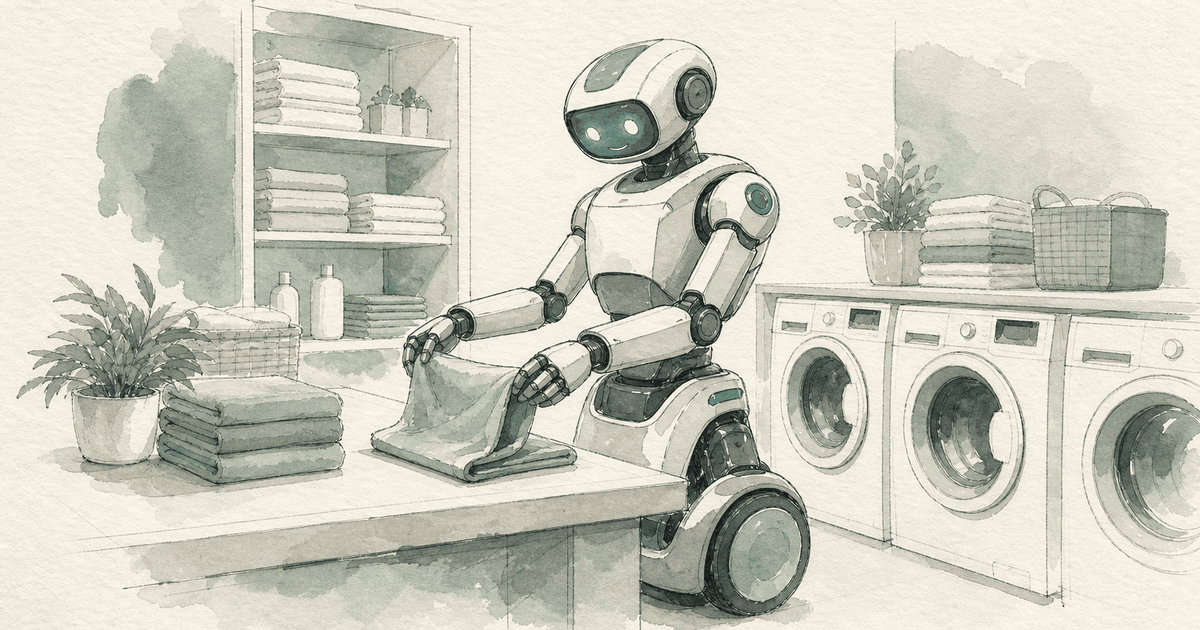
On September 29, 2026, Dyna Robotics released Dyna-2.1, which it calls a "Physical Agent," along with uncut footage of the robot completing an hour-long laundry room workflow on its own. Dyna-2.1 pairs new semi-humanoid hardware (a two-armed upper body on four steerable wheels) with an agentic system built around Dyna-2, the company's robot foundation model. According to the launch announcement, the robot loads and runs washers and dryers, pulls out towels, folds and sorts them by size, shelves the stacks, and recovers from its own mistakes without human help.
- What is new: one robot running a whole workflow, not a single task like folding.
- Hardware: a wheeled semi-humanoid, so it doesn't have to balance like a walking robot.
- Brain: a vision-language "orchestrator" that plans the workflow, plus a whole-body controller.
- Metric that matters: mean time between interventions, meaning how long it works before a person has to step in.
- For small businesses: real deployments exist, but broad, affordable availability is still ahead.
Post credit: video and post by Dyna Robotics (@DynaRobotics) on X, published September 29, 2026 (3.1 million views and 3,900 likes when we wrote this). View the post on X. All rights to the video belong to its creator; we embed it with X's standard embed and add our own commentary.
Why did the Dyna-2.1 laundry video go viral?
Robot demo videos are everywhere, and many are short, sped up, or carefully edited. This one went the other way. Three things stood out:
- It is uncut. An hour of continuous footage is harder to fake than a 30-second clip, and viewers can see the robot fumble and recover.
- It is a real job. Laundry is a chore everyone knows, and commercial laundry is real, paid work in hotels and laundromats.
- It is boring on purpose. The robot doesn't backflip. It loads machines and folds towels, which is exactly the point for buyers.
Who is Dyna Robotics?
Dyna Robotics is based in Redwood City, California, and was founded in 2024 by Lindon Gao (CEO), York Yang, and Jason Ma, a former DeepMind research scientist. Gao and Yang previously sold Caper AI, a smart shopping cart company, for $350 million in 2021. In September 2025 the company raised a $120 million Series A led by Robostrategy, CRV, and First Round Capital, with Salesforce Ventures, NVentures (Nvidia), the Amazon Industrial Innovation Fund, Samsung Next, and LG Technology Ventures joining.
Dyna's strategy is to sell narrow, commercial jobs first and generalize later. Its progress so far:
| Milestone | What Dyna reported |
|---|
| Dyna-1 (2025) | Robot foundation model claiming a 99%+ success rate over 24 hours of non-stop operation, deployed in hotels, restaurants, laundries, and gyms |
| Dyna-1 napkin folding (June 2025) | About 35 napkins an hour, roughly 480 per shift, 75% passing quality checks |
| Dyna-2 (August 2026) | About 95 napkins an hour, 1,590 per 18-hour shift, 93% passing quality checks, per Dyna's research post |
| Restaurant rollout | Dyna says restaurant chain Din Tai Fung, which needs 1,500 napkins per robot per shift, is rolling the robots out across its network |
| Dyna-2.1 (September 2026) | New wheeled semi-humanoid running full laundry workflows; deployments in hotels, laundromats, and restaurants |
Dyna also says its fleet should reach "hundreds of robots" by the first half of 2027, and that some deployments pay back in as little as three days. Those are company claims, not independent audits.
What is a "physical agent" with long-horizon autonomy?
In software, an AI agent is a system that plans and carries out a multi-step job, like reading an email, checking a calendar, and booking a meeting. A physical agent is the same idea in a body: it plans a chain of real-world steps and does them.
"Long-horizon" means the chain is long. Folding one towel is a short task. Running a laundry room means dozens of linked steps over an hour or more, where one dropped towel or stuck door can derail everything. Dyna says Dyna-2.1 handles this with two layers:
- An orchestrator: a vision-language model that looks at the scene, decides what to do next, and notices when something went wrong.
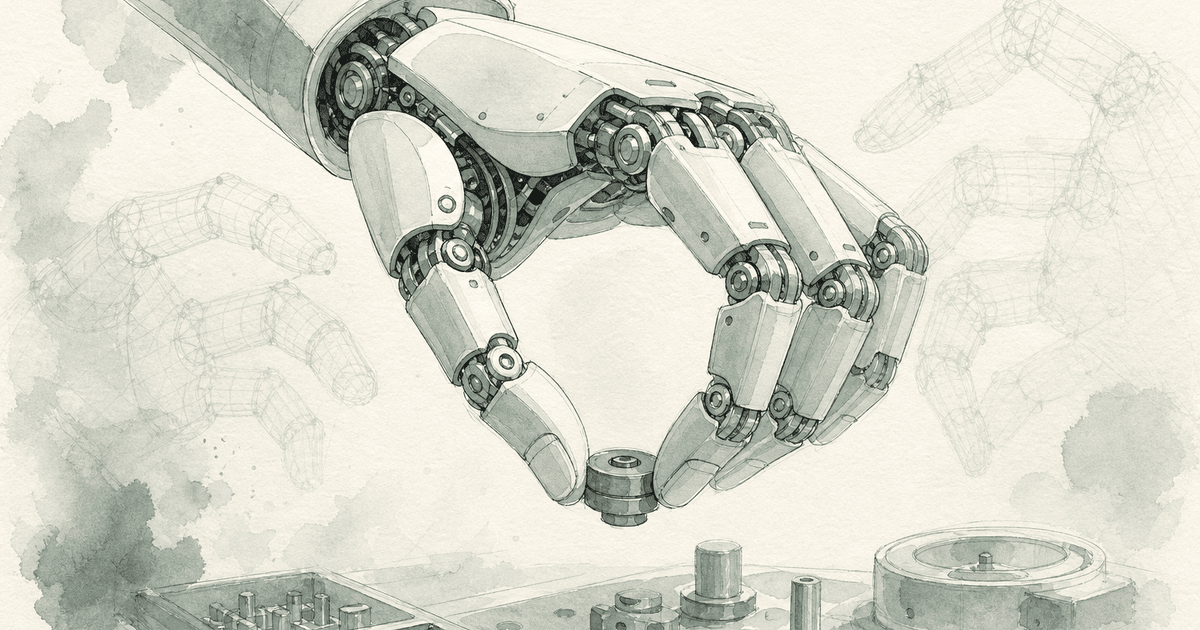
- A whole-body controller: driving, reaching, bending, and lifting as one coordinated motion, built on Dyna-2, which the company says was trained on about one million hours of human and robot data.
The number Dyna wants judged on is mean time between interventions (MTBI): how long the robot works before someone has to help. CEO Lindon Gao put the goal as robots that "complete an entire workflow for a full shift — without human babysitters." Coverage from Interesting Engineering describes the same workflow and recovery behavior.
How does Dyna-2.1 compare with other humanoid robot efforts?
| Company / robot | Form | Main target | Commercial status (public) |
|---|
| Dyna Robotics, Dyna-2.1 | Wheeled semi-humanoid, two arms | Commercial laundry, restaurants, hotels | Paid deployments reported; no public price |
| 1X, NEO | Walking humanoid | Homes | Pre-orders opened October 2025 at $20,000 or $499 a month, with US deliveries targeted for 2026 |
| Agility Robotics, Digit | Walking humanoid | Warehouses and logistics | Multi-year robots-as-a-service deal with GXO signed in 2024 |
| Boston Dynamics, Atlas | Walking humanoid | Industrial and manufacturing work | In development |
Dyna's bet is that wheels and a narrow job beat legs and a general one, at least for now. Wheels are cheaper, safer, and don't fall over, and a laundry room has flat floors. The trade-off is that it can't climb stairs.
What does Dyna-2.1 mean for laundromats, hotels, and cleaning businesses?
This is one of the few robot videos with a direct small-business link. Laundromats, hotel housekeeping, linen services, and restaurants all have repetitive folding and machine work, and that is exactly where Dyna is deploying. Still, be realistic:
- Availability is limited. Dyna is working with chosen customers and projects hundreds of robots by mid-2027. That is not yet a product you can order next week.
- No public price. Neither the launch nor the coverage lists one. Expect a lease or robots-as-a-service model, as is common in the industry, but check with the vendor.
- Interventions still happen. The goal is a full shift without help. Plan on someone being nearby during any trial.
- Volume matters. The economics work best where machines run many hours a day, such as a busy commercial laundry or a hotel with hundreds of rooms.
If you run one of these businesses, a sensible plan is to keep watching, talk to vendors once you see deployments near you, and in the meantime automate the front office, where AI already works reliably. Missed booking calls, customer emails, review replies, and quote follow-ups can all be handled by digital agents today. Our guide to automating business processes explains how to pick the first one.
Where does Dooza fit?
Dooza is an AI-native company that builds AI products and services for small businesses, from the Dooza Workforce app to the Dooza Agents platform. Every product starts with a refundable pilot: 100% refund within 14 days.
Dooza doesn't build robots or foundation models. We build the digital agents that handle the work around the laundry room: phones, inboxes, bookings, and follow-ups. Dooza Workforce gives you ready-made AI employees: Maily for email, Somi for social media, Ranky for SEO and AI visibility, Stan for lead generation, Linda for legal documents, and Rachel for phone calls. Dooza Agents are custom agents that Dooza engineers build and maintain around your workflows.
For service businesses, the usual first steps are an AI receptionist to answer every call, AI customer support for questions and complaints, and workflow automation for scheduling and invoicing. For more on how agents work, see AI agents vs agentic AI. Pricing depends on the product and is on our pricing page.
Ready to automate your front office while robots handle the back?
Book a free 30-minute call and a Dooza engineer will scope a pilot around one workflow. Start with a refundable pilot — 100% refund within 14 days. Book a free pilot call.