LLM SEO: How to Optimize Your Website for ChatGPT, Claude, Gemini, and Perplexity
LLM SEO is optimizing your pages so large language models can read, trust, and cite them. Here are the on-page and technical changes that matter, the myths to skip, and how to measure results.
11 min read
September 29, 2026
What is LLM SEO?
LLM SEO is the practice of optimizing your website and brand so large language models such as ChatGPT, Claude, Gemini, and Perplexity can find, understand, trust, and cite your content. It is also called LLM optimization or LLMO, and it overlaps almost entirely with answer engine optimization.
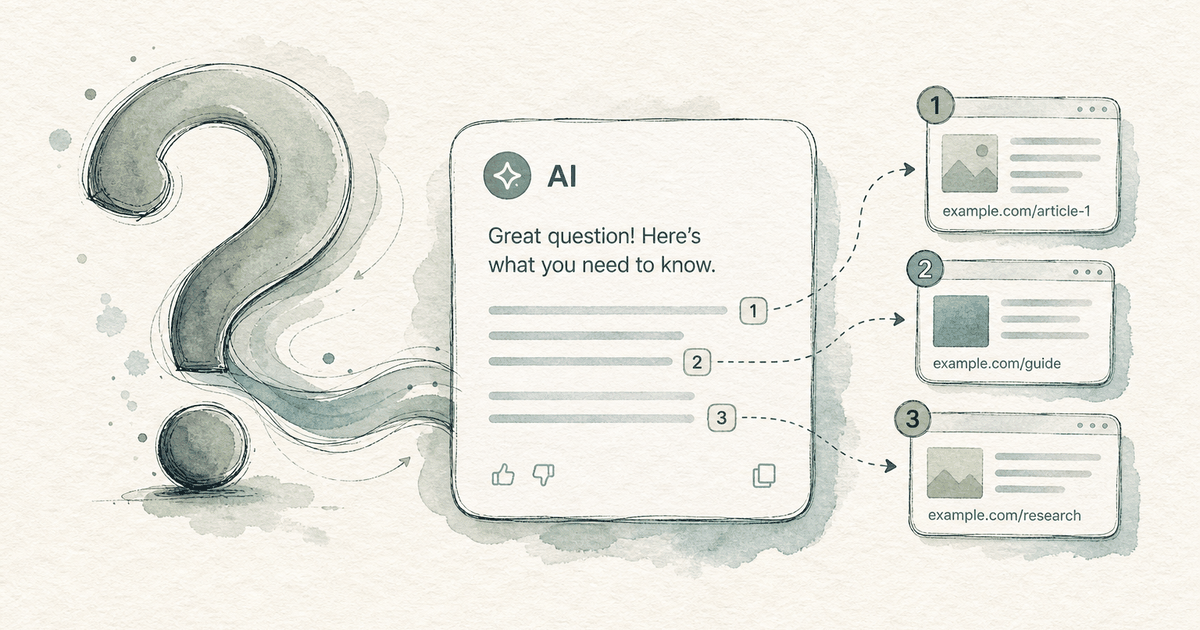
The core idea is simple: LLMs retrieve pages, pull out passages, and synthesize answers. Pages whose passages are self-contained, specific, and easy to lift get cited. Brands that many trusted sources describe consistently get recommended.
How do LLMs read web pages?
In passages, not whole pages. Retrieval systems split pages into chunks and score each chunk against a sub-question.
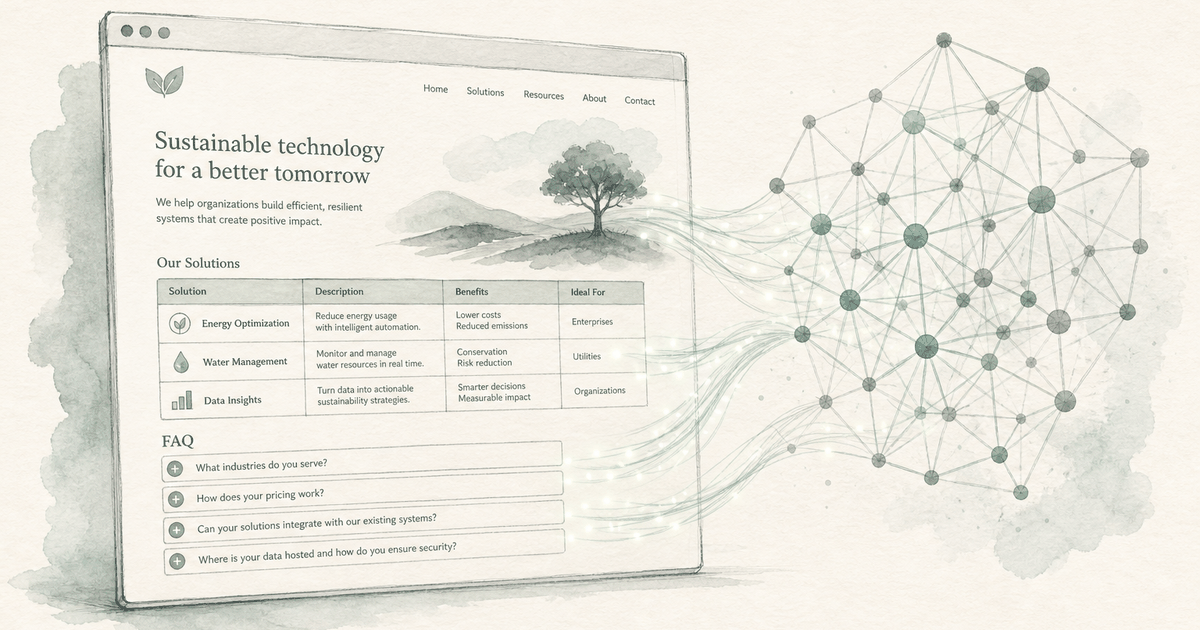
From raw HTML. Most AI crawlers do not run JavaScript like a browser; content hidden behind scripts can be invisible.
Through entities. Named products, companies, places, and standards help the model connect a passage to the question.
Across sources. Claims repeated by several credible sources are preferred over one-off claims.
What does on-page LLM SEO look like?
Rank Math's Jack gives a practical, page-level walkthrough. Two points stand out:
But for LLMs, they read text in chunks and can’t see the whole page at once, so you need to give context and mention key entities in your sentence and associate them with your key points.
But if you cannot find the text here, then it is practically hidden from LLMs. That’s because LLMs do not render JavaScript like a browser. They rely on text that is accessible in the raw HTML.
His other recommendations: open with key takeaways written as questions and answers, turn headings into questions followed by a direct 20–40 word answer, put statistics in standalone sentences, caption tables of original data, and publish transcripts for video and podcast content. Note the video also demonstrates Rank Math's own plugin features.
What is the on-page LLM SEO checklist?
Answer first. A bolded 2–3 sentence answer in the first 100 words.
Question headings. H2s phrased the way people ask, each opened with a one-sentence answer.
Self-contained sections. Each section makes sense if lifted alone; repeat the subject instead of "it".
Named entities. "Google AI Overviews, ChatGPT, and Perplexity", not "AI tools".
Tables and lists for comparisons, specs, prices, and steps.
Sourced numbers with links, in standalone sentences.
Visible FAQ that matches your FAQPage schema.
Dates. "Updated" dates and current facts; freshness is a citation signal.
What is the technical LLM SEO checklist?
Check
Pass condition
AI search bots allowed
OAI-SearchBot, Claude-SearchBot, PerplexityBot, Bingbot, Googlebot not blocked (see AI crawlers)
Raw HTML content
Main text visible in view-source, not only after JavaScript
Bing indexing
Key pages indexed in Bing Webmaster Tools (ChatGPT search relies on Bing)
Brand mentions on editorial sites, listicles, and review platforms.
Community presence in relevant Reddit threads and forums, as a real, disclosed participant.
YouTube videos on core topics; Google's AI surfaces cite YouTube heavily.
Consistent descriptions of what you do across your site, profiles, and directories.
Which LLM SEO myths should you ignore?
"You must rewrite everything." Start with the pages closest to revenue and the prompts you lose.
"Schema guarantees citations." Schema helps structure and eligibility; evidence that it directly drives LLM citations is mostly correlational.
"llms.txt is required." It is a cheap, optional helper; major AI companies have not committed to using it.
"Longer is better." Ahrefs found word count had essentially no correlation with AI Overview citations.
"Spam listicles work." Mass-produced self-ranking lists can spike briefly, but they risk trust and do not last.
How do you measure LLM visibility?
Track a fixed prompt set across ChatGPT, Claude, Gemini, Perplexity, and Google AI Overviews: mention rate, citations, share of voice, position, and sentiment. Add AI referral traffic and "how did you hear about us" answers. Compare tools in AI visibility tools, or read how to rank in ChatGPT.
How does Dooza handle LLM SEO?
Dooza is an AI-native company that builds AI products and services for small businesses. For AI search, Ranky does the work. Ranky tracks how ChatGPT, Perplexity, Gemini, Claude, Microsoft Copilot, and Google AI Overviews answer the prompts your buyers ask, maps which sources those answers cite, and then does the fixes: it drafts and publishes answer-ready pages, fixes schema, and flags the third-party threads worth joining, all behind your approval. Every Dooza product starts with a refundable pilot — 100% refund within 14 days.
For LLM SEO, Dooza audits your key pages against the on-page and technical checklists above, has Ranky rewrite them answer-first with tables, entities, and FAQs, adds schema, and re-measures LLM visibility on your prompt set. It is the same loop enterprise platforms sell, priced for growing brands. See the Profound alternative guide or our GEO services.
Get your pages LLM-ready
Book a free pilot call to scope a refundable pilot: we audit your top pages for LLM SEO and fix the first three.
Frequently Asked Questions
What is LLM SEO?
LLM SEO is optimizing your website and brand so large language models like ChatGPT, Claude, Gemini, and Perplexity can find, understand, trust, and cite your content in their answers.
Is LLM SEO different from regular SEO?
It builds on regular SEO. LLM SEO adds answer-first, self-contained passages, entity-rich writing, raw-HTML content, AI crawler access, off-site brand mentions, and prompt-based measurement.
Do LLMs read JavaScript content?
Most AI crawlers rely on text available in the raw HTML and do not render JavaScript like a browser, so important content should be server-rendered.
Does schema markup help LLM SEO?
Schema helps search engines understand and display pages, and supports eligibility for rich results. Direct evidence that it increases LLM citations is mostly correlational, so treat it as a foundation, not a guarantee.
What is llms.txt?
llms.txt is an optional file that gives AI systems a curated map of a site's key pages. It is cheap to add, but major AI companies have not committed to using it.
How do I measure LLM visibility?
Re-run a fixed set of prompts across ChatGPT, Claude, Gemini, Perplexity, and Google AI Overviews and track mentions, citations, share of voice, position, and sentiment, plus AI referral traffic.
Ready to Start Your Pilot?
Automate your business with AI employees that work 24/7. Start with a refundable pilot: 100% refund within 14 days.
Answer Engine Optimization (AEO): The 2026 Guide to Getting Cited by AI
Answer engine optimization is how you get mentioned and cited when people ask ChatGPT, Perplexity, Gemini, and Google AI a question. Here is how it works, what to do first, and how to measure it.
AI Citations: How ChatGPT, Perplexity, and Google AI Choose Sources (and How to Get Cited)
An AI citation is a link an answer engine shows as a source. Here is how engines pick those sources, which content types get cited most, and a practical plan to earn citations for your brand.
Start with a refundable pilot — 100% refund within 14 days. A Dooza engineer scopes it with you on a free 30-minute call. Pricing depends on the product; see pricing.