Answer Engine Optimization (AEO): The 2026 Guide to Getting Cited by AI
Answer engine optimization is how you get mentioned and cited when people ask ChatGPT, Perplexity, Gemini, and Google AI a question. Here is how it works, what to do first, and how to measure it.
13 min read
September 29, 2026
What is answer engine optimization?
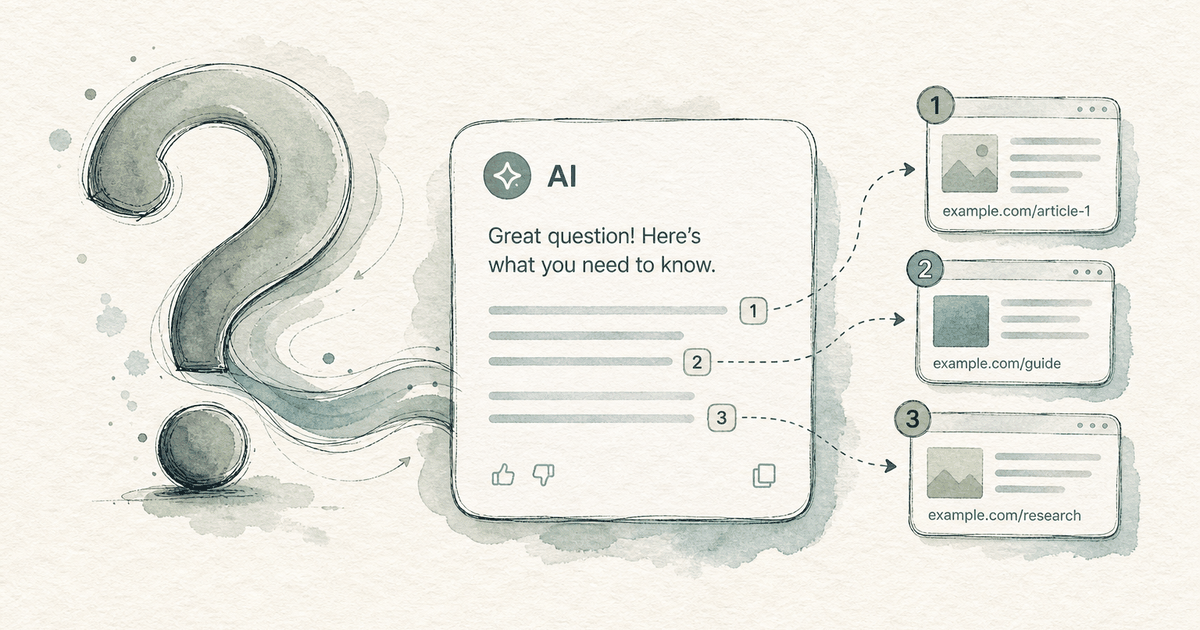
Answer engine optimization (AEO) is the practice of making your brand and content visible, and cited, in AI-generated answers. Answer engines include ChatGPT, Perplexity, Gemini, Claude, Microsoft Copilot, Google AI Overviews, and Google AI Mode. AEO is also called generative engine optimization (GEO) or LLM optimization; the terms mean essentially the same thing.
AEO builds on SEO. The foundations still matter: crawlable pages, useful content, and authority. What changes is the goal. You are no longer competing only for a position in a list of links; you are competing to be named and cited inside one synthesized answer.
Win condition: a mention by name plus a citation to your URL.
Biggest levers: answer-first pages, comparison content, and brand mentions on sites the engines trust.
Measure it with a fixed prompt set re-run over time, not by rankings.
How do experts define AEO?
Ahrefs' Sam Oh gives the clearest short definition in the first lesson of Ahrefs' AEO course:
In AEO, there is no list. The AI reads from dozens of sources, synthesizes an answer, and decides who to mention or cite. You’re not competing for a position. You’re competing for a mention.
He also shares Ahrefs' own numbers: in June 2025, AI search sent 0.5% of Ahrefs' traffic but drove 12.1% of its sign-ups, which he describes as a 23 times higher conversion rate than organic search. That is one company's data, but it explains why AEO moved from experiment to budget line.
What is the difference between AEO and SEO?
SEO
AEO
Where you show up
A ranked list of links
Inside a synthesized AI answer
Win condition
Top positions, clicks
Mentions, citations, recommendations
Query shape
Short keywords
Long conversational prompts with context
Main signals
Relevance, links, technical health
Consensus across sources, clarity, freshness, brand mentions
Off-site focus
Backlinks
Mentions on listicles, reviews, Reddit, YouTube
Measurement
Rank tracking, Search Console
Prompt tracking, share of voice, AI referral traffic
How do answer engines choose which sources to cite?
Query fan-out. The engine splits your prompt into many smaller searches, then retrieves pages for each.
Retrieval. Pages must be indexed by the engine's search partner and reachable by its bot. ChatGPT search relies on OAI-SearchBot; Claude on Claude-SearchBot; Perplexity on PerplexityBot.
Selection. Engines favor passages that answer directly, name specific entities, include data, and agree with other sources.
Synthesis. The answer blends several sources; brands mentioned across many of them tend to get named.
Each engine has its own preferences. Ahrefs found only 7 of the top 50 cited domains overlapped across Google AI Overviews, ChatGPT, and Perplexity. More in how AI citations work.
What is the AEO playbook, step by step?
Build a prompt set. 30–100 prompts from search data, sales calls, support tickets, and competitor comparisons.
Baseline. Record mentions, position, sentiment, and cited URLs per engine.
Fix access. Allow search bots (OAI-SearchBot, Claude-SearchBot, PerplexityBot, Googlebot, Bingbot) and check pages render in raw HTML. See AI crawlers explained.
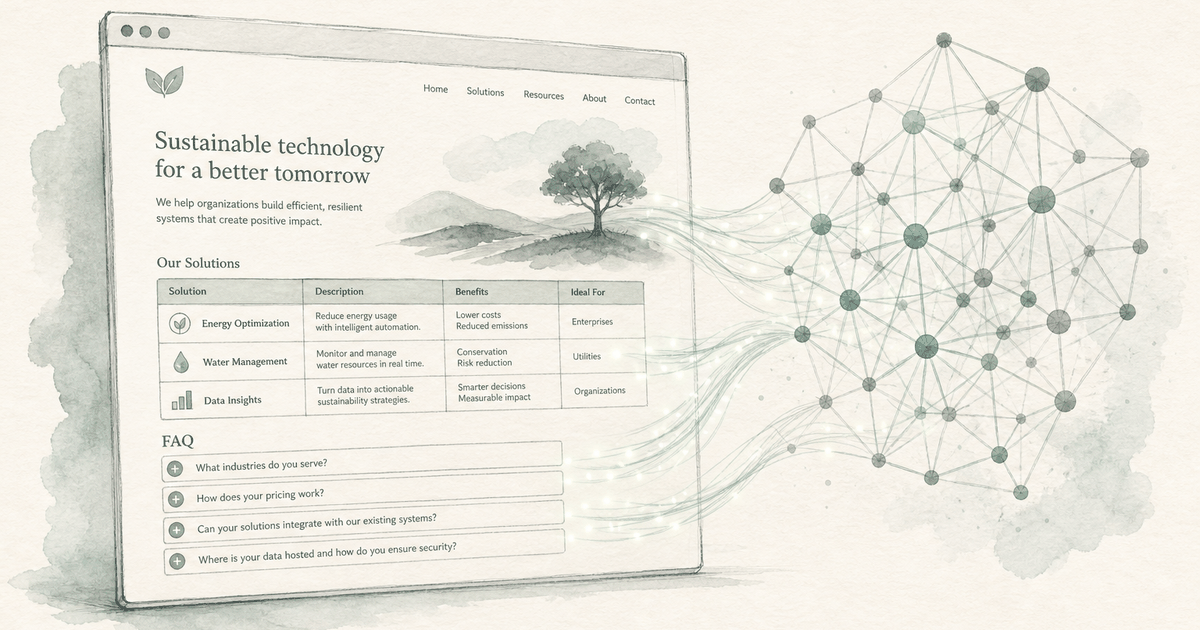
Rewrite top pages answer-first. Direct answer in the first 100 words, then tables, steps, and FAQs.
Publish missing pages. "Best X for Y", "X vs Y", "X alternatives", pricing, and use-case pages.
Earn off-site mentions. Get listed on the listicles, review sites, Reddit threads, and YouTube videos the engines cite.
Add structured data. Organization, Product, FAQPage, Article, and BreadcrumbList schema.
Keep it fresh. Update key pages with dates and current facts.
Re-measure every 2–4 weeks on the same prompt set.
What does an AEO-optimized page look like?
A title that matches the question.
A 2–3 sentence direct answer, bolded, at the top.
A short summary list with the buyer takeaway.
Question-style H2s, each opened by a one-sentence answer.
At least one comparison table.
Named entities (products, places, standards) instead of vague references.
Sourced statistics with links.
A visible FAQ that matches your FAQ schema.
This article follows that template. For on-page detail, read LLM SEO.
How do you measure AEO?
Metric
How to get it
Mention rate and share of voice
Re-run a fixed prompt set with an AI visibility platform
Citations
Log cited URLs per prompt and engine
AI referral traffic
Analytics segment for chatgpt.com, perplexity.ai, gemini.google.com, copilot.microsoft.com, claude.ai
Self-reported attribution
"How did you hear about us?" with an AI assistant option
AEO tools fall into trackers (Peec AI, Otterly.ai, Scrunch AI), enterprise platforms (Profound), SEO-suite add-ons (Semrush, Ahrefs), and tracking-plus-execution platforms (Dooza). Our AI visibility tools guide and best GEO tools list compare them.
How does Dooza do answer engine optimization?
Dooza is an AI-native company that builds AI products and services for small businesses. For AI search, Ranky does the work. Ranky tracks how ChatGPT, Perplexity, Gemini, Claude, Microsoft Copilot, and Google AI Overviews answer the prompts your buyers ask, maps which sources those answers cite, and then does the fixes: it drafts and publishes answer-ready pages, fixes schema, and flags the third-party threads worth joining, all behind your approval. Every Dooza product starts with a refundable pilot — 100% refund within 14 days.
Dooza runs the playbook above as a loop: prompt set and baseline, citation map, access and schema fixes, answer pages drafted by Ranky and approved by you, community and listicle outreach, then re-measurement. Compare it with enterprise options in Profound alternatives, or see our GEO services.
Start AEO with a refundable pilot
Book a free pilot call to scope a refundable pilot that shows where you appear today and ships the three fixes that will move it first.
Frequently Asked Questions
What is answer engine optimization (AEO)?
Answer engine optimization is the practice of making your brand and content visible and cited in AI-generated answers from ChatGPT, Perplexity, Gemini, Claude, Copilot, and Google AI Overviews.
Is AEO the same as GEO?
Essentially yes. AEO, GEO (generative engine optimization), and LLMO (large language model optimization) are used interchangeably for optimizing visibility in AI answers.
Does AEO replace SEO?
No. AEO builds on SEO. Crawlable, useful, authoritative pages remain the foundation; AEO adds answer-first formatting, comparison content, off-site mentions, and prompt-based measurement.
How long does AEO take to work?
Engines that search the web live, such as ChatGPT search and Perplexity, can pick up new or updated pages within days to weeks. Changing how models describe your brand broadly takes consistent work over months.
How do you measure answer engine optimization?
Re-run a fixed set of prompts across answer engines and track mention rate, citations, share of voice, position, and sentiment, alongside AI referral traffic and self-reported attribution.
What is the fastest AEO win?
Publish or rewrite comparison and 'best for' pages with a direct answer at the top, a comparison table, and an FAQ, and make sure AI search bots can crawl them.
Ready to Start Your Pilot?
Automate your business with AI employees that work 24/7. Start with a refundable pilot: 100% refund within 14 days.
LLM SEO: How to Optimize Your Website for ChatGPT, Claude, Gemini, and Perplexity
LLM SEO is optimizing your pages so large language models can read, trust, and cite them. Here are the on-page and technical changes that matter, the myths to skip, and how to measure results.
AEO Agency vs AEO Platform: What Should You Hire in 2026?
AEO agencies sell expertise and hours. AEO platforms sell tracking. Most growing brands need both the measurement and the work. Here is how to decide, what to ask, and what it should cost.
Start with a refundable pilot — 100% refund within 14 days. A Dooza engineer scopes it with you on a free 30-minute call. Pricing depends on the product; see pricing.