Best OpenClaw Alternatives in 2026: Self-Hosted, Lightweight, and Managed Options Compared
OpenClaw is free, MIT-licensed, and the most-starred personal agent on GitHub, but you run it, pay the model bill, and own the security. Here are the alternatives worth a look in 2026, with sourced facts, a comparison table, and an honest note on when to stay with OpenClaw.
12 min read
October 6, 2026
Updated October 6, 2026. GitHub stars, licenses, and project details checked October 6, 2026. Star counts move daily; treat them as a snapshot.
What is the best OpenClaw alternative?
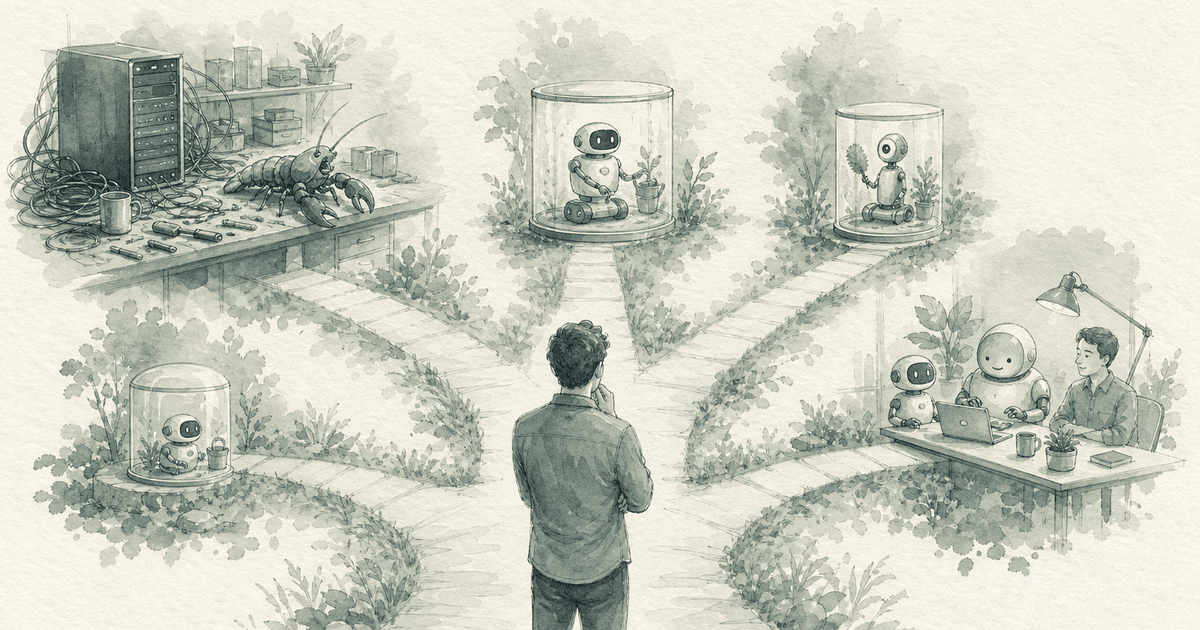
The best OpenClaw alternative depends on why you are leaving. If you want a self-hosted agent that learns and keeps memory, pick Hermes Agent from Nous Research. If security is the worry, pick NanoClaw (agents run in their own containers) or IronClaw (encrypted local credential store). If you want something tiny and fast, pick ZeroClaw or nanobot. If you do not want to run servers at all, pick a managed option: Claude's desktop agent for personal work, or Dooza for business workflows handled by AI employees and custom agents.
OpenClaw is free software, not a free service. It is MIT-licensed; you pay for models, hosting, and your own time.
Most "alternatives" are other self-hosted agents. They trade OpenClaw's breadth for a smaller codebase, stronger isolation, or a learning loop.
Security is the most common reason to switch. OpenClaw has had a high-severity CVE and a malware campaign in its skill marketplace in 2026.
Businesses that want outcomes, not infrastructure, are usually better served by a managed alternative to self-hosting OpenClaw.
What is OpenClaw, and who runs it now?
OpenClaw (formerly ClawdBot and Moltbot) is an open-source personal AI agent that runs on your own Mac, Windows, or Linux machine and takes orders through chat apps like WhatsApp, Telegram, Slack, Discord, iMessage, and Signal. Its site lists inbox and calendar management, web browsing and form filling, file work, shell commands, and persistent memory (openclaw.ai, checked October 6, 2026). If you are new to it, start with our guide to what OpenClaw is.
It is the most-starred project in its category: about 391,000 GitHub stars under the MIT License (github.com/openclaw/openclaw). In February 2026 its creator, Peter Steinberger, joined OpenAI, and the project moved to a foundation (Steinberger’s announcement). OpenClaw's site now says it is stewarded by an independent 501(c)(3) nonprofit funded by donors that include OpenAI, Amazon, GitHub, and NVIDIA, none of whom direct the project.
So OpenClaw is not abandoned. It is very much alive. People look for alternatives for other reasons.
Is OpenClaw free?
Yes, the software is free. OpenClaw is MIT-licensed and has no paid tier or subscription (openclaw.ai). Running it is not free. You pay for three things:
Model usage. Every step the agent takes calls a model such as Claude, GPT, or a cheaper open model, billed per token by the provider.
Hosting. An always-on agent needs a machine that stays on: a spare Mac, a home server, or a cloud VPS.
Your time. Setup, updates, skill vetting, and security hardening are on you.
How much is reported to vary widely. A May 2026 cost breakdown by Codebridge estimated model spend at about $58 a month for a small business pilot and $200 to $1,320 a month for a production-ready setup, depending on the model mix (Codebridge, reported). Heavy use of frontier models costs more. Every alternative below has the same model bill; only the managed options bundle it.
Why do people look for OpenClaw alternatives?
Four reasons come up again and again:
Security. CVE-2026-25253, rated 8.8 (High) by NVD, let OpenClaw versions before 2026.1.29 read a gateway URL from a query string and connect to it automatically, sending a token (NVD). Separately, Koi Security audited 2,857 skills on ClawHub, OpenClaw's skill marketplace, and found 341 malicious ones, most from a single campaign it named ClawHavoc (Koi Security). Both have been addressed, and OpenClaw ships an openclaw security audit command (OpenClaw security docs). But an agent with shell access and your logins is a big target.
Size. NanoClaw's author says OpenClaw has "nearly half a million lines of code" and 70+ dependencies (NanoClaw README). That is a lot to trust and audit.
Not built for teams. OpenClaw's own docs say it "is not a hostile multi-tenant security boundary" for users sharing one agent or gateway (OpenClaw security docs). One gateway is one trust boundary. Serving several clients or staff takes extra work, as we cover in building an AI employee business on OpenClaw.
Time. A business owner who wanted follow-up emails sent does not want to become a part-time sysadmin.
OpenClaw alternatives compared
Stars and licenses are from each project's GitHub page, checked October 6, 2026. "Cost" for open-source tools means your own model and hosting bill.
Small businesses that want results, not infrastructure
The OpenClaw alternatives, one by one
Hermes Agent (Nous Research)
Hermes Agent is the closest like-for-like alternative. Nous Research calls it "the self-improving AI agent," with a built-in learning loop that creates skills from experience and searches its own past conversations. It works across Telegram, Discord, Slack, WhatsApp, Signal, and the CLI from one gateway, has a built-in cron scheduler, and runs on any model provider (Hermes Agent README). We compare the two in depth in Hermes Agent vs OpenClaw.
NanoClaw
NanoClaw is the security pick. It keeps "one process and a handful of files," and every agent runs in its own Linux container that can only see what you mount, so shell commands do not touch your host (NanoClaw README). Setup provisions Docker and a credential gateway for your Anthropic key. The trade-off: fewer built-in integrations, and it leans on Claude.
ZeroClaw
ZeroClaw is an agent runtime shipped as a single Rust binary. It supports about 20 model providers, including local models through Ollama, and 30+ channels, and installs as a system service (ZeroClaw README). Pick it if you want small and fast.
nanobot
nanobot, from the HKU Data Intelligence Lab, is a lightweight Python agent with a browser WebUI, long-term memory, MCP, scheduled automations, and an OpenAI-compatible API. It even has a setup guide for people without a technical background (nanobot README).
IronClaw
IronClaw, from NEAR AI, is built around privacy: data is stored locally and encrypted, credentials go into an encrypted store, and it advertises no hidden telemetry (IronClaw README).
OpenFang
OpenFang calls itself an "Agent Operating System" in Rust. Its "Hands" are pre-built agents that run on schedules and report to a local dashboard. Its own README says it is "still pre-1.0" with breaking changes between minor versions, and recommends pinning a commit for production (OpenFang README).
PicoClaw
PicoClaw, from hardware maker Sipeed, is a tiny Go agent aimed at running on cheap, low-power devices (PicoClaw on GitHub).
Managed options: Claude and Dooza
If the real goal is "an agent that does things" rather than "a server I run," skip self-hosting. Anthropic's desktop agent, formerly called Cowork, is now part of Claude Pro and Max plans (claude.com/pricing, checked October 6, 2026). It is strong for one person's files and browser tasks. For business roles such as email, social media, SEO, lead generation, and phone calls, Dooza runs the agents for you (more below). Older names? See Moltbot alternatives.
Video: five OpenClaw alternatives compared
No Code MBA's February 2026 walkthrough breaks down five OpenClaw alternatives and compares each on safety, cost, and ease of use. It is a useful second opinion on the self-hosted options above; check the star counts and versions in our table, since these projects have moved fast since it was recorded.
How to choose an OpenClaw alternative
Answer these six questions before you install anything:
Who will maintain it? If nobody on your team will patch, update, and vet skills every month, pick a managed option.
What can it touch? Shell, email, bank, CRM? The more it can touch, the more isolation you need (NanoClaw containers, IronClaw's encrypted store, or a managed platform with approvals).
Which channels do you use? Check that your chat apps, email, and calendar are supported out of the box.
Which models? If you want local or cheap open models to control cost, check provider support (ZeroClaw, nanobot, Hermes Agent are flexible).
One person or a team? Personal agents assume one trusted owner. Teams and client work need separate permissions and logs.
How mature is it? Pre-1.0 projects move fast and break things. That is fine for a hobby, risky for payroll.
Common OpenClaw use cases map neatly onto these picks: a morning briefing or inbox triage for yourself suits Hermes Agent or nanobot; a coding or shell helper suits NanoClaw; lead follow-up, social posting, or answering customer calls for a business suits a managed AI employee.
When should you stay with OpenClaw?
Honestly, often. Stay with OpenClaw if:
You are a developer who enjoys tinkering and wants the biggest community and skill library.
You need a channel or integration only OpenClaw supports.
You are already patched past 2026.1.29, run openclaw security audit, keep the gateway on loopback, and install only skills you have read.
It is just you, on your own machine, with nothing sensitive connected.
Switching tools does not remove the model bill or the need to think about permissions. It only changes who does the work.
Where Dooza fits
Dooza is an AI-native company that builds AI products and services for small businesses, from the Dooza Workforce app to the Dooza Agents platform. Every product starts with a refundable pilot: 100% refund within 14 days.
Dooza is a managed alternative to self-hosting OpenClaw. You do not install a gateway, rent a server, or vet marketplace skills:
Dooza Workforce gives you ready-made AI employees for set roles: Maily for email, Somi for social media, Ranky for SEO and AI visibility, Stan for lead generation and sales outreach, Linda for legal documents, and Rachel for phone calls. They can start working the same day.
Dooza Agents is for workflows that do not fit a ready-made role: custom agents built and maintained by Dooza engineers, live in days.
Guardrails: encrypted connections and your approval on anything sensitive, plus 1,000+ app integrations.
The trade-off is real: you give up running everything on your own hardware and editing every line of code. If that control is the point, a self-hosted option above is the better choice. If the point is getting the work done, read OpenClaw vs Dooza for a side-by-side. Pricing depends on the product; see /pricing.
Every Dooza product starts with a refundable pilot — 100% refund within 14 days. Book a free pilot call and a Dooza engineer will scope your pilot in 30 minutes.
OpenClaw alternatives: FAQ
What is the best OpenClaw alternative?
For a self-hosted agent that learns over time, Hermes Agent. For security through container isolation, NanoClaw. For a small, fast binary, ZeroClaw. For businesses that do not want to run servers, a managed option such as Dooza, which provides ready-made AI employees and custom agents.
Is OpenClaw free?
The software is free and MIT-licensed, with no paid tier. Running it is not free: you pay for model usage, an always-on machine, and your own setup and maintenance time. A May 2026 Codebridge breakdown reported model spend from about $58 a month for a small pilot to $200–$1,320 a month for production use.
Is OpenClaw safe to use?
It can be, if you keep it updated, run its built-in security audit, keep the gateway private, and install only skills you have reviewed. In 2026 it had a high-severity CVE (CVE-2026-25253, fixed in 2026.1.29) and a malware campaign in its ClawHub skill marketplace.
What is a self-hosted AI agent?
A self-hosted AI agent is software you run on your own computer or server that uses an AI model to take actions for you, such as sending messages, browsing, editing files, or running commands. OpenClaw, Hermes Agent, NanoClaw, and ZeroClaw are examples; you control the data and pay for the model and hosting.
Who owns OpenClaw now?
OpenClaw is an open-source project stewarded by an independent nonprofit foundation. Its creator, Peter Steinberger, joined OpenAI in February 2026; OpenAI is one of several donors but does not direct the project.
Does Dooza run on OpenClaw?
No. Dooza is a managed alternative to self-hosting OpenClaw. Dooza Workforce provides ready-made AI employees, and Dooza Agents provides custom agents built and maintained by Dooza engineers. Every product starts with a refundable pilot: 100% refund within 14 days.
Frequently Asked Questions
What is the best OpenClaw alternative?
For a self-hosted agent that learns over time, Hermes Agent. For security through container isolation, NanoClaw. For a small, fast binary, ZeroClaw. For businesses that do not want to run servers, a managed option such as Dooza, which provides ready-made AI employees and custom agents.
Is OpenClaw free?
The software is free and MIT-licensed, with no paid tier. Running it is not free: you pay for model usage, an always-on machine, and your own setup and maintenance time. A May 2026 Codebridge breakdown reported model spend from about $58 a month for a small pilot to $200–$1,320 a month for production use.
Is OpenClaw safe to use?
It can be, if you keep it updated, run its built-in security audit, keep the gateway private, and install only skills you have reviewed. In 2026 it had a high-severity CVE (CVE-2026-25253, fixed in 2026.1.29) and a malware campaign in its ClawHub skill marketplace.
What is a self-hosted AI agent?
A self-hosted AI agent is software you run on your own computer or server that uses an AI model to take actions for you, such as sending messages, browsing, editing files, or running commands. OpenClaw, Hermes Agent, NanoClaw, and ZeroClaw are examples; you control the data and pay for the model and hosting.
Who owns OpenClaw now?
OpenClaw is an open-source project stewarded by an independent nonprofit foundation. Its creator, Peter Steinberger, joined OpenAI in February 2026; OpenAI is one of several donors but does not direct the project.
Does Dooza run on OpenClaw?
No. Dooza is a managed alternative to self-hosting OpenClaw. Dooza Workforce provides ready-made AI employees, and Dooza Agents provides custom agents built and maintained by Dooza engineers. Every product starts with a refundable pilot: 100% refund within 14 days.
Ready to Start Your Pilot?
Automate your business with AI employees that work 24/7. Start with a refundable pilot: 100% refund within 14 days.
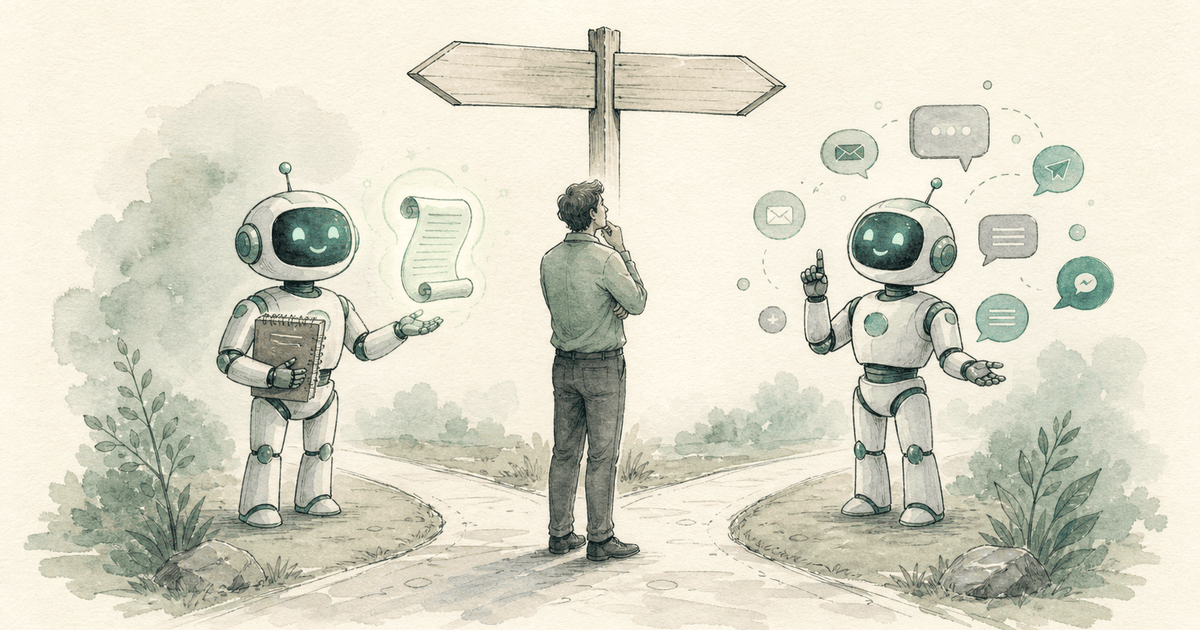
Hermes Agent vs OpenClaw (2026): Which Open-Source AI Agent Should You Run?
Hermes Agent (Nous Research) and OpenClaw are the two most popular open-source personal AI agents. Hermes is built around a learning loop that writes its own skills; OpenClaw is built around a gateway that puts one assistant in 30+ chat apps and on your devices. Here is a sourced, side-by-side comparison and a simple way to pick.
Lindy AI Alternative: Why Businesses Are Switching in 2026
Frustrated with Lindy AI's credit system? Compare the best Lindy AI alternatives including Dooza, which offers predictable pricing and pre-built AI employees.
Start with a refundable pilot — 100% refund within 14 days. A Dooza engineer scopes it with you on a free 30-minute call. Pricing depends on the product; see pricing.